Sorry, your browser is not supported. For a better experience, keep your browser up to date. Check here for latest versions
China’s garden manufacturing sector has developed quickly, serving homeowners, landscapers, retailers, and commercial buyers worldwide. This article examines the China Top 10 Garden Storage Shed Manufacturers through practical buying criteria. These include material quality, structural design, weather resistance, production capacity, customization, and after-sales support. A reliable manufacturer should explain steel thickness, timber treatment, roof loading, ventilation, and drainage clearly. Vague promises are not enough.
Garden designer and television presenter Alan Titchmarsh has said, “A shed is the heart of a garden.” That simple observation remains useful. A Garden Storage Shed may hold muddy boots, bicycles, pruning tools, or seasonal furniture. Its value depends on daily use, not only appearance. Strong hinges, smooth doors, raised floors, and sensible shelving can matter more than decorative panels. Small details become obvious during winter.
The manufacturers discussed here represent different strengths. Some focus on galvanized steel structures. Others specialize in resin, timber, modular systems, or private-label production. Their export experience, factory controls, and documentation also deserve attention. Product photographs can mislead. Samples, inspection reports, and clear warranty terms offer stronger evidence. Buyers should also check local planning requirements and installation conditions.
No ranking is perfect. Factory performance may change over time. Public information can also be incomplete. That limitation deserves acknowledgement. Still, comparing these companies helps buyers narrow choices with greater confidence. The best supplier is not always the largest one. It is the partner that delivers consistent quality, honest communication, and a Garden Storage Shed suited to its real environment.
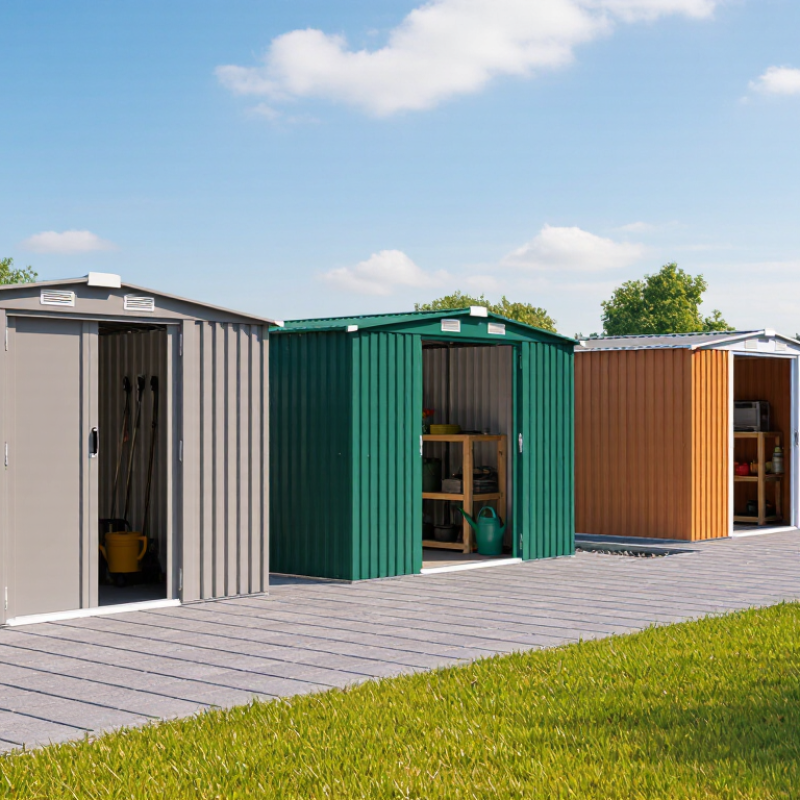
China’s garden storage shed industry combines metal fabrication, modular design, and export logistics. Manufacturers commonly produce steel, aluminum, resin, and composite sheds for tools, bicycles, and seasonal equipment. Mordor Intelligence’s outdoor storage market research identifies durability, weather resistance, and urban space limits as major demand drivers. These needs are visible in compact courtyards and balcony-sized gardens.
China remains a major global manufacturing base for fabricated metal products. UN Comtrade data under HS 9403 shows strong Chinese exports of other furniture, a category that can include some storage structures. However, customs classifications vary. That makes shed-specific comparisons imperfect. Quality also differs between factories. In my experience, buyers should inspect welds, panel thickness, drainage details, and packaging before trusting production claims. A low price can hide thinner steel or weaker coatings.
Tips: Ask for salt-spray test results, load ratings, and assembly videos. Check whether dimensions include the roof overhang. Request a sample before placing a large order. The picture is not perfectly clean. Some industry reports combine sheds with broader outdoor storage products, so buyers should verify every statistic and factory capability directly. A practical audit should also review production capacity, inspection records, spare-part support, and delivery performance.
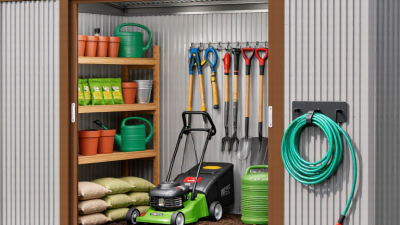
This benchmark compares common garden shed footprint configurations used in the market. Floor area is calculated from the stated width and length, while nominal storage volume is calculated using a 1.98 m wall height. The figures describe product specifications rather than individual manufacturers or brands.
China Top 10 Garden Storage Shed Manufacturers
Identifying the top ten Chinese shed manufacturers requires more than counting online listings. I would examine factory history, production capacity, material knowledge, and completed export projects. A reliable manufacturer should provide clear steel, aluminum, wood, or resin specifications. Product samples matter too. They reveal panel strength, coating quality, drainage design, and hardware accuracy.
Factory verification adds practical evidence. Auditors can inspect cutting equipment, welding areas, powder-coating lines, packing stations, and warehouse controls. Quality records should show how dimensions, corrosion resistance, load performance, and assembly instructions are checked. Manufacturers with international certifications may demonstrate stronger systems, but certificates should be verified directly. A professional sales team must also explain lead times, customization limits, spare parts, and warranty procedures without vague promises.
Ranking still involves judgment. Public information can be incomplete. Some excellent factories publish little online, while polished websites may hide weak production controls. I would compare several years of trade records, customer references, inspection reports, and sample results before assigning a position. Communication during this process is revealing. Do replies answer technical questions, or simply repeat marketing language? A top-ten list should reward consistent evidence, not the loudest claim. Mistakes can happen, especially when factory data changes between audits. That uncertainty deserves honest disclosure.
China’s leading garden storage shed manufacturers commonly work with galvanized steel, aluminum, resin, and treated wood. Each material serves a different outdoor need.
Galvanized steel offers strong impact resistance and suits tool sheds, bicycle shelters, and larger garden buildings. Powder-coated surfaces help reduce rust, though cut edges still need inspection. Aluminum feels lighter and performs well in damp gardens. Resin or polypropylene panels resist moisture and require little maintenance. They can feel less rigid in strong wind. Treated wood provides warmth and better visual integration with landscaping, but it needs periodic sealing.
Common designs include gable roofs, pent roofs, lean-to units, and modular sheds. Gable roofs improve headroom and rainwater flow. Pent sheds fit narrow spaces beside walls. Lean-to models work well near kitchens or garages. Many manufacturers also offer lockable tool cabinets, bin stores, bike sheds, mower houses, and compact garden rooms. Larger units may include windows, vents, shelving, ramps, and sliding doors.
From practical sourcing experience, specifications deserve more attention than polished pictures. Check panel thickness, frame spacing, drainage details, coating standards, and hardware quality. Wind resistance should match the installation area. Some suppliers provide custom colors and dimensions, but customization can increase delivery time and assembly difficulty. A low price may look attractive. It can also reflect thinner panels or weaker hinges. That assumption needs testing through samples, inspection records, and clear after-sales terms.
| Profile | Common Materials | Typical Designs | Common Product Types | Typical Size Range | Typical Features | Common Customization Options |
|---|---|---|---|---|---|---|
| 01 | Galvanized steel panels, zinc-coated steel frames, polypropylene accessories | Gable roof, vertical wall panels, double hinged doors | Metal garden sheds, tool sheds, bicycle storage sheds | Approximately 1.5 × 1.2 m to 4.0 × 3.0 m | Powder-coated finish, ventilation openings, lockable door handles | Color, panel thickness, door position, windows, skylights |
| 02 | Hot-dip galvanized steel, painted steel roof sheets, aluminum fittings | Pent roof, compact footprint, sliding or single door | Balcony sheds, narrow side-yard sheds, urban storage units | Approximately 1.2 × 0.8 m to 3.0 × 2.0 m | Space-saving layout, raised base, corrosion-resistant exterior | Overall dimensions, roof slope, door style, base supports |
| 03 | Galvanized steel, aluminum alloy frames, polycarbonate glazing | Greenhouse-style roof sections, windows, walk-in layout | Garden tool sheds, potting sheds, combined greenhouse sheds | Approximately 2.0 × 1.5 m to 4.0 × 3.0 m | Natural light panels, roof ventilation, shelves and work benches | Glazing area, shelving layout, ventilation type, interior worktop |
| 04 | WPC panels, galvanized steel reinforcement, stainless steel hardware | Wood-grain appearance, gable roof, framed entry door | Low-maintenance composite sheds, patio storage, garden rooms | Approximately 1.5 × 1.2 m to 3.6 × 2.4 m | Moisture-resistant wall panels, UV-resistant surface, easy cleaning | Panel color, exterior texture, windows, interior partitions |
| 05 | PVC or resin panels, steel reinforcement, polypropylene floor components | Modular panels, pitched roof, wide double doors | Resin sheds, lawn equipment storage, seasonal storage sheds | Approximately 1.8 × 1.2 m to 3.6 × 2.4 m | Rust-free panels, low maintenance, integrated floor options | Panel color, floor design, window placement, ventilation grilles |
| 06 | Aluminum alloy panels, galvanized steel base, tempered glass or polycarbonate | Modern flat or low-pitch roof, glass-look façade, clean lines | Premium garden storage, outdoor utility rooms, poolside storage | Approximately 2.0 × 1.5 m to 4.0 × 3.0 m | Lightweight structure, weather-resistant coating, concealed drainage | Frame color, glazing type, access direction, drainage details |
| 07 | Painted galvanized steel, structural steel tubing, bitumen roof panels | Heavy-duty gable roof, reinforced corners, high-clearance entry | Lawn tractor sheds, workshop sheds, heavy equipment storage | Approximately 2.4 × 1.8 m to 5.0 × 3.0 m | Reinforced frame, wide doors, floor anchoring points, high load capacity | Frame gauge, door width, roof reinforcement, anchor kits |
| 08 | Galvanized steel, foam-insulated sandwich panels, aluminum trims | Insulated wall system, gable or pent roof, secure personnel door | Insulated storage rooms, outdoor workshops, garden offices | Approximately 2.0 × 1.5 m to 6.0 × 3.0 m | Thermal insulation, weather sealing, electrical cable entry options | Insulation thickness, wall color, window package, electrical openings |
| 09 | Treated softwood or engineered wood panels, galvanized fasteners, asphalt shingles | Traditional gable roof, cottage-style façade, framed windows | Wooden garden sheds, hobby rooms, decorative storage cabins | Approximately 1.8 × 1.5 m to 4.8 × 3.0 m | Natural appearance, paintable surfaces, customizable interior layout | Wood treatment, siding profile, roof covering, windows and doors |
| 10 | Galvanized steel, color-coated steel, composite floor panels, ABS fittings | Flat-pack modular construction, gable roof, reversible assembly | DIY garden sheds, e-commerce flat-pack sheds, multi-purpose storage | Approximately 1.5 × 1.2 m to 4.0 × 2.5 m | Knock-down packaging, illustrated assembly instructions, modular accessories | Packaging dimensions, hardware kits, color, door orientation and accessories |
Note: Product dimensions, materials, and features are representative industry ranges commonly used for garden storage sheds manufactured in China; specifications vary by supplier, model, and market requirements.
China’s top garden storage shed manufacturers are increasingly judged by standards, customization, and measurable quality control. Grand View Research valued the global outdoor living products market at over USD 20 billion in 2023, with storage products benefiting from home improvement demand. This growth raises expectations for safer materials and longer service life.
Reliable factories normally operate under ISO 9001 quality systems, but certification alone proves little. Incoming steel should be checked for thickness, coating weight, and visible corrosion. Welds need consistent penetration. Doors should open smoothly after repeated cycles. For painted steel, ISO 12944 helps buyers evaluate corrosion protection by exposure category. ASTM B117 salt-spray testing can reveal coating weaknesses, although it does not perfectly predict outdoor performance.
Customization must go beyond color selection. Experienced manufacturers can adjust panel dimensions, roof pitch, ventilation, shelving, locks, and packaging to suit climate and installation conditions. In coastal areas, thicker galvanized layers and stainless fasteners may be necessary. In snowy regions, roof-load calculations deserve written evidence. A practical supplier should provide inspection records, material certificates, sample approvals, and pre-shipment photographs.
Details matter.
The difficult part is consistency. A factory may pass one sample and still vary across a container. Buyers should request batch-based inspections, dimensional tolerances, and corrective-action records. The 2024 Global Steel Association outlook noted continuing pressure on steel costs and supply chains, which can tempt substitutions. That risk deserves attention. A cheaper panel may become an expensive replacement later.
Choosing a Chinese garden storage shed manufacturer requires more than comparing catalog prices. The global outdoor storage market continues to expand, according to recent Grand View Research forecasts. Demand is moving toward durable, weather-resistant structures. Ask about steel thickness, coating systems, roof drainage, and tested load capacity. A low price may hide thinner panels or weaker hinges. Samples matter.
Review factory evidence, not only product photographs. Request ISO 9001 certificates, current audit reports, production videos, and batch inspection records. Certification supports process control, but it does not guarantee every shipment. The 2023 ISO Survey recorded more than 1.2 million ISO 9001 certificates worldwide, so verification remains essential. Also check export experience and packaging design. The World Bank’s 2023 Logistics Performance Index ranked China 19th globally, with a 3.7 score, supporting its strong manufacturing logistics. Still, damaged panels can result from poor internal protection.
Tips: Ask for a pre-production sample and a final inspection report. Confirm steel gauge in millimeters, not vague terms like “heavy duty.” Request wind and snow-load data for your target market. Compare warranty exclusions carefully. Check whether replacement panels and hardware are available. I would also inspect drainage edges personally, because small design faults become rust problems. Do not choose the cheapest quotation automatically.