Why Should You Use a Foot Scrub?
Why Should You Use a Foot Scrub? The answer begins with what your feet handle each day: pressure, friction, sweat, and long hours inside shoes. Dry, rough patches often build up around heels and the balls of the feet. A gentle Foot Scrub can loosen some surface flakes and leave skin feeling smoother. It is a grooming step, not a cure for cracked skin or a medical condition.
The American Podiatric Medical Association’s 2014 survey reported that 77% of U.S. adults had experienced foot pain. That figure describes reported pain, not the effects of exfoliation. It does, however, underline how often foot concerns affect everyday life. A scrub may help with surface roughness, but results depend on skin type, pressure, and frequency. More force is not better.
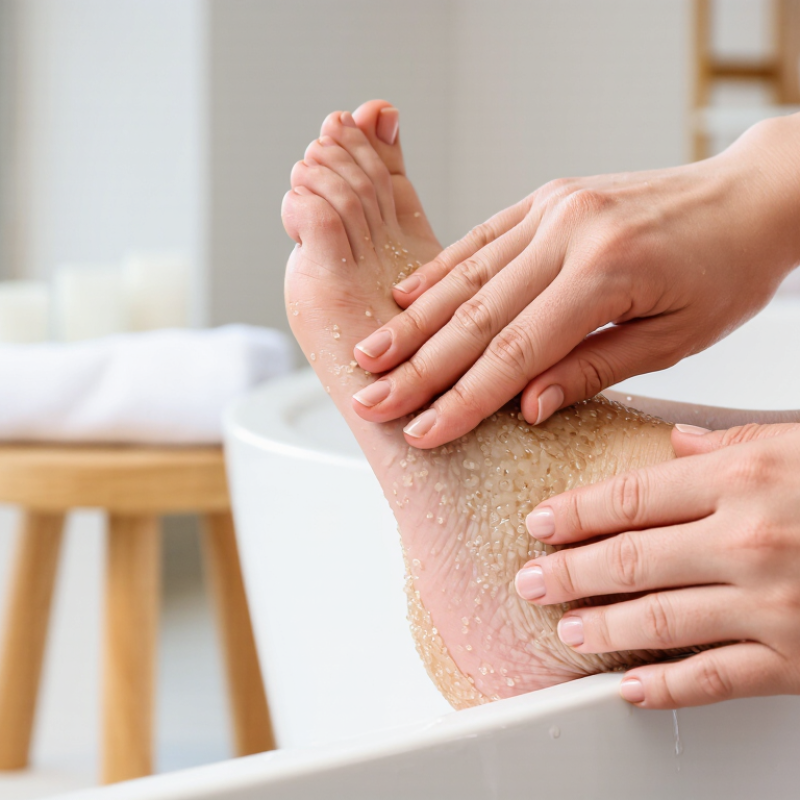
Think of warm water, a small amount of scrub, and light circular movements over hardened skin. Stop if the skin stings, looks red, or feels tender. Small details matter. People with diabetes, reduced foot sensation, poor circulation, open cuts, or persistent cracks should ask a healthcare professional before exfoliating. The American Academy of Dermatology advises gentle skin care and cautions against irritating already sensitive or damaged skin. A scrub can feel satisfying, but it cannot diagnose why skin is changing. And sometimes, less really is safer.
Foot Skin and Callus Formation: Why the Soles Need Different Care
The skin on the soles is built for pressure. Its outer layer is thicker than skin on many other parts of the body, helping it handle steps, shoes, and long hours standing. But repeated rubbing can make that layer build up into a callus, especially around the heel and ball of the foot. Calluses are not automatically a problem; they can protect areas under pressure. That is normal. Dry air, tight shoes, and friction may also leave heels rough or cracked.
A foot scrub can loosen surface flakes and help skin feel smoother, but it cannot fix the reason a callus keeps returning. Use light pressure on damp skin, focusing on rough areas rather than scrubbing the whole foot until it feels raw. Less can be better. Rinse, dry carefully between the toes, and apply moisturizer to the soles. I used to think a smoother heel always meant better care; that is not quite right. Thick or painful calluses, deep cracks, or redness deserve attention from a healthcare professional. People with diabetes, reduced sensation, or circulation problems should ask a clinician before using abrasive tools, since small injuries can be easy to miss.
Why Should You Use a Foot Scrub? — Foot Skin and Callus Formation
The skin on weight-bearing soles is naturally much thicker than skin in many other areas. Repeated pressure and friction can further thicken the outer layer, forming calluses. A gentle foot scrub may smooth superficial roughness, but avoid scrubbing cracked, irritated, or painful skin. Thickness varies by person and measurement site; these figures are approximate.
How Foot Scrubs Work: Physical Abrasion and Exfoliating Ingredients
Why Should You Use a Foot Scrub?
How Foot Scrubs Work: Physical Abrasion and Exfoliating Ingredients
A foot scrub helps lift dull, loose skin from areas that face repeated pressure, such as heels and the balls of the feet. Many formulas use small particles, including sugar or pumice, to create gentle friction. Massage them over damp skin with light pressure; hard scrubbing can leave skin sore or irritated. A rough heel may not feel smooth after one use. That is normal.
Some scrubs also contain exfoliating ingredients, such as alpha-hydroxy acids. Lactic acid, for example, can loosen the bonds between dead surface cells, making them easier to shed. These ingredients vary by product, and more is not always better. Check the label and follow its directions, especially if your skin is sensitive. I sometimes find that a softer touch works better than an ambitious scrub. It takes patience.
Tips: Soak feet briefly, then scrub gently and rinse well. Apply moisturizer afterward. Skip scrubs over cuts, cracks, or irritated skin. If you have diabetes, reduced foot sensation, or poor circulation, ask a healthcare professional before exfoliating; small injuries may be harder to notice or heal.
Potential Benefits: Smoother Skin and Easier Moisturizer Application
Why Should You Use a Foot Scrub?
A foot scrub can loosen surface flakes and leave rough heels feeling smoother. That may help moisturizer spread more evenly, especially over dry patches around the heel and ball of the foot. It does not make moisturizer penetrate deeper, though. The benefit is mostly a cleaner, less flaky surface.
The American Podiatric Medical Association’s 2014 foot-health survey found that 77% of Americans had experienced foot problems. That survey does not prove scrubs prevent problems, but it underlines why routine foot care matters. Use light pressure on damp skin, then apply moisturizer while the skin is still slightly moist. Less is enough. A gritty scrub should not leave skin sore or red.
Results vary. If skin feels tight afterward, scrub less often or stop; I would not treat stinging as proof that exfoliation is working. Avoid scrubbing open cracks, blisters, or inflamed areas. People with diabetes, reduced sensation, or poor circulation should ask a podiatrist before using abrasive tools, since small injuries may be harder to notice or heal.
Foot Health Context: APMA’s 2014 Survey Found 77% Had Foot Problems
The American Podiatric Medical Association’s 2014 survey found that 77% of Americans had experienced foot problems. This was a self-reported survey, not a clinical diagnosis, and it should not be read as today’s prevalence. Still, the figure highlights how often sore, dry, or rough feet affect daily life. A gentle foot scrub can loosen surface flakes, especially on thick heel skin. It cannot treat the cause of pain or persistent cracking. Small difference, but an important one.
The CDC’s 2024 National Diabetes Statistics Report estimated that 38.4 million people in the United States had diabetes. Diabetes can affect sensation and circulation, so scrubbing may injure skin without a person noticing. Be cautious. Use light pressure on intact skin, and stop if it stings or becomes red. Avoid scrubbing open cracks, blisters, or inflamed areas. People with diabetes, numbness, or poor circulation should ask a health professional before using an abrasive scrub. A warm rinse and careful drying, especially between the toes, are sensible basics. I sometimes think rough heels invite over-scrubbing; they do not need to feel polished to be cared for.
Safe Use: Gentle Pressure, Sensible Frequency, and When to Avoid Scrubbing
Use a foot scrub as a light polish, not a way to strip away every rough patch. Wet your feet with warm water, then massage a small amount over thick skin using your fingertips. Gentle circles are enough. Don’t press until the skin turns red, and avoid gritty scrubs on cracks, blisters, rashes, or freshly irritated skin. Less is safer. Try it once a week at first; there is no single frequency that suits every foot. If tenderness or redness lingers, pause and let the skin recover.
Some feet need extra caution. The CDC’s 2024 National Diabetes Statistics Report estimates that 38.4 million people in the United States had diabetes in 2021. Diabetes can affect sensation and circulation, making small injuries harder to notice or heal. If you have diabetes, numbness, poor circulation, or a history of foot sores, ask a healthcare professional before exfoliating. The American Academy of Dermatology also advises gentle exfoliation and avoiding irritated or damaged skin. A scrub cannot safely treat a deep callus or painful crack. I have found it tempting to keep rubbing one stubborn spot; that is usually the moment to stop, not push harder.
