Sorry, your browser is not supported. For a better experience, keep your browser up to date. Check here for latest versions
A front entrance does more than mark the way into a home. It shapes the first impression, helps manage everyday access, and can influence comfort inside. A modern Entrance Front Door brings these needs together through considered materials, clean lines, and practical hardware. The right choice depends on the building, local climate, and how the household uses its entrance. Looks matter, but so does the door’s performance.
Think about the details you will notice each day: a handle that feels secure, a threshold that is easy to cross, and glass that admits daylight without sacrificing privacy. Insulation, weather seals, and a well-fitted frame can also affect drafts and maintenance. Small choices add up. A sleek finish may suit a contemporary home, while a simpler design can sit more naturally on an older façade. Neither option is automatically better.
There are trade-offs. Large glazed panels may brighten a hallway, yet they require thoughtful placement and suitable glazing. Dark finishes can make a strong statement, but dust and fingerprints may show more clearly. A door also cannot solve every security or energy problem on its own; installation and the surrounding frame matter. That part is easy to overlook. Use this guide to compare styles, materials, and useful features before choosing a modern entrance that fits your home, rather than one that only looks impressive in a photograph.
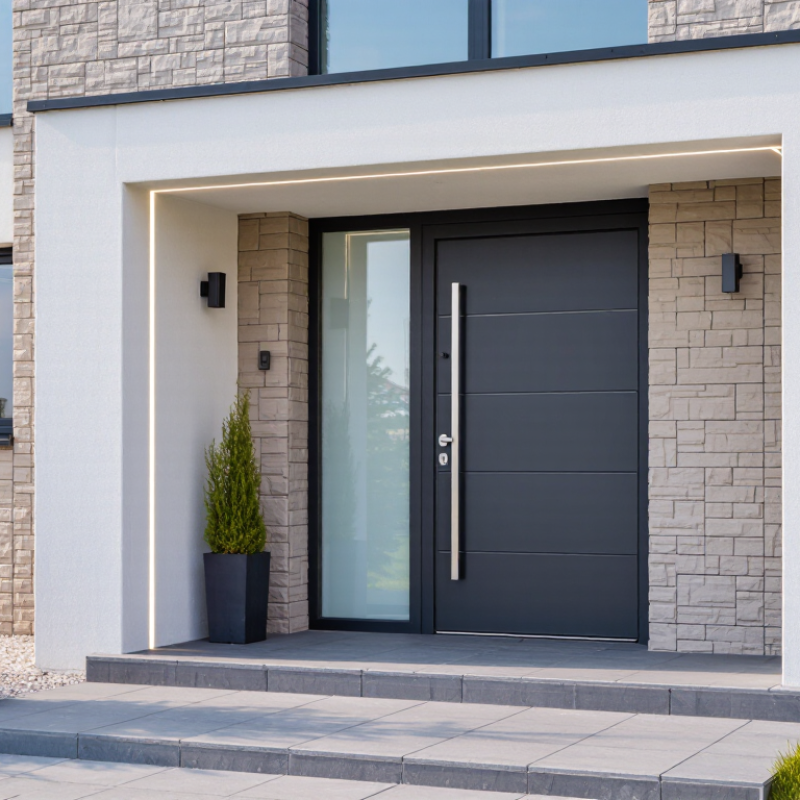
A modern entrance front door is defined by more than a flat panel or oversized glass. It combines clean proportions with practical performance: a tight-fitting frame, durable finish, reliable locking hardware, and glazing chosen for daylight and privacy. Details matter. A narrow glass strip can brighten a dim hallway without exposing the whole interior. Check tested performance ratings for air and water resistance, and confirm the frame suits the local climate. A beautiful door that leaks around its threshold is not a modern solution.
Material and proportions shape the first impression. Smooth steel or fiberglass can create a restrained look, while textured wood adds warmth without ornate trim. The U.S. Department of Energy advises choosing energy-efficient exterior doors suited to the climate; proper installation and weatherstripping also affect comfort. Still, “modern” can feel cold. I would question an all-glass design where afternoon glare or privacy is a concern.
There is a financial signal, though not a guarantee. Zonda’s 2024 Cost vs. Value report estimated a 188.1% cost recoup for a steel entry door replacement, based on national averages. That figure reflects a specific project category, not every home or market. Use it as context, not a promise. A considered choice balances appearance, tested performance, maintenance, and the way people actually enter the home.
Modern entrance doors often pair clean lines and simple detailing with practical features such as durable materials, secure hardware, and glazing options. This chart shows three common nominal widths for U.S. residential entry door slabs. Actual dimensions and availability vary, so check the product specifications and opening measurements before choosing a door.
A modern entrance door is more than a clean façade. It is a working barrier between a busy street and the quiet of home. The FBI’s Crime in the United States 2019 report found that 55.7% of recorded burglaries involved forcible entry. That figure does not prove one door type prevents crime, but it shows why the frame, lock, and installation matter together.
A reinforced strike plate, long screws anchored into the framing, and a properly fitted deadbolt can make forced entry harder. The details count.
Privacy deserves equal attention. A solid door limits sightlines and muffles some street noise, while frosted or textured glazing can admit daylight without exposing the hallway. Check the view from the pavement at night; interior lights can make glass more revealing than it seems by day. Tight weather seals also reduce gaps that carry sound and drafts, though they cannot make a home completely private. No door does that.
A small practical point: choose hardware that feels easy to operate, even with full hands, and test the latch after installation. A secure door that sticks is frustrating—and that is worth reflecting on before choosing a design.
A modern entrance door can improve comfort when its materials slow heat transfer and its edges seal tightly. Insulated fiberglass and steel doors often use a foam core; wood can also perform well when properly built and maintained. Look beyond the surface. The National Fenestration Rating Council’s label reports whole-product U-factor, which indicates heat flow: lower values mean better insulation. For glazed door panels, check the solar heat gain coefficient too, especially in sunny climates.
The U.S. Department of Energy’s Energy Saver guidance estimates that heat gain and loss through windows account for 25–30% of residential heating and cooling energy use. That figure concerns windows, not doors, but it shows why glazed openings deserve attention. Choose limited, well-sealed glazing where practical, plus continuous weatherstripping and an insulated threshold. Small details matter. Even a narrow gap can invite a cold draft across the entry floor. Installation counts as much as the door’s rating; a high-performing slab cannot compensate for a poorly fitted frame. I have seen specifications focus on the core and overlook the sill. That’s an easy detail to miss.
A modern entrance door can feel contemporary without looking out of place. Match its shape to the architecture. A flat, flush door with narrow glass suits many modern homes, while Craftsman façades often benefit from divided lights and substantial trim. For a traditional colonial exterior, balanced panels and restrained hardware preserve familiar proportions. Mid-century homes can handle wider glass panels, but privacy and afternoon glare deserve attention. Scale matters. A door that looks elegant in a showroom may overwhelm a small porch.
Materials and finishes should respond to climate, maintenance, and the home’s existing details. Wood brings visible grain and warmth, but needs more upkeep in exposed locations. Fiberglass offers varied finishes; steel can provide a crisp, simple profile. These are trade-offs, not universal rules. The 2024 Cost vs. Value report estimated a national average cost of $2,355 for a steel entry-door replacement and a $4,430 resale value. That estimate is not a promise of return, and local costs vary. Still, it suggests that a focused entry upgrade may be worth comparing with a larger renovation. Check the frame, threshold, and weather seals too. A beautiful slab cannot correct a drafty opening. My preference is a clear material palette, though the “right” choice sometimes needs a second look beside the actual façade.
A modern entrance door should suit the house, not just a photograph. Check the opening width, frame depth, and direction of swing before comparing designs. A broad door can look striking, but it may be awkward in a narrow hallway. Measure twice.
Material affects comfort and upkeep. Insulated steel and fiberglass can help limit drafts, while wood offers natural texture but may need regular finishing. Performance depends on the whole door system, including the frame, seals, and installation. Ask for documented insulation and weather-resistance ratings, and compare like with like. A sleek panel is not automatically an efficient one.
Think about daily use, too. A dark finish can show dust and scratches; pale surfaces may reveal scuffs near the handle. If you choose glass, consider privacy, daylight, and how much direct sun reaches the entry. Check that the lock, hinges, and threshold suit your security and accessibility needs. The small details matter. Also consider local exposure: wind-driven rain, salty air, or strong afternoon sun can change what holds up well. I would not choose a door from a sample alone; finishes can look different beside your home’s brick or siding, and maintenance needs are easy to underestimate.
| Factor | What to Consider | What to Compare | Useful For |
|---|---|---|---|
| Material | Common options include insulated steel, fiberglass, solid wood, and doors with a wood veneer. Each differs in appearance, upkeep, durability, and cost. | Ask about the door’s construction, finish, resistance to dents or moisture, and maintenance requirements. | Matching the door to your climate, home style, and maintenance preferences. |
| Energy Efficiency | A well-fitted door with suitable insulation and weatherstripping can help limit drafts and heat transfer. Performance depends on the complete door assembly and installation. | Review the product’s stated U-factor, air-leakage information, weather seals, and whether glazing is included in the rating. | Improving comfort near the entrance and reducing unwanted air movement. |
| Security | Security is influenced by the door, frame, hinges, lock, strike plate, and installation—not just the door material. | Check the frame and lock compatibility, hinge design, hardware quality, and whether the unit is tested to a recognized standard. | Choosing a complete entrance system with components suited to your security needs. |
| Glazing and Daylight | Glazed panels or sidelights can bring natural light into an entryway. More glass may affect privacy and thermal performance. | Compare glass area, privacy level, glazing type, and the door’s overall energy information. | Balancing a brighter entrance with privacy and insulation priorities. |
| Size and Swing | Door dimensions, handing, swing direction, and clearance must suit the opening and surrounding space. | Measure the existing opening and check thresholds, nearby walls, steps, and interior clearance before ordering. | A proper fit and convenient everyday access. |
| Weather Resistance | Rain, sun, temperature changes, and wind exposure can affect finishes and components over time. | Look for suitable exterior finishes, drainage details, weather seals, and care instructions for your local conditions. | Entrances exposed to harsh weather or direct sunlight. |
| Design and Finish | Modern styles often use clean lines, simple panels, restrained hardware, or carefully placed glazing. | Consider how the color, texture, hardware, and proportions work with the facade and other exterior finishes. | Creating a cohesive entrance without choosing a style that quickly feels dated. |
| Installation and Warranty | Even a high-performing door may underperform if it is poorly measured, fitted, or sealed. | Confirm what the warranty covers, who is responsible for installation, and how the frame and perimeter will be sealed. | Protecting the door’s fit, operation, and stated performance over time. |