10 Water Sprinkler Buying Tips for Global Buyers
For global buyers, choosing a Water Sprinkler is not simply a price comparison. It is a life-safety decision involving water supply, hazard classification, installation quality, maintenance, and certification. A low-cost sprinkler may look attractive on a quotation, yet poor response performance or incompatible fittings can create expensive problems later.
NFPA’s U.S. Experience with Sprinklers report found that sprinklers operated in 92% of reported fires large enough to activate them. When they operated, they controlled the fire in 97% of cases. These figures show the value of tested systems, but they do not guarantee identical results worldwide. Building design, pressure stability, corrosion, inspection routines, and local standards still matter. NFPA fire protection expert Lorraine Carli has stated, “Home fire sprinklers are the safest, most effective way to protect your family from fire.” Her point also applies to commercial purchasing: performance must come before appearance.
This guide, 10 Water Sprinkler Buying Tips for Global Buyers, examines practical details that are easy to miss. Buyers should check approvals such as UL, FM, LPCB, or relevant regional certifications. They should also compare K-factor, temperature rating, thread type, flow requirements, materials, and replacement availability. A sample unit should be inspected under clear light, not accepted from a catalogue image alone. That small step matters.
No purchasing checklist is perfect. Some specifications remain unclear until site conditions are measured. That is why reliable suppliers should provide test records, traceable documentation, installation guidance, and responsive technical support. The right Water Sprinkler is not merely delivered. It must remain dependable when water, heat, and time test the entire system.
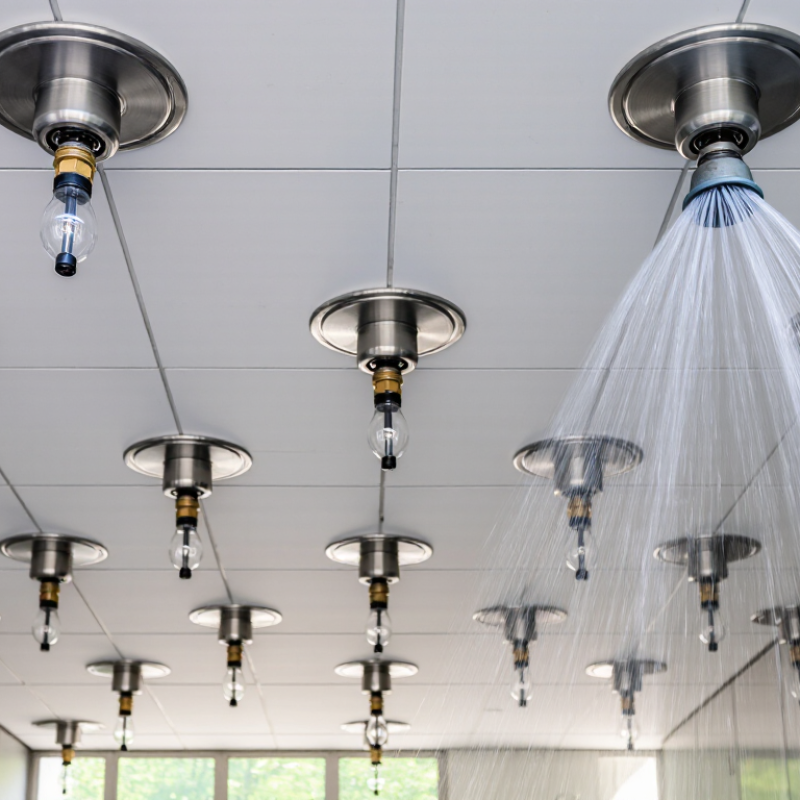
Define the Watering Area and Sprinkler Coverage Requirements
Before choosing a sprinkler, map the actual watering area rather than relying on rough estimates. Measure the length and width of each lawn, bed, greenhouse section, or planting zone. Note slopes, narrow corners, paths, walls, and areas that should remain dry. Separate grass from flower beds because their water needs may differ.
Coverage looks simple. It is not. A sprinkler may advertise a wide spray radius, yet water pressure, nozzle height, and wind can reduce real performance. Use the available pressure and flow rate to estimate practical coverage. Place sprinklers so their spray patterns overlap slightly. This helps prevent dry strips between watering zones. Too much overlap, however, can create puddles and waste water.
Experienced installers usually test one section before ordering a complete system. Set the sprinkler at the planned height and observe its pattern for several minutes. Check the farthest edge with a small container or soil probe. Windy sites need smaller zones or adjustable spray angles. I once underestimated a narrow side yard because the map looked accurate. The corner stayed dry. Rechecking the layout on site would have exposed that mistake earlier. Product specifications are useful, but field testing remains more reliable. Document the measured radius, pressure, and flow before final selection.
10 Water Sprinkler Buying Tips for Global Buyers - Define the Watering Area and Sprinkler Coverage Requirements
| Sprinkler Type | Typical Watering Area | Typical Radius | Typical Flow Rate | Recommended Operating Pressure | Recommended Head Spacing | Suitable Applications |
| Fixed Spray Sprinkler | Up to approximately 80 m² per head | 2–5 m | 4–15 L/min | 2.0–3.5 bar | 70–100% of the spray diameter | Small lawns, flower beds, narrow strips, and residential gardens |
| Rotary Stream Sprinkler | Approximately 50–150 m² per head | 3–7 m | 2–10 L/min | 2.5–4.0 bar | 60–80% of the spray diameter | Water-conscious landscaping and medium-sized lawn areas |
| Gear-Drive Rotor | Approximately 150–450 m² per head | 7–12 m | 5–25 L/min | 3.0–5.0 bar | 50–65% of the spray diameter | Large lawns, sports fields, parks, and landscaped commercial sites |
| Impact Sprinkler | Approximately 300–1,000 m² per head | 10–18 m | 10–45 L/min | 2.5–5.5 bar | 50–70% of the spray diameter | Open fields, nurseries, pasture, and large outdoor areas |
| Agricultural Rain Gun | Approximately 1,000–5,000 m² per head | 20–40 m | 50–200 L/min | 4.0–8.0 bar | 55–75% of the spray diameter | Large agricultural plots and temporary irrigation systems |
| Micro-Sprinkler | Approximately 5–50 m² per head | 1–4 m | 0.5–4 L/min | 1.0–2.5 bar | 60–90% of the spray diameter | Greenhouses, nurseries, orchards, and planting beds |
| Full-Circle Pattern | Circular areas; area ≈ 3.14 × radius² | Select according to the site diameter | Depends on nozzle size and pressure | Use the sprinkler’s specified range | Place heads in a grid with head-to-head coverage | Central lawn zones and unobstructed circular areas |
| Half-Circle Pattern | Semicircular edge zones; area ≈ 1.57 × radius² | Match the distance from the boundary to the opposite edge | Approximately half of a comparable full-circle nozzle flow | Use the sprinkler’s specified range | Install along straight boundaries for overlapping coverage | Side lawns, borders, and perimeter planting areas |
| Quarter-Circle Pattern | Corner zones; area ≈ 0.785 × radius² | Match the two boundary lengths from the corner | Approximately one-quarter of a comparable full-circle nozzle flow | Use the sprinkler’s specified range | Position at corners and overlap with adjacent heads | Rectangular lawns, corners, and narrow garden sections |
| Adjustable-Angle Sprinkler | Irregular areas from approximately 10–300 m² per head | 2–15 m | 2–30 L/min | 2.0–5.0 bar | Set the arc to prevent overspray beyond the boundary | Complex landscapes, curved edges, and mixed-use garden zones |
Planning note: For uniform watering, use head-to-head coverage wherever possible. Actual radius, flow, and pressure vary with nozzle size, elevation, pipe diameter, water quality, and local water supply. Confirm the final selection with the product’s technical specifications and site conditions.
Choose the Right Sprinkler Type for Each Application
Choosing the right sprinkler type starts with the application, not the catalog photograph. FAO AQUASTAT reports that agriculture accounts for about 70% of global freshwater withdrawals. This makes distribution efficiency a practical purchasing concern. Fixed spray sprinklers suit small, regular beds with low wind. Gear-driven rotary sprinklers cover larger lawns and fields with fewer heads. Micro-sprinklers work well for orchards, nurseries, and delicate root zones. Impact sprinklers remain useful where long throw and simple maintenance matter.
Tip 1: Match precipitation rate to soil intake. Clay soil may need slower cycles, while sandy soil accepts water faster.
Tip 2: Check operating pressure at the nozzle, not only the pump rating. A pressure drop can create dry strips and muddy corners.
The U.S. EPA reports that landscape irrigation can represent nearly one-third of residential outdoor water use. A correctly selected nozzle can reduce waste, but only when spacing and pressure are also correct.
Wind changes the decision. Rotary patterns often resist drift better than fine fixed sprays. Water containing sediment may require larger passages and accessible filters. For international projects, confirm thread standards, flow units, pressure ranges, and replacement-part availability. One overlooked detail can stop an entire installation. My field experience suggests that published radius figures are optimistic; real sites include wind, elevation, and imperfect alignment. A short on-site test is still more reliable than a perfect spreadsheet.
Compare Water Pressure, Flow Rate, and Irrigation Range
When selecting a water sprinkler, compare pressure, flow rate, and irrigation range together. A wide spray radius means little if pressure drops at the farthest outlet. Check the manufacturer’s tested pressure, usually stated in bar or psi, then measure your actual supply with a pressure gauge. Do not assume the advertised range applies to every site. Pipe length, elevation, filters, and connectors can reduce performance.
Flow rate deserves equal attention. Record liters per minute at the working pressure, not only the maximum rating. A nozzle delivering 12 L/min may overload a small pump, while a low-flow model may create dry patches. Match each sprinkler’s flow with your available supply and divide zones when necessary. Use a simple bucket test at the outlet. It is crude, but useful. The FAO reports that agriculture accounts for about 70% of global freshwater withdrawals, making efficient application increasingly important (FAO, AQUASTAT, 2022).
Evaluate irrigation range on the actual landscape. Wind can distort a 10-meter pattern, while slopes can cause runoff before water reaches roots. The Irrigation Association’s best-management guidance emphasizes pressure regulation, matched precipitation, and distribution uniformity. Ask for uniformity test results, such as the lower-quarter distribution value, rather than trusting attractive pictures. Standards help, but field conditions still win. A slightly smaller radius with even coverage may outperform a larger spray pattern. Recheck pressure after installation; this step is often skipped, and that is where the comparison becomes imperfect.
Evaluate Materials, Durability, and Climate Resistance
10 Water Sprinkler Buying Tips for Global Buyers
Evaluate Materials, Durability, and Climate Resistance
Global buyers should assess sprinkler materials before comparing prices or spray patterns. Field inspections often reveal cracks, seized joints, and faded plastic after harsh seasonal exposure. Tip 1: Choose UV-stabilized materials for strong sunlight. Tip 2: Check whether metal parts resist rust in humid or coastal locations. Tip 3: Inspect seals carefully. Poor seals can leak before the sprinkler body fails. Tip 4: Confirm that plastics remain flexible during cold weather.
Climate resistance depends on more than the outer casing. Tip 5: Ask for test information covering heat, freezing, pressure, and salt exposure. Tip 6: Select thicker components for systems exposed to impact or frequent movement. Tip 7: Examine the inlet thread and connection design. Mismatched fittings create unnecessary installation problems. Tip 8: Verify replacement parts are available in the target market.
No material wins everywhere. A metal sprinkler may handle impact well, but corrosion can become its weakness. Plastic may resist moisture, yet brittle plastic can fail under cold stress. Tip 9: Match the material to local soil, water quality, temperature, and maintenance habits. Tip 10: Request clear technical documents, including operating pressure and service limits. Do not trust vague claims. One imperfect decision can affect an entire irrigation area, so buyers should test samples when possible and review performance after one full season.
10 Water Sprinkler Buying Tips for Global Buyers
Suggested evaluation weighting for materials, durability, and climate resistance
When comparing water sprinklers, give the greatest weight to material quality and long-term durability. UV resistance is important for outdoor installations, while corrosion resistance should be checked for coastal, humid, or chemically treated water environments. Also verify operating pressure, temperature tolerance, connection standards, replacement-part availability, and water distribution performance for the target climate.
