Animal research rarely depends on a species name alone. The specimen’s tissue, age, health history, and collection method can shape whether results are useful. A mouse liver section, a preserved fish gill, and a fresh blood sample answer very different questions. Small details matter. They are easy to overlook.
The U.S. Department of Agriculture’s Animal and Plant Health Inspection Service reported 780,070 covered animals used in research, testing, and teaching in its FY2022 annual report. That figure does not include several groups, including purpose-bred mice and rats, so it is not a complete count of research animals. The limitation is important when comparing specimen demand or study practices. For researchers, commonly considered specimen types include tissues, blood and other biological fluids, organs, and whole-animal models such as rodents, fish, and rabbits. Each brings distinct practical and scientific trade-offs. A frozen tissue may preserve molecular targets, while a fixed sample can better support structural examination. Neither is automatically the right choice.
This guide examines the top types of Aniaml Specimen used in research and the questions each can help address. It also considers sample quality, documentation, and fit for purpose. These factors deserve careful review, not assumptions. A specimen label alone rarely tells the whole story.
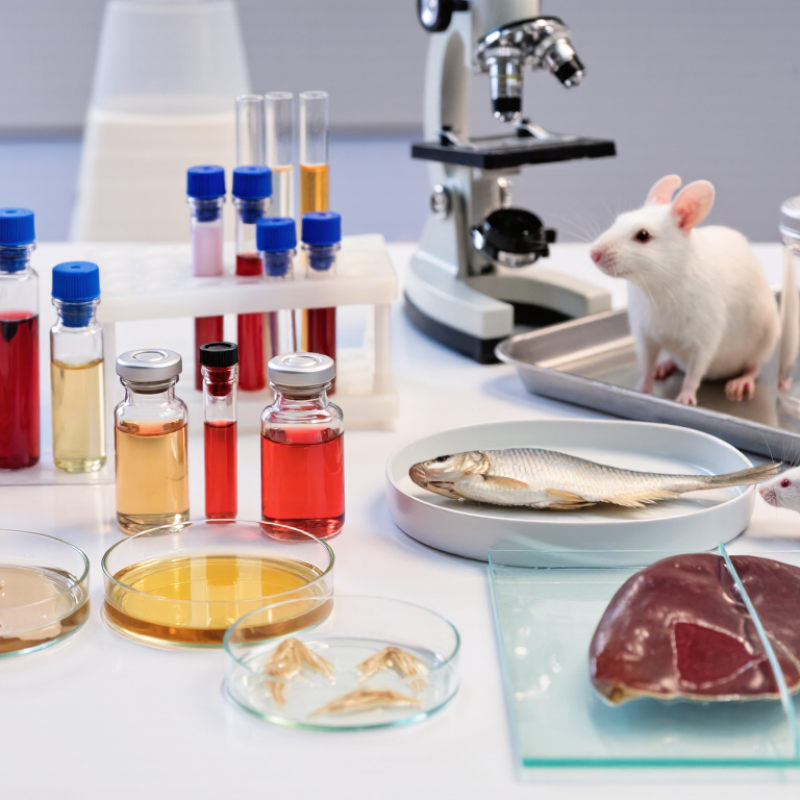
What Are the Top Types of Animal Specimens for Research?
Whole-Animal Specimens and Preserved Organisms
Whole-animal specimens retain anatomy in context: organs, skeletal structures, and visible developmental features remain connected. They support comparative anatomy, pathology, taxonomy, and ecological studies. A jarred specimen is only as useful as its records. Labels should include collection date and location, identification method, life stage, and preservation treatment. Details matter. Fixatives can alter color, shrink soft tissue, or limit later DNA analysis, so preparation should match the research question. There is no perfect method for every study.
Preserved organisms also serve as voucher specimens, allowing later researchers to check an identification against a physical reference. The 2024 IUCN Red List update reported 163,040 assessed species, with more than 45,300 threatened; documented specimens can help establish what was observed and where. Numbers need context: the list is not a count of all animal species. The USDA APHIS 2022 annual report recorded 780,070 uses of covered animals in US research, excluding mice, rats, and birds bred for research. That figure concerns animal use, not preserved collections, but it underscores why careful records matter. Preservation can also erase evidence. Researchers should note what was sampled or changed, even when the field notes feel incomplete.
| Specimen type | Typical preparation | Common research uses | Key strengths | Important limitations |
|---|---|---|---|---|
| Fluid-preserved whole animals | Whole organisms stored in a suitable preservative, commonly ethanol for many invertebrates or buffered formalin followed by long-term storage fluid for some anatomical collections. | Taxonomy, comparative anatomy, biodiversity surveys, and reference collections. | Retains the overall body and many internal structures; specimens can be re-examined over time. | Preservatives can alter color, shrink or distort tissues, and affect molecular analyses. Formaldehyde requires careful handling. |
| Pinned or dry-preserved insects | Dried and mounted, often with wings and appendages positioned for examination; very small specimens may be mounted on cards or slides. | Insect identification, morphology, distribution records, and long-term biodiversity monitoring. | Compact and convenient to store; external features are readily visible and specimens can be compared directly. | Fragile structures can break, and drying may change colors. Labels and protection from pests and humidity are essential. |
| Study skins and mounted preparations | Skin, fur, feathers, or other external coverings prepared as a study skin or displayed on a mount; associated bones or tissues may be stored separately. | Mammal and bird taxonomy, comparative morphology, plumage or coat studies, and historical comparisons. | Preserves useful external characters and can provide a durable reference for morphological study. | Does not preserve all anatomy; preparation can affect shape and coloration. Requires pest management and appropriate storage. |
| Skeletons and osteological specimens | Bones prepared as a complete articulated skeleton or as labeled individual elements, with preparation methods selected to protect the material. | Comparative anatomy, vertebrate identification, biomechanics, and studies of skeletal variation. | Allows detailed examination of bone form and relationships among skeletal elements. | Soft tissues are absent, and small bones can be lost or damaged. Preparation can remove contextual information if elements are not documented. |
| Embryos and developmental specimens | Developmental stages preserved individually or in series, often in fluid; exact stage, collection details, and preparation should be recorded. | Developmental biology, comparative embryology, and studies of growth and morphology. | A documented series can show anatomical changes across developmental stages. | Small specimens are delicate, and fixation may affect tissue structure. Collection and use must follow applicable ethical and regulatory requirements. |
| Whole-organism vouchers with linked tissue samples | A preserved, identifiable whole specimen is linked by a shared catalog record to separately preserved tissue, such as a sample stored frozen or in high-concentration ethanol. | Integrative taxonomy, DNA-based identification, population studies, and repeatable biodiversity research. | Combines anatomical reference material with tissue that may be suitable for molecular work, depending on collection and storage conditions. | Tissue and voucher must remain correctly linked and traceable. Fixatives such as formalin can compromise DNA quality. |
Research value depends on accurate identification, collection locality and date, preparation records, stable storage, and compliance with relevant permits and animal-welfare requirements.
