For global buyers, selecting the right Toiltry Bag involves more than choosing attractive colors. Different travelers need different storage systems. A business traveler may prefer a slim Dopp kit. A family may need several compartments and stronger zippers. Outdoor users often require water-resistant fabric, washable linings, and secure hanging hooks.
Rick Steves, a respected travel and packing authority, often shares this practical principle: “If you bring it, you carry it.” That advice remains valuable when comparing toiletry bags. A compact clear pouch can simplify airport screening. A hanging model can turn a small bathroom wall into a useful storage area. A waterproof bag protects clothing from shampoo leaks and wet toothbrushes. Modular organizers offer flexibility, although extra parts can become inconvenient.
This guide examines ten popular Toiltry Bag types for international buyers. The selection includes hanging bags, Dopp kits, transparent pouches, waterproof cases, cosmetic organizers, electric-accessory bags, family-size kits, compression designs, modular systems, and sustainable options. Each type has clear strengths and possible weaknesses. No single design suits every climate, trip length, or purchasing market. That assumption can fail.
We consider materials, stitching, capacity, cleaning, portability, and user experience. Small details matter. A smooth zipper feels better at a crowded hotel sink. A wide opening makes small bottles easier to find. A reinforced handle may survive repeated luggage handling. Buyers should still test supplier samples carefully. Product photos can hide thin lining, weak seams, or awkward compartments. This overview aims to support practical, informed decisions, not simply promote the most fashionable bag.
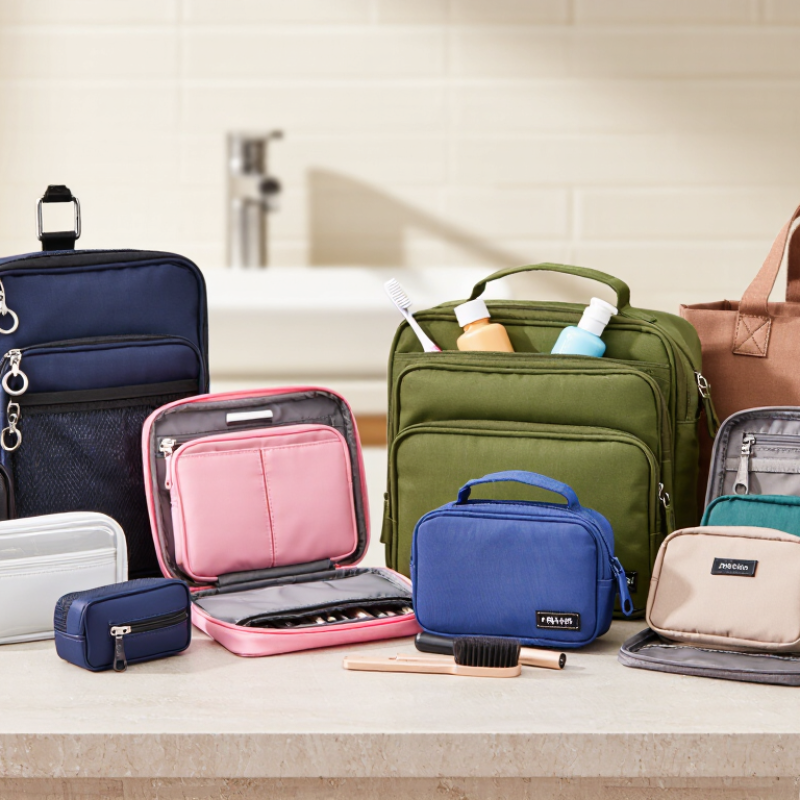
A toiletry bag is a portable organizer for personal care items used during travel, work, or daily routines. It keeps small products together and reduces clutter inside luggage. Its core functions include storage, separation, protection, and quick access. A practical design may hold bottles, grooming tools, cosmetics, and folded tissues without wasting much space. Size, shape, closure, and internal compartments define how efficiently it works. That distinction matters.
In real packing checks, a wide opening makes contents easier to find. Elastic loops can secure slim bottles and prevent noisy movement. Separate pockets help keep dry items away from damp towels. A washable lining is useful when lotion leaks or toothpaste leaves residue. However, water-resistant fabric is not always waterproof. Not the same thing. Buyers should inspect seams, zippers, lining thickness, and handle strength rather than trusting appearance alone. A hanging hook can save counter space, but it may add weight and fail under poor stitching.
For global buyers, toiletry bags should match climate, luggage habits, and customer expectations. Compact pouches suit short trips, while structured cases serve longer journeys or shared bathrooms. During product evaluation, sample testing reveals weaknesses that photographs hide. Check whether the bag stays stable when partly filled. Too many pockets can reduce usable space. Some materials feel premium but become difficult to clean. No format serves every traveler perfectly. That trade-off deserves honest product descriptions and careful quality checks.
| No. | Toiletry Bag Type | Definition | Core Functions | Best Suited For | Typical Size and Capacity | Common Materials | Key Buyer Considerations |
|---|---|---|---|---|---|---|---|
| 1 | Hanging Toiletry Bag | A toiletry organizer with an integrated hook that can be suspended from a towel rail, door, or wall fixture. | Provides vertical storage, keeps personal-care items visible, and reduces the need for counter space. | Frequent travelers, hotel guests, and users with limited bathroom space. | Approximately 24–30 cm wide × 20–28 cm high × 8–12 cm deep; usually 3–8 liters. | Polyester, recycled polyester, nylon, PVC-coated fabric, and mesh. | Hook strength, compartment layout, hanging stability, zipper quality, and resistance to moisture. |
| 2 | Dopp Kit | A compact, structured toiletry pouch traditionally designed to hold essential grooming products. | Offers simple access and organized storage for shaving, skincare, dental-care, and grooming items. | Short business trips, gym visits, and minimalist packing. | Approximately 20–28 cm wide × 10–15 cm high × 8–12 cm deep; usually 2–5 liters. | Canvas, nylon, polyester, synthetic leather, and coated cotton. | Stable base, opening width, internal wipe-clean lining, compact footprint, and durability. |
| 3 | Clear Toiletry Bag | A transparent pouch that allows the contents to be identified without opening the bag. | Improves visibility, simplifies security screening, and helps users monitor liquid levels. | Air travelers, carry-on users, and buyers requiring quick product identification. | Commonly 20–30 cm wide × 15–22 cm high; typically 1–5 liters. | TPU, PVC, transparent EVA, polyester trim, and metal or plastic zippers. | Material clarity, seam strength, zipper performance, leak containment, and compliance with local travel rules. |
| 4 | Waterproof Toiletry Bag | A toiletry bag made with water-resistant or waterproof materials and protected seams or closures. | Helps protect contents from splashes and helps contain minor leaks from bottles and containers. | Beach holidays, camping, outdoor activities, and humid bathroom environments. | Approximately 20–32 cm wide × 12–24 cm high × 8–14 cm deep; usually 2–8 liters. | Coated polyester, TPU, PVC, waterproof nylon, and welded or taped materials. | Water-resistance level, closure design, seam construction, odor resistance, and ease of cleaning. |
| 5 | Double-Sided Toiletry Bag | An organizer with two connected storage sections, often separated by a central panel or zipper system. | Separates dry and wet items, grooming tools and cosmetics, or daily-use and backup products. | Longer trips, shared packing, and users carrying multiple product categories. | Approximately 22–32 cm wide × 16–24 cm high × 10–16 cm deep; usually 4–10 liters. | Nylon, polyester, coated fabric, mesh, and synthetic leather accents. | Balanced weight, access to both sides, folding behavior, divider strength, and overall packed volume. |
| 6 | Toiletry Roll Bag | A flexible organizer that rolls or folds around its contents and is secured with a strap, buckle, or tie. | Saves space, keeps small items organized, and can be unfolded for full visibility. | Backpackers, outdoor travelers, and buyers prioritizing portability. | Rolled length commonly 20–30 cm; unfolded length approximately 45–75 cm; usually 2–6 liters. | Canvas, cotton, polyester, nylon, mesh, and coated textile. | Secure fastening, pocket depth, roll compression, hanging option, and protection for fragile containers. |
| 7 | Toiletry Case with Compartments | A multi-pocket case designed to classify toiletries into separate sections for structured organization. | Prevents items from shifting, supports category-based packing, and improves access to small products. | Family travel, extended stays, and users carrying skincare or grooming routines. | Approximately 24–35 cm wide × 18–26 cm high × 10–18 cm deep; usually 5–12 liters. | Polyester, nylon, EVA, mesh, foam padding, and wipe-clean lining. | Number and placement of pockets, elastic loops, divider flexibility, load distribution, and cleanability. |
| 8 | Travel Cosmetic and Toiletry Pouch | A versatile pouch intended for cosmetics, skincare, toiletries, or a combination of personal-care products. | Combines everyday personal-care storage with a lightweight format suitable for travel or handbags. | Daily commuters, leisure travelers, and buyers seeking multipurpose storage. | Approximately 18–30 cm wide × 12–22 cm high × 5–12 cm deep; usually 1.5–6 liters. | Polyester, cotton, nylon, coated canvas, synthetic leather, and mesh. | Shape retention, interior lining, cosmetic stain resistance, zipper opening, and visual presentation. |
| 9 | Toiletry Bag with Bottle Holders | An organizer featuring elastic loops, sleeves, or dedicated sections that keep bottles upright. | Reduces spills, stabilizes travel-size containers, and separates liquid products from other items. | Users carrying shampoo, lotion, cleanser, sunscreen, or multiple liquid containers. | Approximately 22–32 cm wide × 18–26 cm high × 8–15 cm deep; usually 4–9 liters. | Nylon, polyester, coated fabric, mesh, TPU, and elastic webbing. | Bottle diameter compatibility, loop elasticity, leak-resistant lining, capacity, and upright stability. |
| 10 | Hard-Shell Toiletry Case | A rigid or semi-rigid case that protects toiletries with a molded or reinforced outer shell. | Protects bottles and containers from crushing, supports organized packing, and maintains its shape. | Checked luggage, business travel, fragile containers, and organized long-term packing. | Approximately 22–32 cm wide × 16–25 cm high × 8–15 cm deep; usually 3–8 liters. | ABS, polycarbonate, EVA, molded polypropylene, and polyester lining. | Shell durability, hinge and zipper quality, interior padding, weight, cleanability, and impact resistance. |
