Hotel chairs do more than provide a place to sit. They shape a guest’s first impression, influence comfort, and help each space feel intentional. In 2026, hotels will continue balancing visual character with durability, easy maintenance, and practical budgets. A chair that looks elegant in a lobby may feel cumbersome beside a guest-room desk. Details matter.
Furniture designer Charles Eames captured the value of thoughtful design: “The details are not the details. They make the design.” His insight applies strongly to hospitality seating. Upholstery texture, seat height, arm shape, and frame finish can change how a chair feels and functions. The right choice depends on its setting. Lobby lounge chairs invite longer conversations; dining chairs need dependable support; banquet chairs must stack and move efficiently. Outdoor seating faces different demands, including sunlight and changing weather.
This guide explores the top hotel chair types in 2026, from lounge and dining chairs to ergonomic desk, banquet, and outdoor options. It considers comfort, materials, maintenance, and how each style serves guests and staff. For Chair Hotel buyers, no single chair fits every property. A plush seat can impress, yet it may stain easily. A lightweight frame can simplify room changes, but feel less substantial. These trade-offs deserve attention. Sometimes the most photogenic choice is not the most comfortable one. That is worth reconsidering.
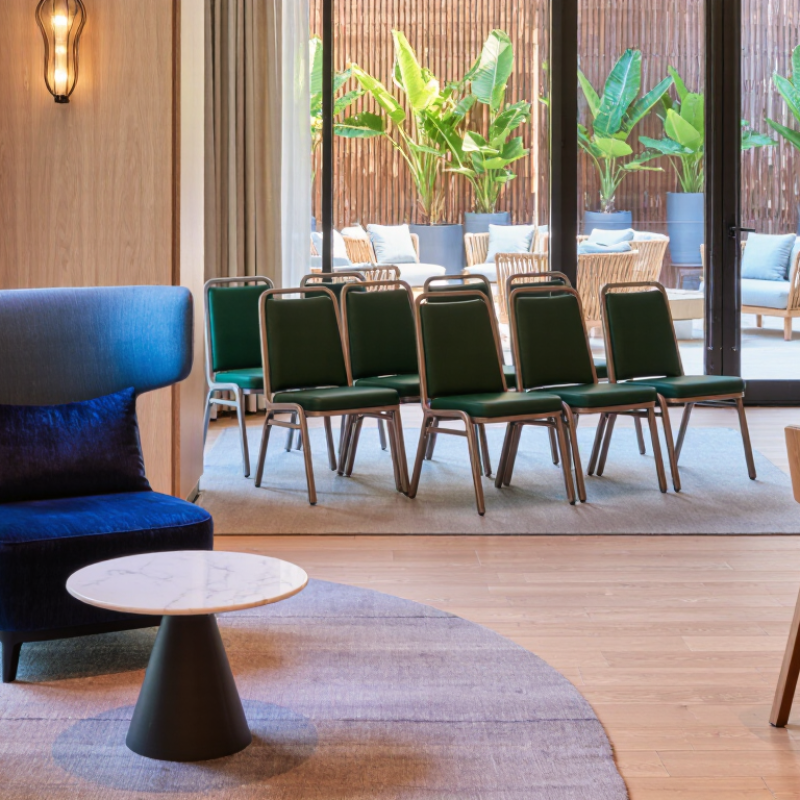
Hotel chairs are often classified by where they work and what guests need from them. Lobby lounge chairs encourage longer stays, while dining chairs support upright seating and easier movement around tables. Meeting-room chairs usually prioritize posture, stackability, or quick room changes. Guest-room chairs may serve as a desk seat, a place to set down a bag, or both. Fit matters.
Design adds another useful layer. Frame shape, seat height, armrests, and upholstery affect how a chair looks and performs. A low lounge chair can soften a waiting area, but it may be awkward for guests who need help standing. In dining spaces, wipeable fabric or a sealed wood surface can simplify daily cleaning. Small details matter. Still, appearance can distract from comfort; a beautiful chair is not automatically practical.
Many chairs cross categories. An upholstered armchair might suit a lobby, a suite, or a quiet corner near a meeting room. To compare options, consider the task, expected use, cleaning routine, and room layout together. Check whether chairs slide beneath tables and leave clear walking paths. Sit in a sample for several minutes, not just a quick moment. Even careful planning misses things sometimes: lighting, floor texture, and noise can change how a chair feels in the finished room.
| Chair Type | Primary Function | Typical Hotel Locations | Common Design Features | Typical Seat Height | Key Selection Considerations |
|---|---|---|---|---|---|
| Banquet Stacking Chair | Flexible seating for events, meetings, and temporary dining layouts. | Ballrooms, conference rooms, banquet halls, and event spaces. | Lightweight frame, upholstered or molded seat, and a shape designed for stacking or linking. | About 17–19 in (43–48 cm) | Check stackability, ease of handling, storage footprint, frame stability, and fabric cleanability. |
| Dining Side Chair | Everyday seating at tables where a compact, armless profile helps guests move in and out. | Restaurants, breakfast areas, cafés, and guest-room dining spaces. | Armless silhouette with a firm seat; may have an upholstered, wood, metal, or molded construction. | About 17–19 in (43–48 cm) | Match seat height to table height and consider aisle clearance, cleanability, and repeated-use comfort. |
| Dining Armchair | Provides supported seating for longer meals or a more substantial place setting. | Restaurants, private dining rooms, suites, and executive dining areas. | Armrests, a supportive back, and upholstery or hard-surface finishes suited to the room’s style. | About 17–19 in (43–48 cm) | Allow enough space between chairs and tables for the arms; assess upholstery durability and cleaning needs. |
| Lounge Chair | Comfortable, relaxed seating for waiting, reading, or informal conversation. | Lobby lounges, guest-room sitting areas, suites, and quiet zones. | More relaxed seat angle, broader seat, and often upholstered cushions with a supportive back. | Often about 16–18 in (41–46 cm) | Balance comfort with ease of standing, circulation space, upholstery maintenance, and the available floor area. |
| Guest-Room Desk Chair | Supports seated work at a desk or vanity during a guest’s stay. | Guest rooms, suites, and business-oriented rooms. | Compact footprint; may include casters, a swivel base, height adjustment, or a stationary upholstered frame. | Often adjustable; approximately 16–21 in (41–53 cm) | Consider desk compatibility, adjustment range, back support, mobility, and whether the chair can tuck under the desk. |
| Lobby Occasional Chair | Offers flexible seating for short stays, waiting, and casual meetings. | Reception areas, lobby seating groups, and shared public spaces. | Varied forms, including compact armchairs and accent chairs; finishes often coordinate with the interior scheme. | Commonly about 16–19 in (41–48 cm) | Choose durable, cleanable materials and a seat height that suits the expected users and length of stay. |
| Bar or Counter Stool | Seats guests at raised counters, breakfast bars, or bar-height tables. | Hotel bars, lobby counters, restaurant counters, and in-room kitchenettes. | May have a backrest and footrest; available in fixed-height or adjustable designs. | Counter-height: about 24–27 in (61–69 cm); bar-height: about 28–32 in (71–81 cm) | Measure the counter or table before selecting; allow comfortable legroom and check for a stable footrest. |
| Outdoor Patio Chair | Provides seating in exterior or semi-exterior guest and dining areas. | Terraces, patios, poolside dining areas, balconies, and courtyards. | Weather-suitable frames and finishes; may be stackable, woven, or fitted with removable cushions. | Often about 17–19 in (43–48 cm) | Match materials and cushions to local weather exposure, drainage, storage practices, and cleaning routines. |
Seat-height figures are typical reference ranges, not fixed standards. Actual dimensions vary by model and should be checked against the table or counter height, room layout, and accessibility requirements.
