Sorry, your browser is not supported. For a better experience, keep your browser up to date. Check here for latest versions
Choosing a reliable Car Perfume Diffuser supplier in China takes more than comparing catalog photos. A polished sample may look convincing under showroom lights, yet feel loose in a real dashboard holder. Fragrance strength, heat resistance, refill design, and packaging all affect the finished product. Small details matter.
This guide explores what buyers should examine when shortlisting Chinese suppliers. It considers product range, customization options, production capacity, quality checks, communication, and export experience. A supplier’s answers about materials and inspection methods can reveal more than a low quotation. Ask for current samples, clear specifications, and relevant quality documents before making decisions. Then compare the results under consistent conditions, such as the same vehicle interior and testing period.
There is no universal “top” supplier for every buyer. A startup may value low minimum order quantities, while an established brand may need stable production and custom packaging. Some factories present strong samples but provide limited follow-up; that deserves a closer look. I would not treat a supplier ranking as a guarantee, either. Product quality can vary between batches, and one successful sample is only one data point. The sections ahead offer practical ways to assess potential partners, ask better questions, and reduce avoidable sourcing surprises. Take your time. A careful comparison can help you find a supplier whose capabilities match your product goals, budget, and expected order volume.
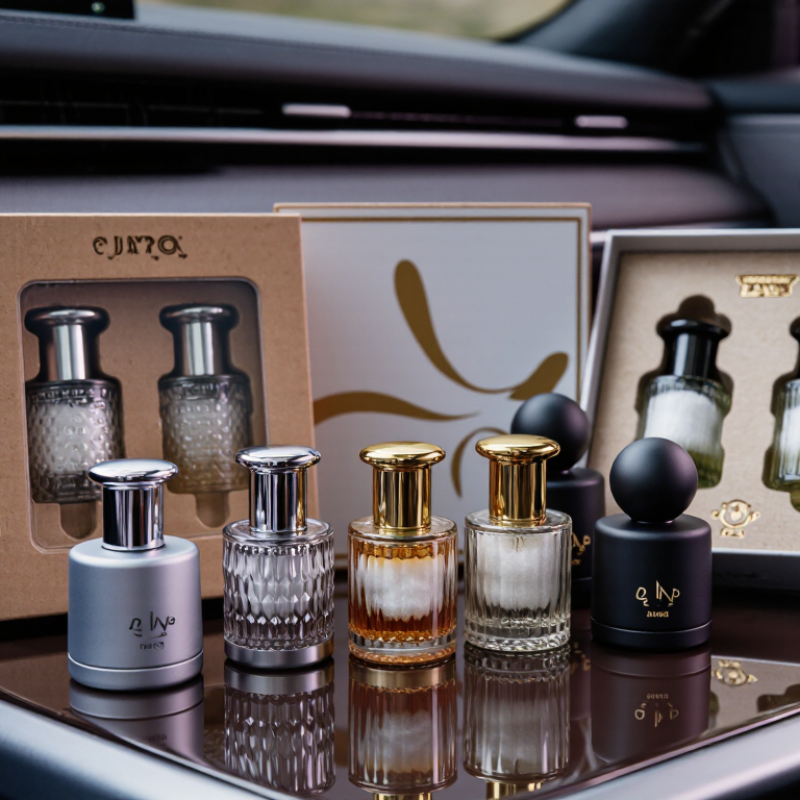
What Is a Car Perfume Diffuser and How Does It Work?
A car perfume diffuser releases fragrance into the cabin at a controlled pace. Most models use a scented cartridge or absorbent wick. Air from the vents carries evaporated fragrance through the vehicle. Some powered designs use gentle heat or atomization instead. Simple, but not magic. The scent can fade faster in a hot, sunny car, while a strong airflow may make it noticeable near the vent and faint in the rear seats.
The U.S. Environmental Protection Agency’s indoor-air guidance reports that concentrations of many volatile organic compounds can be up to 10 times higher indoors than outdoors. This is not a measurement of car diffusers or vehicle cabins, but it supports a practical point: fragrance adds airborne compounds, so restrained use and fresh-air ventilation matter. A diffuser should not mask persistent odors or replace cleaning. That distinction is easy to overlook.
For shoppers comparing suppliers in China, ask for clear details on the fragrance medium, refill design, heat control, and material testing. Request test documentation rather than relying on claims like “long-lasting” alone. There is no single output level that suits every cabin; temperature, vent position, and personal sensitivity all change the experience. A device that smells subtle on a cool morning may feel overpowering after the car sits in direct sun.
Car perfume diffusers release fragrance by evaporation, airflow, or powered atomization. The chart shows nominal electrical-system voltages commonly associated with passenger cars and heavy-duty trucks; it is not a supplier ranking. Check a vehicle’s accessory outlet and the diffuser’s specifications before use.
Nominal values are shown; actual voltage can vary with vehicle design and operating conditions. Many diffusers do not require a vehicle power connection.
China’s car perfume diffuser supplier market is not a single layer of factories. It includes fragrance formulators, component makers, final assemblers, and export-focused trading companies. Some suppliers produce complete diffusers; others specialize in molded vent clips, glass bottles, ceramic cores, or small fans. This division offers buyers more choices for cost and customization, but accountability can become less clear. Two similar-looking units may use different wicks, seals, or plastic grades.
Suppliers commonly serve three product categories: passive vent-mounted diffusers, liquid bottle systems, and powered units with fans or heating elements. OEM partners can adapt colors, packaging, capacity, and scent options. ODM suppliers usually offer existing designs with fewer changes. Samples matter. Check for leaks after tilting, consistent scent release, a secure fit on different vent slats, and performance in a warm parked car. A polished sample does not prove that every production batch will match.
The market also includes sourcing agents and trading firms. They can coordinate multiple factories and export documentation, though an extra communication layer may slow problem-solving. Reliable suppliers should explain material choices, batch controls, and finished-product inspections. Ask for relevant test records and clarify who handles defects. Details vary. Not every supplier provides equally clear evidence, so buyers should leave time to verify claims before placing a large order.
Chinese suppliers commonly manufacture passive vent-clip diffusers, hanging liquid bottles, and powered models. Vent clips direct airflow across a scented pad or porous ceramic core. They need no battery. Their output can weaken when the air-conditioning fan is off.
Hanging diffusers usually pair a small glass or plastic reservoir with a wooden cap. The cap absorbs fragrance and releases it gradually. A secure seal matters: a loose cap can allow liquid to spill during sharp turns. Some designs use refillable cartridges, while others are disposable. Simple, but practical.
Powered diffusers include USB models with small fans, heating elements, or ultrasonic mechanisms. Fan-based units spread fragrance through moving air, while heated designs warm a replaceable pad or liquid. Each approach behaves differently in a hot parked car. Buyers should check output control, material compatibility, and leak testing, not just appearance. A neat product photo can hide weak clips or noisy motors. Samples are worth testing, though one sample may not reveal every production issue. Vent size, bottle capacity, and replacement-part availability also shape everyday use.
When comparing leading car perfume diffuser suppliers in China, look beyond polished product photos. Reliable quality shows up in repeatable details: a snug housing fit, a secure vent clip, and fragrance release that does not overwhelm the cabin. Ask for material specifications, inspection records, and samples from separate production runs. Check whether plastic parts warp near a warm dashboard or rattle on rough roads. Small details matter. A supplier that explains its testing methods is easier to assess than one offering broad promises. Still, one sample is only a snapshot.
Customization reveals how well a supplier can adapt without weakening product consistency. Options may include housing colors, vent-clip styles, refill formats, packaging, and custom scent profiles. Ask how changes affect tooling, lead times, minimum order quantities, and quality checks. Then compare a pre-production sample with the approved specifications, including fit, finish, and scent strength. The cheapest offer may leave little room for careful inspection. A detailed quote helps. One point is easy to miss: custom packaging can look excellent while the diffuser itself feels flimsy. Check both before choosing a manufacturing partner.
The table compares common supplier profiles rather than ranking or identifying specific companies. Capabilities, minimum order quantities, prices, and lead times vary by factory and product; confirm them with each supplier before ordering.
| Supplier Profile | Typical Product Scope | Customization Options | Quality Evidence to Request | MOQ and Lead-Time Considerations | Potential Advantage | Key Checks Before Selection |
|---|---|---|---|---|---|---|
| Automotive accessory OEM/ODM manufacturer | Vent-clip, hanging, and other car fragrance products; some suppliers also offer refill components. | Housing design, color, materials, logo placement, packaging, and selected fragrance options, depending on tooling and production capability. | Ask for documented inspection procedures, material specifications, sample approval records, and applicable test reports. An ISO 9001 certificate, if provided, relates to the supplier’s quality-management system, not a guarantee that every product is defect-free. | Request separate quotations for existing designs and new tooling. Confirm sample, tooling, production, and shipping timelines in writing. | May coordinate product design and production in one supplier relationship. | Check whether the supplier owns the factory or outsources production; confirm tooling ownership, change control, and batch inspection criteria. |
| Fragrance and refill specialist | Fragrance liquids, scent cartridges, refill bottles, and related dispensing components; device production may be limited or outsourced. | Scent selection or development, fragrance strength, refill format, labeling, and packaging, subject to formula and component availability. | Request the current safety data sheet (SDS) and applicable fragrance documentation. If an IFRA conformity document is supplied, check that it matches the exact fragrance formula and intended product use; it is not a blanket product-safety certification. | Ask whether different scents require separate production batches or minimums. Confirm formula approval, stability testing, and refill compatibility timelines. | May offer more focused fragrance formulation and refill support. | Verify formula ownership, batch traceability, leakage compatibility, transport requirements, and consistency between approved samples and production batches. |
| Plastic injection-molding and component supplier | Plastic housings, vent clips, caps, and other molded parts; finished fragrance products may require additional suppliers. | Part geometry, resin selection, surface finish, color, and custom tooling, subject to design review and mold feasibility. | Request resin and color specifications, dimensional inspection records, sample parts, and details of any relevant material testing. Confirm that test reports cover the actual material and part being quoted. | Custom molds can add upfront cost and development time. Confirm mold trials, revision limits, ownership, maintenance, and replacement terms. | May provide closer control over molded-part design and production. | Assess part fit, clip retention, heat exposure requirements, tooling terms, and responsibility for assembly and final-product testing. |
| Trading or sourcing company | May coordinate finished diffusers, fragrances, packaging, and export services through one point of contact. | Options depend on the selected manufacturing partners; customization may involve additional coordination and approval steps. | Request the actual manufacturing site, product-specific test reports, inspection records, and written confirmation of who is responsible for corrective actions. | Confirm whether quoted minimums and lead times come from the factory, and whether they change when components are sourced from multiple vendors. | May simplify supplier communication and sourcing across product categories. | Verify factory access, subcontractor disclosure, sample-to-batch controls, export documentation, and after-sales responsibility. |
Choosing a car perfume diffuser supplier in China takes more than comparing unit prices. Start with the product’s intended use: a vent clip, cup-holder unit, or USB-powered diffuser. Ask for material specifications, fragrance capacity, refill method, and operating-temperature range. A sample should fit firmly, feel smooth at its edges, and stay stable during a warm-car test. Small details matter.
Check how the supplier controls production, not just how polished its catalog looks. Request recent inspection records, stated defect limits, and clear information about batch traceability. Compare quoted lead times with a written production schedule, and confirm packaging dimensions before arranging freight. For a first order, a modest pilot batch can reveal loose clips, leaking inserts, or inconsistent scent output. It costs time, but can prevent a larger mistake.
Communication is evidence too. Send the same questions to several factories and note whether replies include measurements, photos, and specific corrective steps. Verify certificates and test reports against the exact model offered; generic documents prove little. I would not choose solely on the lowest quote. Supplier claims can be difficult to verify remotely, so independent inspection may be worthwhile before shipment. Keep evaluation notes practical, even if they expose gaps in your own checklist.