Sorry, your browser is not supported. For a better experience, keep your browser up to date. Check here for latest versions
Choosing a reliable maker of Boys Leather Shoes takes more than comparing glossy catalogues. Buyers need to examine leather consistency, stitching, sole attachment, sizing accuracy, and communication. A shoe may look polished in a photograph yet feel stiff or uneven in a child’s hand. Details matter.
Chinese manufacturers serve different needs, from small custom runs to large-volume production. Their capabilities vary, so a supplier’s location alone cannot guarantee quality. Footwear designer Christian Louboutin once said, “A shoe has so much more to offer than just to walk.” For children’s shoes, that idea also calls attention to comfort, movement, and everyday durability. It is a useful perspective, though not a substitute for practical testing.
This guide introduces leading Boys Leather Shoes manufacturers in China and the factors buyers can compare. Look closely at sample pairs: flex the sole, inspect the seams, and check whether the lining feels smooth against the foot. Ask how the factory handles size grading, material selection, and production checks. Request clear specifications before placing an order. Still, no checklist can predict every fit issue. Children’s feet differ, and one sample cannot represent every production run. A careful review reduces uncertainty, but it does not remove it.
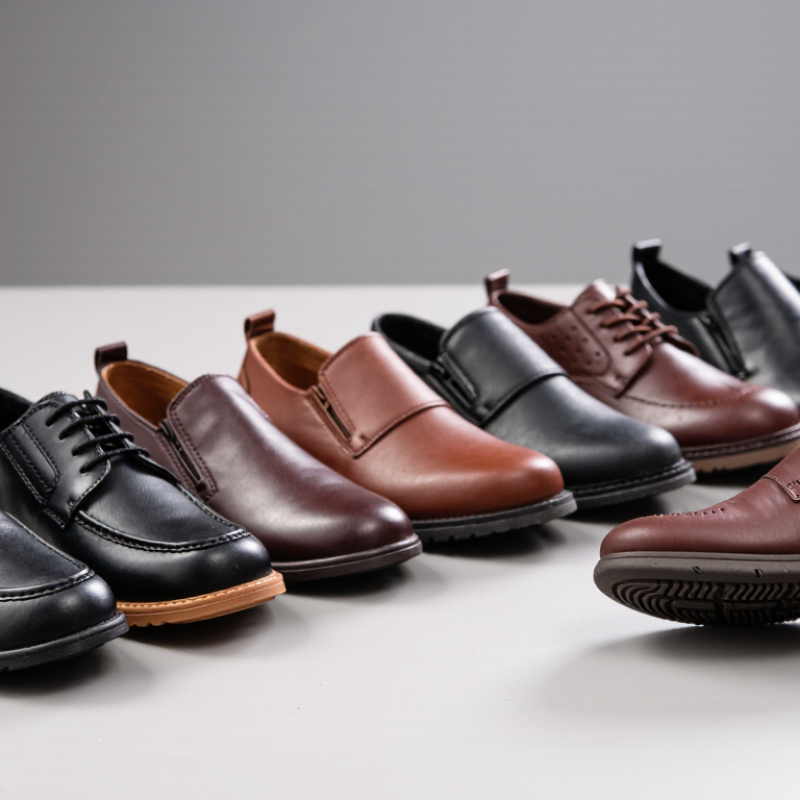
China’s boys’ leather shoe sector combines material sourcing, pattern development, and production across several established footwear regions. Factories make school shoes, formal styles, and everyday pairs, adapting patterns and lasts to children’s changing feet. A capable maker should explain toe room, heel hold, lining, and sole flexibility in practical terms. Details matter.
Production often begins with leather inspection and cutting, followed by stitching, lasting, sole attachment, and finishing. Workers check seams, glue lines, shape, and surface marks; inspection methods can differ between workshops. For buyers, approved samples and written size specifications help keep repeat orders more consistent. Yet a neat sample is not a guarantee.
Factories vary in equipment, order capacity, and experience with children’s footwear. A low quote may not reflect the full cost. Ask how materials are selected, how size grading is checked, and how batch differences are handled. I would still inspect several sizes, not just one; children’s fit can change noticeably across a range. That extra check takes time, but skipping it can leave avoidable fitting problems.
Choosing leather for boys’ shoes involves balancing durability, flexibility, and breathability. Full-grain leather can develop character with wear, while corrected-grain leather offers a more even surface. Neither option guarantees comfort on its own. The leather should bend easily across the forefoot without feeling thin or brittle. Soft textile or leather linings can reduce rubbing, especially around the heel. Fit still matters most.
In Chinese factories, production commonly begins with pattern cutting, followed by skiving, stitching, lasting, and sole attachment. Careful skiving helps overlapping leather lie flat, while even stitching supports seams under daily movement. Small details count. Ask how the sole is joined and whether sample pairs are flex-tested. A neat finish can hide stiff edges or uneven padding, so visual inspection is not enough. Not always. Check several sizes for consistent shape, and feel inside the shoe for rough seams. Material choices and workmanship vary between factories; clear specifications and repeat sample checks help buyers assess quality more reliably.
When evaluating Chinese boys’ leather shoe manufacturers, production scale is only a starting point. The World Footwear Yearbook 2024 estimates that Asia produced about 87% of global footwear in 2023. That concentration offers deep supplier networks, but it does not guarantee consistent leather quality or careful sizing. Ask how each factory controls hide selection, thickness, color variation, and cutting waste. Request traceability records for the leather and lining used in your sample. Then compare those materials with the production specification. Samples can mislead. A hand-finished pair may look excellent while a rushed production line varies in stitching or shade.
Check the factory’s testing process, not just its certificates. Ask for recent batch records covering upper-to-sole bonding, flexing, abrasion, color transfer, and water resistance where relevant. ISO 17708:2018 provides a method for measuring upper-to-sole adhesion, which can help make supplier results more comparable. For children’s shoes, inspect the toe shape, heel support, insole finish, and size grading on several sizes. Have staff wear-test a sample and note pressure points after a full day. Also review defect limits, inspection frequency, and corrective-action records. A factory that shares a failed test and its fix may be more informative than one showing only perfect reports. No checklist is perfect. Recheck specifications before approving bulk production.
China’s boys’ leather shoe manufacturers supply footwear for school, formal occasions, and everyday wear. Experienced producers consider more than a polished upper. Children need flexible soles, secure closures, and linings that stay comfortable through a full school day. Ask how leather is selected and whether incoming materials are checked for color and thickness. Small details matter.
A capable factory should explain its process, from pattern development and cutting to stitching, lasting, and final inspection. Request samples in the intended size range. Check seam alignment, heel support, sole bonding, and edge finishing. Put them through a real wear test. A showroom sample cannot answer every question. Some manufacturers may offer careful workmanship but slower communication during busy periods, so response quality deserves attention too.
Before placing an order, discuss minimum quantities, size grading, packaging, and lead times. Ask for written inspection criteria and photos of finished pairs in different sizes. If possible, review a production sample rather than relying only on digital images. Even reliable suppliers can miss a detail. Clear specifications and documented checks help limit variation, while wear feedback from children and caregivers can guide later fit adjustments.
When comparing boys’ leather shoe manufacturers in China, assess quality with repeatable checks, not showroom appearance alone. Examine leather thickness, grain consistency, lining, and edge finishing across several pairs. Flex each shoe at the forefoot and inspect whether the sole bends smoothly without separating. Details matter.
Ask how the factory records stitching defects, size deviations, and rejected materials. A neat sample is useful, but it may not represent a full production run. Request a pre-production sample and compare it with random pairs from a completed batch.
Capacity should be judged by verified output, available production lines, and realistic lead times during peak seasons. Ask how orders are scheduled and whether materials are reserved before cutting begins.
Compliance requires equally specific evidence: current factory audit records, worker training procedures, and test reports matched to the intended sales market. Confirm that reports cover the actual leather, dyes, adhesives, and soles being used. Paperwork can look complete while describing a different product. Not always.
A site visit or independent inspection can help resolve gaps, though it adds time and cost. No single score captures every risk; buyers should weigh quality consistency, delivery reliability, and compliance evidence against their own order requirements.