Sorry, your browser is not supported. For a better experience, keep your browser up to date. Check here for latest versions
Choosing a reliable Inflatable Dome manufacturer requires more than comparing product photos and factory claims. Global buyers must examine materials, engineering, production control, delivery support, and documented project experience. This guide introduces China’s top 10 Inflatable Dome manufacturers through a practical buyer-focused lens.
The evaluation considers membrane quality, air retention, fire performance documentation, wind resistance, insulation options, customization, and installation guidance. It also reviews factory capacity, export experience, communication, warranty terms, and after-sales service. A strong manufacturer should explain fabric specifications clearly, provide testing records, and show completed installations with measurable details. Project scale matters. So does response speed.
Real applications may include sports halls, temporary exhibitions, warehouses, event venues, and agricultural spaces. Each use requires different ventilation, anchoring, lighting, and maintenance solutions. A dome designed for a mild climate may not suit heavy snow or strong coastal winds. That difference is easy to overlook.
The ranking is informative, not absolute. Supplier capabilities can change, and published information is sometimes incomplete. Buyers should request current certifications, factory videos, technical drawings, and references before placing an order. A careful comparison can reveal practical weaknesses behind attractive pricing. It may also expose strengths that a simple ranking misses.
This overview aims to support informed sourcing decisions. It connects manufacturer reputation with real operating requirements, not marketing language alone. Reliability begins with evidence. Yet no supplier should be accepted without direct verification.
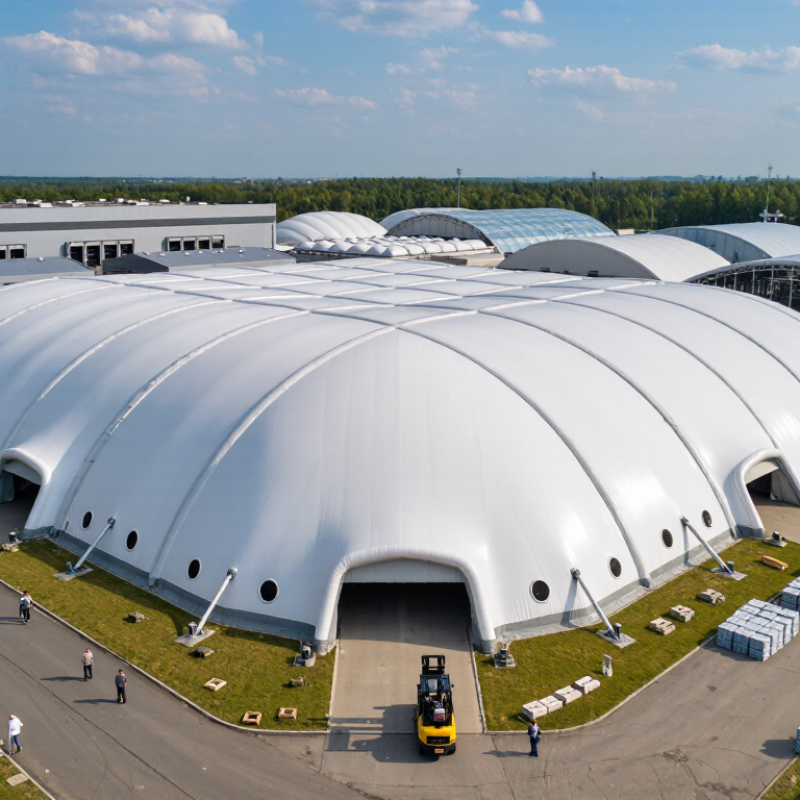
Inflatable domes are air-supported structures that use continuous low pressure to hold a flexible membrane above the ground. Fans maintain the shape, while anchored cables and weighted edges resist wind. Depending on the design, membranes may use PVC-coated polyester, TPU, or ETFE film. A sports dome can cover a clear indoor court without steel columns, creating a bright space with fewer construction stages.
Their value is practical, not magical. UNEP and the Global Alliance for Buildings and Construction reported in the 2024 Global Status Report that buildings consumed about 32% of global energy and produced 34% of global carbon emissions in 2022. A well-designed dome may reduce structural material and construction time, but lighting, heating, ventilation, and fan electricity still require careful calculation. Some sellers overstate savings. That deserves skepticism.
Chinese manufacturers attract global buyers through mature textile-processing clusters, integrated welding workshops, and export-oriented logistics. Experienced factories can provide membrane samples, pressure tests, wind-load calculations, fire-performance documents, and installation drawings before production. Buyers should request independent test records, material batch details, spare-fan plans, and references from similar climates. ISO 9001 certification can support process control, but it does not prove a dome is safe or durable by itself. Ask for project-specific evidence. The cheapest quotation often excludes drainage, anchoring, customs packaging, or commissioning. That is where budgets become uncomfortable.
How to Evaluate China’s Top Inflatable Dome Manufacturers
A serious evaluation starts with engineering evidence, not attractive product photos. Request structural drawings, fabric specifications, seam-strength results, blower capacity, and emergency-air plans. The dome should match local wind, snow, fire, and electrical requirements. Ask whether calculations were reviewed by an independent engineer. That small step can prevent expensive redesigns.
ISO’s 2023 Survey recorded 1,265,216 ISO 9001 certificates worldwide. Certification shows process control, but it does not prove excellent dome performance. Ask to inspect production records, fabric-lot traceability, welding samples, and final inspection forms. An experienced buyer should also review a factory’s failed-project history. Few suppliers volunteer it. Numbers can mislead.
Export capability needs equal attention. The World Bank’s 2023 Logistics Performance Index ranked China 19th, with a score of 3.7 out of 5. This supports strong logistics potential, but delivery still depends on packing, documentation, and port planning. Request a detailed bill of materials, replacement-part list, installation videos, and a written warranty. Check references for projects exposed to similar weather. I would not rely on a factory tour alone; production conditions may change after the visit. A staged inspection before shipment is wiser, although it adds time and cost. Ask for evidence.
This chart presents a practical buyer evaluation framework for inflatable dome manufacturers. The percentages represent recommended procurement priorities: product safety and engineering reliability receive the highest weight, followed by material durability, customization, compliance documentation, production capability, delivery performance, after-sales support, and total cost.
China’s Top 10 Inflatable Dome Manufacturers for Global Buyers represent a broad range of production capabilities. Some focus on sports halls, while others build event shelters, warehouse covers, and temporary exhibition spaces. Experienced buyers should examine fabric specifications, welding methods, blower systems, and fire-retardant documentation. These details often matter more than attractive photographs.
Look closely at project evidence. Reliable manufacturers should provide installation records, load calculations, material test reports, and clear warranty terms. Ask how each company controls seam quality during continuous production. A practical factory review should include sample inspection, packing checks, and a live discussion with technical staff. Response speed also reveals operational discipline. Small details count.
The ranking should not be treated as permanent. Production capacity, export experience, and quality control can change within a year. One weakness in many comparisons is limited access to independent factory data. Buyers should request recent samples and verify certificates with issuing organizations. Check door dimensions, emergency exits, anchor systems, and replacement-part availability before signing. Safety comes first. Cost still matters, but the cheapest quotation may hide thinner fabric, weaker blowers, or incomplete service. A careful purchasing decision combines documented performance, realistic delivery schedules, and communication that remains clear after payment.
China’s inflatable dome manufacturers supply sports halls, swimming pools, warehouses, exhibition spaces, and temporary venues. Key products usually include single-layer and double-layer air-supported structures. Some suppliers also produce insulated membranes for colder climates. Reinforced PVC-coated fabric remains common because it balances strength, flexibility, and maintenance costs.
Modern systems use pressure sensors, automatic fans, backup power, and remote monitoring. Digital controls can adjust airflow when doors open or weather changes. Structural teams often review wind, snow, drainage, and foundation conditions before production. Reliable manufacturers provide CAD drawings, material specifications, installation guidance, and documented safety tests. Buyers should request evidence, not just attractive technical words.
Customization is often the real difference. Buyers can select dimensions, entrance tunnels, emergency exits, lighting, insulation, branding areas, ventilation, and interior partitions. Some projects require special anchoring or stronger fabric around high-traffic doors. Local building rules must guide the final design. A factory’s standard solution may not fit every site. That matters. Even a carefully engineered dome can become uncomfortable if ventilation is underestimated. Quotation reviews should include shipping, installation, spare fans, warranty terms, and maintenance training. A lower initial price can hide higher operating costs.
China Top 10 Inflatable Dome Manufacturers for Global Buyers
Comparing inflatable dome manufacturers requires more than checking the lowest quotation. Ask for a detailed price breakdown covering fabric, blowers, doors, anchoring, packaging, installation, and spare parts. A cheaper offer may exclude essential components. That difference can become expensive after delivery.
Quality should be verified through material specifications, seam-testing records, load calculations, and inspection photos. For cold or windy regions, ask about insulation, emergency airflow, and backup blower design. Request samples when possible. Delivery also needs practical review. Confirm production time, export packaging, shipping terms, installation guidance, and replacement-part availability. A clear schedule is more useful than a confident promise. Still, schedules can change. Weather, port congestion, and document errors deserve written contingency plans.
Tips: Compare identical specifications. Check warranty exclusions. Ask who answers technical questions after payment. A reliable supplier should provide drawings, maintenance instructions, and response-time commitments. Do not accept vague phrases like “high quality” without measurable evidence. I have found that buyers often focus too heavily on the initial price. That is understandable, but incomplete. Five-year operating costs, repair access, energy use, and local compliance may matter more than a small purchasing discount. Keep every promise in the contract. Verbal reassurance is not enough.
| Rank | Anonymous Supplier | Typical Application Focus | Common Dome Diameter | Fabric and Structure Specification | Indicative EXW Price Range | Typical Production Lead Time | Wind-Resistance Reference | Waterproofing and UV Protection | Warranty Practice | After-Sales Response Target | Documentation and Compliance Support | Overall Buyer-Readiness Score |
|---|---|---|---|---|---|---|---|---|---|---|---|---|
| 1 | Supplier 01 | Sports halls, event venues, and large temporary spaces | 20–60 m | Double-coated PVC or equivalent architectural membrane; reinforced perimeter anchoring | US$85–145/m² | 35–55 days | Approx. 80–100 km/h with engineered anchoring | Welded seams; UV-resistant coating commonly available | 12–24 months for manufacturing defects | Initial response within 1 business day | Structural drawings, installation manuals, packing lists, and test documents available by project | 9.1/10 |
| 2 | Supplier 02 | Commercial exhibitions, hospitality, and branded temporary structures | 8–35 m | PVC-coated polyester with high-frequency welded joints and modular air-lock systems | US$70–125/m² | 25–45 days | Approx. 70–90 km/h under standard installation conditions | Waterproof membrane options; UV-stabilized surface treatment available | 12 months standard; extended coverage negotiable | Initial response within 1 business day | Material data sheets, installation guidance, and basic compliance files commonly supplied | 8.8/10 |
| 3 | Supplier 03 | Glamping, tourism, resorts, and seasonal accommodation | 5–15 m | Multi-layer coated polyester; insulated liner and ventilation options | US$60–110/m² | 20–40 days | Approx. 60–80 km/h with correct anchoring and operating procedures | Waterproof outer layer; optional thermal and blackout liners | 12 months for fabric and workmanship | Within 24–48 hours | Assembly drawings, care instructions, and spare-parts lists usually available | 8.6/10 |
| 4 | Supplier 04 | Warehouses, agricultural storage, and logistics shelters | 15–45 m | Heavy-duty PVC-coated fabric; high-capacity blowers and reinforced base system | US$75–135/m² | 30–50 days | Approx. 75–95 km/h when designed for site-specific loads | Industrial waterproofing; UV and flame-retardant grades may be specified | 12–24 months depending on components | Within 1–2 business days | Load calculations, blower specifications, maintenance guides, and export documents available by request | 8.5/10 |
| 5 | Supplier 05 | Indoor sports, fitness centers, and recreational facilities | 18–50 m | Architectural PVC membrane; insulated wall and daylight-panel options | US$80–140/m² | 35–60 days | Approx. 80–100 km/h subject to engineering review | Heat-welded seams; optional fire-retardant and anti-condensation layers | 12 months standard | Within 24 hours for operating issues | Engineering package, installation supervision options, and equipment manuals may be included | 8.4/10 |
| 6 | Supplier 06 | Events, festivals, product launches, and short-term rentals | 6–25 m | Lightweight PVC-coated fabric; rapid-deployment blower configuration | US$45–95/m² | 15–35 days | Approx. 55–75 km/h under temporary-event operating limits | Water-resistant and UV-treated fabric options | 6–12 months | Within 1–2 business days | Basic setup videos, packing instructions, and replacement-part support generally available | 8.2/10 |
| 7 | Supplier 07 | Military, emergency response, and humanitarian field facilities | 8–30 m | Heavy-duty coated fabric; redundant blower and reinforced anchoring options | US$65–120/m² | 25–50 days | Approx. 65–85 km/h, subject to deployment conditions | Waterproof, UV-resistant, and flame-retardant specifications available | 12 months for standard components | Within 24 hours for critical issues | Deployment procedures, repair kits, technical files, and spare components can be specified | 8.0/10 |
| 8 | Supplier 08 | Retail promotions, restaurants, and compact hospitality spaces | 4–18 m | Coated polyester or PVC fabric; customizable doors, windows, and interior lining | US$50–100/m² | 18–38 days | Approx. 55–75 km/h with standard anchoring | Waterproof outer skin; optional insulation and blackout fabric | 6–12 months | Within 2 business days | Product drawings, installation instructions, and export packaging information commonly supplied | 7.9/10 |
| 9 | Supplier 09 | Swimming pools, wellness centers, and seasonal enclosures | 12–40 m | Moisture-resistant PVC-coated membrane; condensation-control and ventilation options | US$75–130/m² | 30–55 days | Approx. 70–90 km/h after site-specific engineering | Waterproof welded seams; anti-mildew and UV-resistant treatments available | 12 months standard | Within 1–2 business days | Ventilation layouts, care instructions, equipment data, and technical drawings available by project | 7.8/10 |
| 10 | Supplier 10 | Small sports courts, private leisure projects, and community facilities | 10–30 m | Standard PVC-coated polyester; simplified blower and anchoring system | US$55–105/m² | 20–45 days | Approx. 60–80 km/h under normal operating conditions | Waterproof fabric; UV protection and insulation available as upgrades | 6–12 months | Within 2 business days | Basic drawings, installation guidance, and routine maintenance information usually provided | 7.6/10 |