Top 10 Freeze Dried Dog Food Brands in 2026
Freeze Dried Dog Food is often presented as a simple upgrade: concentrated ingredients, light bags, and quick serving. Yet a neat label does not tell the whole story. Recipes differ in protein sources, calories, added nutrients, and preparation directions. A dog’s age, health, appetite, and daily routine matter just as much.
Veterinary nutritionist Dr. Lisa M. Freeman’s guidance can be fairly paraphrased this way: no single diet suits every dog. That is a useful lens for comparing brands, not a promise that any one product will fit your pet. Check the ingredient list and complete-feeding statement. Measure portions carefully. Add water when the package directs. Small details count.
This Top 10 guide looks at Freeze Dried Dog Food brands through practical questions: What ingredients lead the recipe? Is it intended as a complete meal or a topper? Are feeding directions clear? We also consider product range, availability, and the information brands provide about nutrition and quality control. These points help readers compare options, but they cannot replace advice from a veterinarian who knows the dog.
There are trade-offs. Some dogs relish the texture; others sniff the bowl and walk away. Prices can add up, too. A little skepticism helps. The strongest choice is not automatically the trendiest bag, but the food that fits a dog’s needs and can be served consistently.
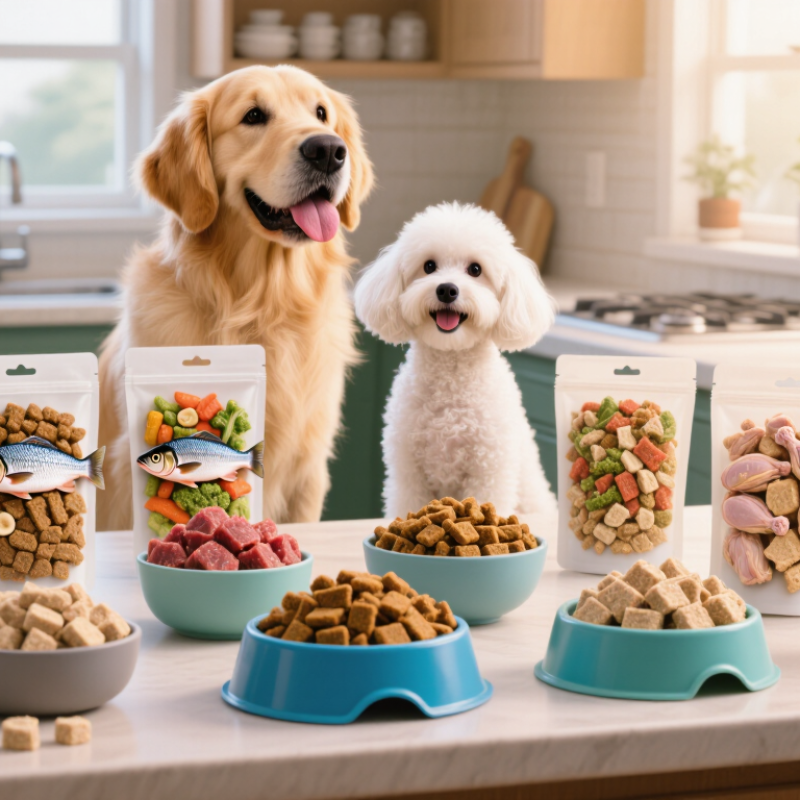
How Freeze-Drying Works and What Moisture Levels Reveal About a Formula
Freeze-drying starts with frozen food placed under low pressure. Ice turns directly into vapor, leaving a porous, lightweight piece behind. A later drying stage removes more water. The process can preserve much of the food’s shape and flavor, but it does not prove that every nutrient remains unchanged. Processing details matter.
Moisture percentage offers a useful clue, not a quality score. A lower figure means less water by weight, so protein and fat percentages may look higher on the label. Compare nutrients on a dry-matter basis when evaluating formulas with different moisture levels. Otherwise, the numbers can mislead. Check the actual analysis, too.
At home, the pieces may feel crisp and crumble under a spoon. Follow the feeding directions if water is added, and serve rehydrated portions promptly. Dry food can absorb moisture from humid air, so reseal the package and keep it in a cool, dry place. This is not a perfect test: texture and moisture alone cannot establish freshness or nutritional balance.
Which AAFCO Life-Stage Nutrient Profiles Apply to Each Brand?
For each freeze-dried product, check the nutritional adequacy statement on its package. AAFCO life-stage claims generally refer to growth and reproduction, adult maintenance, or all life stages. The freeze-dried format alone does not show which profile applies. Look for wording that says the food is formulated to meet an AAFCO nutrient profile or was substantiated through feeding trials. These are different routes, and neither should be inferred from ingredient lists or marketing language.
Read the exact claim. A product labeled for adult maintenance is not automatically suitable for puppies or pregnant dogs. An all-life-stages claim covers growth and reproduction, but may provide more energy than some adult dogs need. For puppies expected to weigh 70 pounds or more as adults, check whether the growth claim addresses large-size dogs. Small detail. Also confirm the intended species and feeding directions. If the adequacy statement is missing, unclear, or limited to intermittent feeding, contact the manufacturer or ask a veterinary nutrition professional. I would not rank ten foods by protein percentage alone; that shortcut misses the profile that matters for a dog’s age and expected adult size.
Top 10 Freeze-Dried Dog Food Brands in 2026 — Which AAFCO Life-Stage Nutrient Profiles Apply?
AAFCO nutrient-profile benchmarks for dogs, shown as minimum crude protein and crude fat percentages on a dry-matter basis.
AAFCO defines profiles for adult maintenance and growth/reproduction. An “all life stages” adequacy claim is based on the growth/reproduction profile, with a special provision for large-size dogs. These figures are profile minimums—not an assessment of any individual food or brand.
How to Compare Guaranteed Analysis, kcal/kg, and Cost per Feeding
Comparing freeze-dried dog foods starts with reading the guaranteed analysis carefully. It lists nutrient minimums or maximums, not the exact amount in every piece. Since moisture levels vary, compare products on a dry-matter basis when possible; otherwise, protein percentages may look more different than they really are. Numbers can mislead. The label is a starting point, not a verdict.
Kcal/kg shows how much energy a kilogram of food provides. Use the package’s feeding guide and your dog’s calorie needs to estimate daily grams: divide daily calories by kcal/kg, then multiply by 1,000. For example, a dog needing 600 calories would need about 150 grams of food at 4,000 kcal/kg. Rehydrating adds water, not calories. Still, appetite, age, activity, and health can change the right portion, so a veterinarian can help when needs are unclear.
To compare cost per feeding, divide the package price by its total calories, then multiply by the calories in one meal. This beats comparing bag prices alone. A small, dense bag may last longer than expected, while a larger portion can raise daily costs. I find this calculation useful, but not perfect: sale prices shift, and feeding guides are estimates. Weigh a meal on a kitchen scale for a more realistic comparison.
Top 10 Freeze-Dried Dog Food Brands in 2026: Formulas and Key Data
A useful 2026 comparison of ten freeze-dried dog food formulas should look beyond ingredient names. Record each recipe’s main animal protein, organ meats, added fats, and whether it is a single-protein or mixed-protein blend. Then compare crude protein, fat, fiber, moisture, and calories per kilogram. Calorie data matter. A small-looking serving can be energy-dense, while cups vary with kibble-like pieces and crumbs.
Check the nutritional adequacy statement and intended life stage; a product labeled for intermittent feeding is not equivalent to a complete daily diet. Note whether the food needs water added, and follow the package directions before serving. Compare prices by daily feeding cost, not bag price alone. For example, weigh a day’s portion on a kitchen scale and record the rehydrated volume. Labels can be awkward to compare, especially when moisture levels differ, so avoid treating crude-protein percentages as a perfect ranking. A neat table still leaves questions: dogs differ in appetite, digestion, and energy needs. Introduce any diet change gradually, and ask a veterinary professional about individual health concerns.
How FDA Safety Guidance and Rehydration Instructions Affect Daily Use
Top 10 Freeze Dried Dog Food Brands in 2026
FDA food-safety advice matters even when a meal looks dry and shelf-stable. Dry food is not necessarily sterile. Wash your hands before and after feeding, keep scoops clean, and store the package as its label directs. FDA guidance emphasizes hygienic handling and safe storage; it does not set one universal rehydration time for every product. Follow the feeding instructions, and ask your veterinarian if your dog has a medical diet or swallowing concerns.
Tips: Measure the portion, add the label’s stated amount of clean water, and wait the full soak time. Check the center for dry, hard pieces. Serve in a clean bowl and handle leftovers as directed. Don’t guess the soaking time or leave softened food sitting out; added moisture can make careful storage more important. This can feel fussy on a rushed morning. Still, a timer helps.
If your dog develops vomiting, diarrhea, or unusual lethargy after a food change, stop serving it and contact a veterinarian. Keep the package and lot details. They may help your vet assess the issue or make a food-safety report. Rehydration can change texture and add moisture to a meal, but it does not replace fresh drinking water or individualized veterinary advice. Some dogs may refuse the texture, so monitor their intake rather than forcing the bowl.
