Top 10 Cornmeal Puffs Suppliers for Global Buyers
Cornmeal Puffs are moving beyond traditional snack aisles. Buyers now expect consistent texture, clean labeling, and dependable export performance. Grand View Research’s 2024 corn snacks analysis identifies convenience, affordable ingredients, and product innovation as major market drivers. However, most reports measure the broader corn snacks category. They do not isolate Cornmeal Puffs perfectly. That limitation deserves attention.
Innova Market Insights continues to highlight texture, flavor experimentation, and recognizable ingredients across global snack development. Food scientist Kantha Shelke, PhD, has said, “Texture is a key driver of snack acceptance.” Her observation matters here. A successful puff should crack lightly, dissolve evenly, and avoid a stale finish. Small details expose weak production control.
This supplier guide evaluates manufacturers through practical purchasing criteria. These include maize sourcing, particle size, extrusion stability, moisture control, seasoning accuracy, packaging strength, and batch traceability. Certifications such as HACCP, BRCGS, ISO 22000, and relevant local approvals also support responsible supplier assessment. Export experience matters too. A bright package means little if cartons arrive softened after a humid ocean journey.
The FAO food price data shows how agricultural input costs can shift across regions and seasons. Buyers should therefore compare quotations carefully, rather than choosing the lowest offer. Price is not quality.
The selected Cornmeal Puffs suppliers represent different strengths, including private-label flexibility, high-volume production, regional distribution, and customized flavors. This list is not flawless. Supplier capabilities change, and published information may become outdated. Direct audits, samples, certificates, and recent customer references remain essential before any global purchasing decision.
What Are Cornmeal Puffs and Who Buys Them?
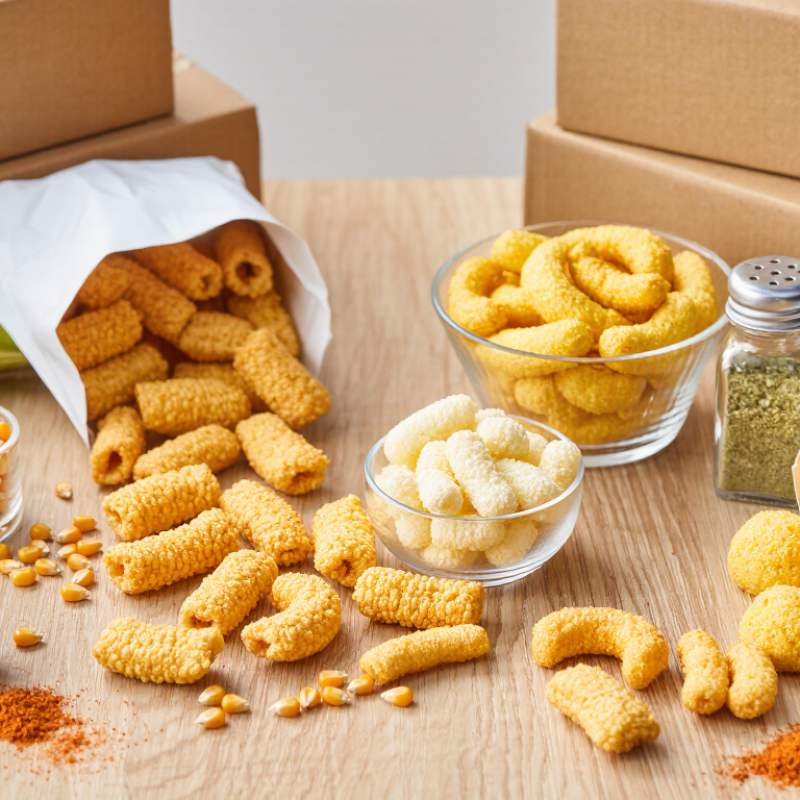
Cornmeal puffs are lightweight snacks made by heating and expanding milled corn under controlled pressure.
The process creates an airy structure, a crisp bite, and a mild toasted flavor. Some products are plain, while others carry cheese, barbecue, chili, or lightly salted seasoning. Their shape may be curls, rings, balls, or short sticks. Moisture control matters. Excess moisture can soften the texture during storage.
Global buyers include snack importers, supermarket distributors, foodservice wholesalers, and private-label processors. Convenience stores often prefer small, colorful packs with strong shelf appeal. Foodservice buyers may request larger bags for cafeterias, cinemas, or vending programs.
Buyers should examine more than price. They need product specifications, ingredient declarations, allergen information, shelf-life data, packaging details, and batch traceability. A reliable supplier should also provide consistent samples across different production lots.
A crisp sample can mislead. It may change after several weeks in humid conditions. That is why experienced buyers test sealed cartons in realistic storage environments. They check breakage, seasoning coverage, odor, and seal strength.
I would also compare carton dimensions with container capacity, since empty space can raise freight costs. One weakness remains common: attractive packaging sometimes hides uneven puff sizes. Careful sampling exposes that problem early. Supplier communication matters too, especially when buyers need custom flavors, pack sizes, or export documentation.
How to Evaluate Cornmeal Puff Suppliers Worldwide
When comparing the top 10 cornmeal puff suppliers, global buyers should examine evidence, not attractive product photos. Request a recent certificate of analysis for each production batch. Check moisture, particle size, expansion rate, flavor consistency, and microbiological results. Ask for samples from different lots. One perfect sample proves very little.
Supplier experience should appear in clear records. Review factory capacity, export history, packaging options, and response times. A reliable supplier can explain how raw corn is sourced and how batches are traced. Visit the facility when practical, or arrange a live video inspection. Look for clean storage areas, sealed packaging, calibrated equipment, and documented quality checks. Small details matter.
Pricing deserves careful attention. Compare the full landed cost, including packaging, testing, freight, insurance, and payment terms. Confirm minimum order quantities and realistic production lead times. Ask how the supplier handles damaged cartons, delayed shipments, or quality complaints. Their answer may reveal more than a sales presentation. A polished website can still hide weak systems. That is easy to overlook. Also, buyers should reassess their own specifications. Overly strict flavor or shape requirements may increase cost without improving the final product. A practical supplier relationship depends on written standards, transparent communication, and regular performance reviews.
Top 10 Cornmeal Puffs Suppliers by Market Strength
For global buyers, the top ten cornmeal puffs suppliers should be ranked by market strength, not visibility alone. Strong suppliers usually combine stable production, export experience, and dependable quality systems. Their facilities should manage consistent puff size, crisp texture, and controlled moisture across large batches. A reliable supplier can also provide recent test reports, traceable ingredient records, and clear allergen information.
Market strength appears in practical details. Leading suppliers often support full-container orders, mixed packaging formats, and regular shipments through major ports. Buyers should examine production capacity, average lead times, and contingency plans for maize supply changes. A capable export team responds clearly about carton dimensions, shelf life, pallet patterns, and required documents. Small details matter.
Price still influences the shortlist. However, the lowest quotation may hide weaker packaging or delayed communication. I have found that sample approval does not always predict every future batch. That deserves attention. Buyers should compare at least three production lots, inspect seal quality, and review complaint-handling records. Suppliers with broad market coverage may offer stronger logistics, but they can sometimes feel less flexible for smaller orders. A balanced ranking should therefore consider volume, consistency, compliance, service speed, and honest limitations. Market strength is useful, but it is never a substitute for direct verification.
Market strength proxy: The ranking uses 2024/25 corn production as an objective supply-side indicator for cornmeal puff sourcing. Higher production generally indicates stronger raw-material availability, processing potential, and export capacity. Data are rounded estimates from the USDA Production, Supply and Distribution database and do not represent individual companies or brands.
Product Quality, Packaging, and Private-Label Capabilities
Top 10 Cornmeal Puffs Suppliers for Global Buyers
When evaluating cornmeal puff suppliers, product quality should lead the discussion. Experienced buyers inspect puff size, color, crunch, and seasoning coverage across several production lots. A clean corn aroma matters. So does a dry, even texture.
Suppliers should provide ingredient specifications, allergen controls, microbiological results, and shelf-life evidence. Moisture migration can soften puffs during ocean transport, especially in humid routes. High-barrier film, strong heat seals, and well-fitted cartons help protect freshness. Nitrogen flushing may improve texture retention, but buyers should verify its actual performance through storage trials. One sample is not enough.
Packaging capability separates reliable factories from simple processors. Look for 20-gram snack bags, family-size pouches, and export cartons with clear case markings. Private-label support should include artwork checks, barcode placement, nutrition panels, language requirements, and controlled pre-production samples. Ask about minimum order quantities and repeat-order consistency. A professional supplier can explain these details without vague promises. Still, no supplier delivers identical results forever. Seasonal corn changes, and seasoning can vary slightly. That weakness deserves measurement, not denial. Buyers should compare retained samples, inspect seal strength, and review corrective-action records before approving a long-term program.
Import, Compliance, and Contract Considerations for Global Buyers
Top 10 Cornmeal Puffs Suppliers for Global Buyers
When comparing the top 10 cornmeal puffs suppliers, buyers should verify more than price and production capacity. Request ingredient specifications, allergen statements, nutrition data, and recent certificates of analysis. Check whether the supplier can meet your destination country’s rules for labeling, additives, packaging, and food contact materials. Confirm the correct customs classification with a qualified broker, because a wrong code can delay clearance or increase duty exposure. Shelf life also deserves practical testing under real shipping conditions. Heat and humidity can soften the product quickly.
Tips: Ask for production samples from different batches. Review microbiological results, lot coding, and traceability records. Keep records. A supplier’s audit history can show useful evidence, but it is not a permanent guarantee. Recheck critical documents before each major shipment.
The sales contract should describe corn variety, puff size, texture, moisture limits, flavor profile, packaging format, and allowable defects. Include agreed inspection procedures, sampling points, delivery terms, insurance responsibility, payment milestones, and remedies for nonconforming goods. Incoterms should match your actual logistics capability. Specify recall cooperation, document delivery deadlines, confidentiality, dispute resolution, governing law, and force majeure conditions. A vague quality clause often creates expensive arguments. It may seem efficient, but it is usually a false saving. Experienced buyers should also confirm whether the supplier can maintain the same formula after seasonal crop changes, since raw material variation can affect color, expansion, and taste.
