Sorry, your browser is not supported. For a better experience, keep your browser up to date. Check here for latest versions
Buying Natural Alpha Arbutin Powder requires more than comparing prices or choosing the brightest product photo. Buyers must examine source, purity, processing, documentation, and intended use. The powder should come with a clear INCI name, batch number, certificate of analysis, and storage guidance. A supplier that avoids basic questions deserves caution. I have seen attractive listings with vague specifications, and that is where judgment can slip.
Cosmetic formulator Perry Romanowski often emphasizes, “The ingredient is only part of the formula.” That principle matters here. Natural Alpha Arbutin Powder can look promising on paper, yet its performance depends on purity, concentration, solvent compatibility, pH control, and packaging. Buyers should also ask whether “natural” refers to the raw material, the manufacturing process, or simply the marketing language. These meanings are not always identical. A careful supplier should explain the difference without pressure.
The seven tips in this guide focus on practical decisions. They cover botanical origin, testing records, powder appearance, supplier transparency, formulation stability, minimum order quantities, and responsible storage. Check the details. Small clues matter, such as moisture-resistant packaging or a recent microbiological report. Still, no checklist removes every uncertainty. Some documentation may be incomplete, and even experienced buyers can overlook a compatibility issue. Therefore, request samples, review technical files, and test a small batch before making a larger purchase. Natural Alpha Arbutin Powder should be evaluated as a cosmetic ingredient, not treated as a guaranteed result. That distinction keeps expectations realistic and purchasing decisions more reliable.
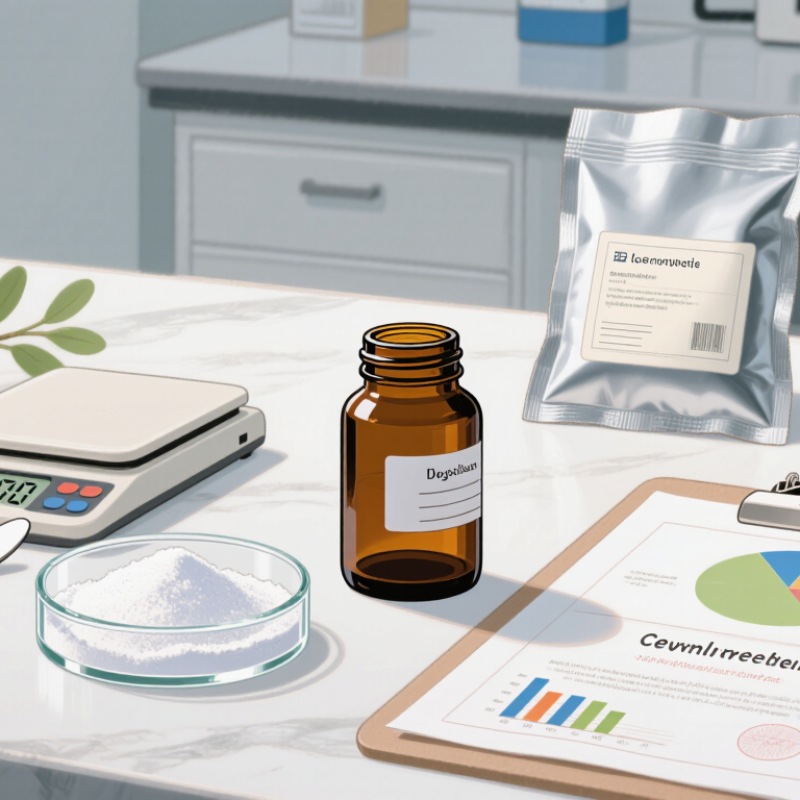
Natural alpha-arbutin powder needs more than a green label. ISO 16128-1 and ISO 16128-2 provide calculation methods for natural and natural-origin indexes. They do not certify a product or prove sustainability. Under this framework, natural origin may score 1, while processed derivatives can score below 1. Ask suppliers to show their calculation basis.
Tip 1: Request botanical traceability records. The file should name the plant species, plant part, cultivation region, harvest period, processor, and batch number. A credible chain should connect the field to your delivery drum. Check the certificate of analysis, HPLC identity, purity, microbiology, pesticides, residual solvents, and hydroquinone levels. Missing harvest details matter.
Tip 2: Compare claims with evidence. “Plant-derived” does not always mean the final powder is fully natural under ISO 16128. A 2023 European SCCS opinion assessed alpha-arbutin safety at proposed cosmetic use levels, including up to 2% in face products and 0.5% in body products. Safety assessment and natural-origin status are different questions. I would not accept one document for both.
Tip 3: Examine the audit trail. Look for lot-specific records, not generic brochures. Organic certification can support farming claims, but it does not replace ISO calculations or analytical testing. Some documentation may look complete yet remain weak. Recheck inconsistencies between the botanical name, country of origin, and assay result. Ask for an independent test when the supplier avoids raw chromatograms.
Natural labeling needs evidence, not attractive wording. Ask for the plant source, extraction method, and complete supply-chain records. Confirm the material is alpha-arbutin, not beta-arbutin or a mixed arbutin product. The CAS number should read 84380-01-8. Check that number against the specification sheet and certificate of analysis. Small detail, major consequence.
Require a recent batch report showing at least 98% HPLC purity. Ask for the testing date, analytical method, chromatogram, and laboratory identity. HPLC purity alone does not prove molecular identity. Supporting FTIR, NMR, or another validated identification test adds confidence. Ask for the chromatogram. Review heavy metals, residual solvents, microbiological limits, moisture, and particle appearance. A clean white powder can still hide poor testing.
Check whether the report matches your exact batch number. Verify the manufacturer’s laboratory qualifications and request independent testing when documentation feels incomplete. Store the powder in a sealed, light-resistant container with controlled humidity. Alpha-arbutin can degrade when exposed to unsuitable conditions.
In practical purchasing, I have learned that fast replies do not equal reliable quality. Traceability matters more. Compare specifications carefully, and question vague claims such as “100% natural” without supporting records. Experiences differ, so leave room for retesting.
7 Tips for Buying Natural Alpha Arbutin Powder
Tip 1: Request the CoA before discussing price. Check the batch number, production date, testing date, and laboratory identity. A clean-looking document is not proof of quality. Tip 2: Review heavy-metal results carefully. Lead, arsenic, mercury, and cadmium should appear as individual results, not one vague “passed” statement. Confirm the units and reporting limits. Tiny details matter. Tip 3: Compare the listed limits with your product’s intended use and local requirements. A result below detection can be useful, but the detection limit should also be visible.
Tip 4: Examine microbial testing for total aerobic count, yeast and mold, and specified pathogens. The report should identify the test method and sample batch. Tip 5: Check residual-solvent data, especially when extraction or processing solvents may be involved. Gas chromatography is commonly used for this analysis. “No solvent” is an unclear phrase without a method or detection limit. Tip 6: Match the CoA with the container label and purchase sample. Mismatched batch codes are a serious warning. Ask for clarification in writing.
Tip 7: Do not judge the powder by color alone. A pale, uniform appearance can still hide moisture, contamination, or weak assay results. Review identity, purity, moisture, and particle information together. In practical sourcing, suppliers may provide incomplete documents, and I have occasionally overlooked small inconsistencies. That is why a second review helps. Independent testing can be worthwhile when the CoA looks unusually brief or overly perfect.
| Tip | CoA Review Dimension | Suggested Acceptance Criteria | Illustrative CoA Result | Analytical Method or Review Point | Assessment |
|---|---|---|---|---|---|
| 1 | Confirm identity and natural-source documentation | Alpha-arbutin identity confirmed by a validated chromatographic method and supported by FTIR or another orthogonal identity test. Botanical source and processing documentation should be available. | Identity conforms by HPLC retention time and FTIR comparison. Botanical source and batch traceability are documented. | HPLC identity test, FTIR, botanical documentation, batch number, production date, and test date. | Pass |
| 2 | Check alpha-arbutin assay and related substances | Assay should meet the buyer’s specification, commonly around 98.0–102.0% on the stated basis. Related substances should be individually and collectively controlled. | Alpha-arbutin: 99.2% on an anhydrous basis. Total related substances: 0.42%. | Validated HPLC-UV method with reference standard, system suitability, and clearly stated calculation basis. | Pass |
| 3 | Review heavy-metal results | Results should comply with the applicable specification and intended-use requirements. Example screening limits: lead ≤3.0 ppm, arsenic ≤1.0 ppm, cadmium ≤1.0 ppm, and mercury ≤0.1 ppm. | Lead: 0.32 ppm; arsenic: 0.18 ppm; cadmium: 0.06 ppm; mercury: <0.01 ppm. | ICP-MS or ICP-OES after appropriate sample digestion. Confirm that units are ppm or mg/kg and that reporting limits are stated. | Pass |
| 4 | Evaluate microbial quality | Typical botanical-powder controls include TAMC ≤1,000 CFU/g, TYMC ≤100 CFU/g, and absence of specified pathogens such as Escherichia coli and Salmonella in the tested sample size. | TAMC: 120 CFU/g; TYMC: <10 cfug; E. coli: absent; Salmonella: absent. | Pharmacopoeial microbial enumeration and specified-organism methods. Check sample size, incubation conditions, and whether results are reported as CFU/g. | Pass |
| 5 | Check residual solvents | Residual solvents should comply with ICH Q3C or the applicable local standard. Common Class 3 examples include ethanol and acetone at 5,000 ppm each; Class 2 solvents such as methanol and toluene require tighter limits. | Ethanol: 86 ppm; acetone: <10 ppm; methanol: <10 ppm; toluene: <1 ppm; n-hexane: <1 ppm. | Headspace GC-FID or GC-MS. Confirm the solvent panel covers the documented manufacturing process and that “ND” includes a numerical detection limit. | Pass |
| 6 | Inspect moisture, appearance, and physical quality | Powder should be uniform, free-flowing, and free from visible foreign matter. Moisture should be controlled according to the product specification to reduce caking and stability risks. | Appearance: white to off-white fine powder; moisture by Karl Fischer: 0.35%; no visible foreign matter. | Visual inspection, Karl Fischer or validated loss-on-drying method, particle-size information, and packaging-integrity check. | Pass |
| 7 | Verify CoA credibility and batch traceability | The CoA should identify the tested batch, sampling date, test methods, specifications, actual results, authorized approval, and retest or expiry date. Do not rely only on a generic specification sheet. | Batch number, sampling date, test dates, method references, actual numerical results, authorized approval, and retest date are present. | Compare the CoA with the purchase order, label, packaging, and independent third-party test results where the material is high-risk or intended for ingestion. | Pass |
7 Tips for Buying Natural Alpha Arbutin Powder
Natural alpha arbutin powder can sound gentle, but “natural” does not prove quality or compliance. Ask for a recent certificate of analysis, assay result, batch number, and manufacturing date. Reliable documentation should also address microbiological limits, heavy metals, and possible hydroquinone contamination. A vague purity statement is not enough.
Pay close attention to the EU SCCS limits for finished cosmetic products. The commonly cited limit is 2% alpha-arbutin in facial products and 0.5% in body products. These percentages apply to the final formula, not the purchased powder. A 2% facial cream therefore needs a carefully calculated powder amount. A body lotion should not automatically use the same concentration. Product classification can also affect the assessment, so check current regional requirements before selling.
Storage matters more than many buyers expect. Choose sealed, light-protective packaging with clear handling instructions. Moisture, heat, and repeated opening may reduce powder quality. I would also request a small sample before placing a large order. Test its appearance, solubility, odor, and performance in a controlled formulation. Some powders dissolve unevenly, despite attractive specifications. That detail is easy to overlook. Keep supplier communication and batch records. They support traceability when a formula changes or a customer reports irritation. Safety testing remains necessary, even when the ingredient comes from a plant-based source.
7 Tips for Buying Natural Alpha Arbutin Powder
When buying natural alpha arbutin powder, start by checking the supplier’s GMP certification. Confirm its issuing body, validity period, and production scope. A certificate covering another product may not protect your purchase. Ask for the scope. The document should match the actual manufacturing site. Also review batch-specific testing, not only a standard product sheet. Each batch should show identity, assay, moisture, heavy metals, microbial limits, and relevant impurities. A clear lot number should connect the test report with the shipped material. Paperwork is not proof. Contact the testing laboratory when results seem unusually perfect.
Packaging deserves equal attention. Alpha arbutin can degrade when exposed to light, heat, or moisture. Choose sealed, opaque containers with suitable inner liners and clear storage instructions. Look for tamper evidence and a readable production date. Desiccant may help, but it does not replace proper sealing. During receiving, inspect damaged lids, powder clumping, and unusual color changes. Small details matter.
MOQ can quietly affect quality and cash flow. A low MOQ supports trial production and reduces storage pressure. A large MOQ may offer better pricing, but unused powder can age before use. Request samples from the same batch planned for full delivery. Compare the sample’s appearance, test data, packaging, and lead time. I would also question vague claims such as “high purity” without numerical results. Even careful buyers miss this point. Supplier communication, traceability, and realistic shelf-life data reveal more than a polished brochure.