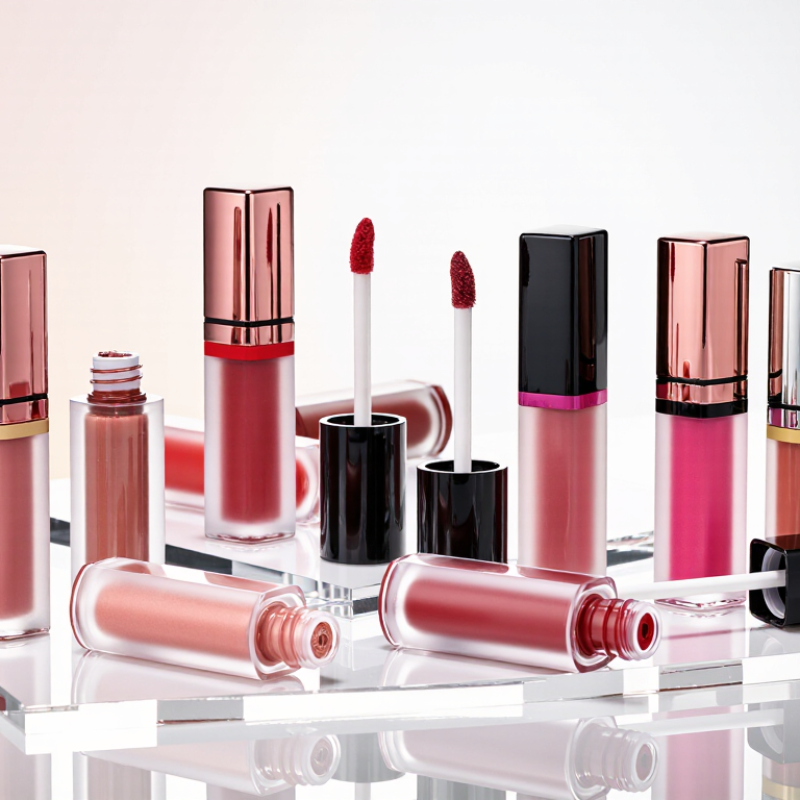
| Tube Material | PET PP Acrylic
Select a material with suitable chemical resistance and documented compatibility with the intended lip gloss formula. | Request the material declaration, resin identification, technical data sheet, and a sample filled with the actual formula. Check for swelling, cracking, discoloration, odor, and leakage after storage. | Clear, frosted, translucent, opaque, colored resin, recycled-content options where technically suitable. | Stock packaging may begin at approximately 1,000–5,000 pieces. Custom-colored or newly tooled packaging commonly requires a higher quantity. | Formula solvents, oils, or fragrances may affect the tube, wiper, applicator, or decoration even when the empty package appears acceptable. |
| Capacity and Fill Volume | Common lip gloss tube capacities include approximately 3 mL, 5 mL, 6 mL, and 8 mL. Define both nominal capacity and target fill weight. | Confirm the drawing, internal volume, usable fill level, overflow allowance, and net content tolerance. Conduct a fill test using the production formula. | Custom tube length, diameter, shoulder shape, base shape, and graduated or ungraduated appearance. | Standard sizes generally offer the lowest MOQ and shortest lead time. Non-standard dimensions may require tooling and engineering approval. | Nominal volume is not the same as fill weight because density varies by formula. An oversized tube can create inaccurate consumer expectations. |
| Closure and Thread Fit | The cap should close smoothly, remain secure during transport, and maintain a consistent seal with the tube neck. | Perform repeated open-and-close testing, torque checks, inversion testing, vibration testing, and temperature cycling. Inspect cross-threading and cap wobble. | Gloss, matte, metallic-look, colored, soft-touch, or two-piece cap construction. | Stock cap colors are usually more economical. Custom-matched colors or special cap structures may increase MOQ and tooling costs. | A loose cap can cause leakage and contamination; excessive torque can damage threads or make the package difficult for consumers to open. |
| Wiper Performance | The wiper should control product pickup, remove excess formula from the applicator, and remain firmly seated in the neck. | Test the filled package with multiple applicator withdrawals. Record product pickup, stringing, dripping, wiper displacement, and visible residue around the neck. | Standard, tight, loose, high-scrape, or formula-specific wiper designs, subject to tooling availability. | Standard wipers are normally available at lower quantities than custom wiper profiles. Custom designs may require a dedicated mold. | A wiper that is too tight can remove too much product; one that is too loose can cause mess, leakage, or inconsistent application. |
| Applicator Quality | The applicator should be smooth, securely attached, dimensionally consistent, and compatible with the desired coverage and finish. | Check stem pull strength, tip alignment, surface smoothness, flocking or fiber shedding, pickup consistency, and consumer-use comfort. | Doe-foot, angled doe-foot, paddle, brush, flocked, silicone, or custom molded tips. | Stock applicators may be available from approximately 1,000–5,000 pieces. Custom applicators usually require a higher MOQ. | Loose fibers, sharp edges, poor tip alignment, or excessive product retention can create safety, quality, and user-experience problems. |
| Leakage and Seal Integrity | The assembled package should remain leak-free during normal storage, handling, shipping, and repeated consumer use. | Conduct upright and inverted storage, pressure or vacuum testing where applicable, drop testing, vibration testing, and temperature cycling with filled samples. | Neck dimensions, liner or sealing components where applicable, cap geometry, and wiper structure. | Prototype testing is usually available in small quantities. Production acceptance criteria should be agreed before mass manufacturing. | Leakage can result from thread mismatch, insufficient closure force, poor wiper fit, dimensional variation, or formula-package incompatibility. |
| Decoration and Print Durability | Decoration should meet the required resistance to rubbing, oils, alcohol-containing products where relevant, and normal handling. | Approve a physical decorated sample. Perform adhesion, rub, tape, scratch, and chemical-resistance tests using the actual formula and packaging conditions. | Screen printing, hot stamping, labeling, metallization, spray coating, color matching, and partial or full-surface decoration. | Stock undecorated components generally have the lowest MOQ. Custom decoration often starts around 3,000–10,000 pieces per design, depending on process. | Printed artwork may differ from digital colors. Decoration can peel or transfer if surface treatment, ink, coating, or curing is inadequate. |
| Color Matching | Establish an approved physical color standard rather than relying only on screen images or digital color codes. | Request a molded or coated color chip and compare it under consistent lighting. Define acceptable color variation and approval procedures. | Transparent tint, solid color, pearl effect, frosted finish, gradient, and custom cap or tube color. | Custom color matching commonly requires a larger production quantity than standard colors and may involve a color-development charge. | Resin color, coating thickness, batch variation, lighting, and viewing angle can change the perceived color. |
| Cosmetic Packaging Compliance | Packaging should be suitable for cosmetic use and supported by documentation appropriate to the destination market and formula. | Request a material declaration, safety data where applicable, restricted-substance statement, heavy-metal statement, and relevant test reports. Confirm whether the supplier can support the importer’s regulatory file. | Material selection, component traceability, batch coding, recycling marks, and documentation language. | Compliance documentation may be included for standard components or charged separately for additional testing and certification. | Cosmetic packaging requirements differ by market. Do not treat a general “FDA approved” or “EU compliant” statement as a substitute for specific evidence. |
| Restricted Substances | Screen materials, coatings, inks, adhesives, and metal parts for substances restricted by the target market, such as certain heavy metals, phthalates, and other regulated chemicals. | Review supplier declarations and, where risk justifies it, commission independent laboratory testing on the finished component or relevant material. | Low-odor materials, alternative coatings, reduced-chemical decoration systems, and documented recycled content. | Testing costs depend on the material, market, number of substances, and laboratory method; include them in the development budget. | Testing only the raw resin may not detect substances introduced by pigments, coatings, printing inks, adhesives, or metal plating. |
| Migration and Formula Compatibility | The package should not transfer unacceptable substances into the formula or absorb key ingredients in a way that changes product quality. | Use a filled-package compatibility study with the final formula, including accelerated and real-time conditions selected by the product safety team. | Barrier layers, alternate resins, different wiper materials, and formula-specific component selection. | Allow several weeks for compatibility screening; longer observation may be needed for products with oils, solvents, pigments, or fragrances. | Early visual inspection alone may miss odor transfer, color change, viscosity change, active loss, or long-term material stress. |
| Quality Control and Tolerances | Define measurable acceptance criteria for dimensions, weight, color, print position, cap fit, leakage, appearance, and component function. | Request a signed specification sheet, approved limit samples, inspection records, and a pre-shipment inspection using an agreed sampling plan. | Custom inspection points, barcode or QR-code verification, batch traceability, and defect classification. | Quality inspection may be performed by the supplier, an independent inspector, or both. Inspection fees are normally separate from unit price. | Without written tolerances, disputes over acceptable color, scratches, flash, misalignment, and leakage are difficult to resolve. |
| Tooling and Development | Custom shapes, special applicators, unique caps, and non-standard neck finishes may require engineering work and dedicated molds. | Obtain the 2D drawing, 3D file, mold ownership terms, revision process, sample approval stages, and tooling maintenance responsibilities. | Bespoke silhouette, embossed or debossed details, custom base, special cap geometry, and proprietary applicator shapes. | Tooling charges vary substantially. Request a separate quote for mold cost, sampling cost, modification cost, and amortization terms. | A low unit price can conceal substantial tooling costs or restrictions on using the mold with another manufacturer. |
| Minimum Order Quantity | Compare MOQ separately for stock components, custom color, decoration, custom tooling, and complete assembled units. | Request a written MOQ matrix showing quantity per SKU, color, decoration version, component, and production batch. | Mixed colors, shared components, blank stock, digital decoration, and phased production may reduce inventory exposure. | Practical planning ranges: 1,000–5,000 pieces for some stock packaging; 3,000–10,000 for many decorated designs; custom tooling may require 10,000+ pieces. | “Low MOQ” may apply only to one standard component and exclude custom color, printing, assembly, or individual cartons. |
| Lead Time and Reordering | Separate sample, tooling, decoration, production, inspection, and shipping time when calculating launch schedules. | Request a timeline with approval deadlines, production capacity, holiday closures, raw-material risk, and reorder lead time. | Pre-approved component inventory, safety stock, blanket orders, and repeat-order color standards. | Stock samples may take days to a few weeks; custom development and production commonly require several additional weeks. | A supplier may quote production lead time but exclude artwork approval, color matching, mold modification, inspection, and transport. |
| Packaging and Sustainability Claims | Use accurate, evidence-based claims such as recyclable by material type only where local collection and recycling conditions support the claim. | Request material composition, recycled-content evidence if claimed, component-separation instructions, and applicable recycling markings. | Mono-material construction, reduced decoration, lightweighting, post-consumer recycled content, and refill-compatible concepts where feasible. | Sustainable materials or special finishes may have higher MOQ, longer lead times, or additional testing requirements. | A package may be technically recyclable but not accepted in every local recycling system. Avoid unsupported “eco-friendly” claims. |