What Is a Linen Maxi Dress?
A Linen Maxi Dress is a long dress made wholly or partly from linen, a textile spun from flax fibers. “Maxi” usually describes a hem that falls near the ankles or floor, though the exact length depends on the cut and the wearer’s height. Linen’s visible texture, crisp feel, and soft movement give the dress a relaxed, distinctive look. Its breathable weave and moisture-absorbing qualities can make it comfortable in warm weather. Still, comfort also depends on the fit, lining, fabric weight, and local climate—not just the fiber name. Some designs blend linen with other fibers to change the drape or reduce creasing, so checking the garment label is useful. That detail matters.
When choosing one, consider where the hem will fall with your usual shoes and whether the fabric feels comfortable against your skin. A loose silhouette may feel airy, while a shaped waist or added lining can create a more structured look. Pockets, straps, and closures also affect everyday practicality. And yes, it creases. Those wrinkles are a normal feature of linen, though they may not suit every preference or occasion. Care instructions vary, so follow the label rather than assuming every linen garment can be washed or pressed the same way. Understanding the fabric and construction makes it easier to decide whether this timeless, full-length style belongs in your wardrobe.
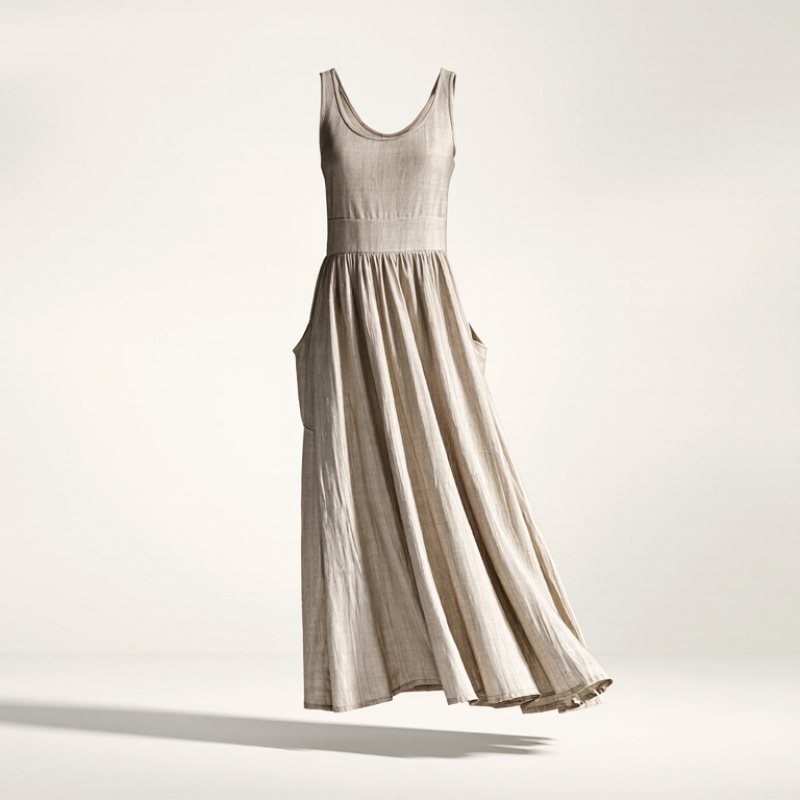
Definition of a Linen Maxi Dress
A linen maxi dress is a long dress made primarily from linen, a fabric spun from the fibers of the flax plant. “Maxi” describes its length: the hem usually falls near the ankles or floor. The exact shape varies, from a loose shift to a fitted waist with a full skirt. Necklines, sleeves, pockets, and lining are design choices, not part of the definition. Check the fabric label: a linen blend may feel softer, but it is not pure linen.
Linen’s texture is part of its character. You may notice small slubs in the weave, a cool hand feel, and creases after sitting. Those marks are normal, though they can look untidy to some wearers. The Alliance for European Flax-Linen & Hemp reports that 99.9% of the water used to grow European flax comes from rainfall. That figure concerns cultivation, not the full garment-making process, so it does not prove every linen dress has a low overall impact. For everyday wear, look at seam finishing, opacity in daylight, and whether the skirt catches when you walk. A beautiful hem can still be awkward.
Linen Fabric and Dress Construction
Linen begins with flax, whose long bast fibers are spun into yarn and woven into cloth. The weave affects how a maxi dress hangs: a tighter plain weave feels crisp, while a looser weave drapes more softly and may show more light. Textile Exchange’s Materials Market Report 2024 estimates that global fiber production reached 124 million tonnes in 2023, with polyester accounting for 57%. That scale makes fiber choice worth noticing, even though the figure does not measure linen quality.
Dress construction shapes comfort as much as the fabric does. Look at the shoulder seams, side seams, and hem: neat stitching and a balanced grain help the skirt fall evenly. A full-length skirt cut on the bias can move fluidly, but it may also stretch or twist with wear. A straight-grain cut is often steadier. Check whether the bodice is lined; an unlined weave can feel cooler, yet may need a slip in bright light. Small details matter.
Still, linen is not magic. It creases when you sit, and pressing may not keep every fold away. I find that a little room through the hips and a hem clear of the floor make a maxi easier to wear. Review the care label, too: washing and drying instructions vary by finish and construction. The cloth should feel breathable, not flimsy.
Length, Fit, and Key Design Features
A linen maxi dress is a full-length dress made from flax-based linen, usually reaching the ankle or lower. “Maxi” describes the length, not a fixed measurement: a petite wearer may find the hem brushes the floor, while a taller wearer may see it stop above the ankle. Check the garment’s shoulder-to-hem measurement, then compare it with a dress you already own. Textile Exchange’s Materials Market Report 2024 estimates that global fiber production reached 124 million tonnes in 2023. That broad figure offers useful industry context, but it does not set a standard length or fit for linen dresses.
Fit depends on the cut. A straight or column shape follows the body; an A-line skirt gives more room around the hips and legs. Look for ease across the chest and waist, since linen can feel restrictive when a garment is cut too close. The fabric also creases during ordinary wear. That’s normal. Design details change how the dress moves: side slits help with walking, a waist seam can define the silhouette, and adjustable straps make small fit changes easier. Pockets add function, though they may pull on lightweight fabric. I would not rely on a size label alone; linen blends, lining, and washing can all affect drape and feel. A slightly rumpled hem is part of the appeal, but the right length should still clear the ground.
What Is a Linen Maxi Dress? — Length, Fit, and Key Design Features
| Dimension | Typical Characteristics | What to Look For |
| Definition | A maxi dress is a long dress that generally reaches the ankles or floor. A linen maxi dress is made wholly or partly from linen, a fabric spun from flax fibers. | Check the garment’s fabric composition; “linen” may refer to pure linen or a blend with fibers such as cotton or viscose. |
| Length | Hemlines commonly fall between the ankles and the floor. The exact drop varies with the wearer’s height, footwear, and the dress’s cut. | Compare the listed garment length with your measurements. With shoes on, the hem should not drag or create a tripping hazard. |
| Fit | Styles range from relaxed and flowing to fitted at the bodice or waist. A loose fit can allow airflow, while shaping details define the silhouette. | Look at measurements for the bust, waist, and hips, as well as whether the garment has stretch, adjustable ties, or a defined waist. |
| Fabric feel | Linen is breathable and absorbent, with a natural texture. It tends to crease during wear; linen blends may feel or drape differently. | Consider fabric weight and opacity. Lightweight linen may be more see-through, while a lining can add coverage and warmth. |
| Common design details | Frequently seen features include shoulder straps or sleeves, a defined or elastic waist, side slits, pockets, buttons, and a gathered or straight skirt. | Choose details for your intended use: slits can ease movement, pockets add function, and a lining can improve coverage. |
| Season and occasion | Often worn in warm weather, though sleeve length, fabric weight, layering, and footwear can make the style suitable for a wider range of settings. | For hotter conditions, a lighter construction and breathable lining are practical considerations. For cooler weather, add a layer. |
| Care | Linen care varies by garment construction, dye, and any blended fibers. Some pieces may be machine washable, while others require gentler care. | Follow the garment’s care label. Avoid assuming all linen dresses can be washed or dried in the same way. |
In brief: A linen maxi dress combines a long, ankle-to-floor silhouette with linen or a linen blend. Length, fit, lining, and construction vary by garment, so check measurements and care instructions before choosing one.
Common Styles and Variations
What Is a Linen Maxi Dress?
Common Styles and Variations
A linen maxi dress is a full-length dress made from linen or a linen blend. Common shapes include relaxed shifts, belted shirt dresses, tiered skirts, and fitted bodices with gathered waists. Necklines range from simple crews to square cuts, while sleeves may be short, puffed, or absent. Side slits help long skirts move. Pockets are useful, though they can pull on very lightweight fabric.
Variations change how the dress works day to day. A button-front shirt style suits layering over a swimsuit; a softly tiered version feels airy but may catch a breeze. Textile Exchange’s Materials Market Report 2024 reports that global fiber production reached 124 million tonnes in 2023. Linen is a small part of this broad market, so check whether a garment is pure linen or blended. Pure linen often creases visibly. That is normal, but not everyone enjoys it. A blend may drape more smoothly, though its feel depends on the other fibers.
Tips: Check the fabric label and lining before buying. Hold pale fabric toward daylight to spot sheerness. For a breezy walk, test the slit and hem length with your usual shoes. A dress can look effortless on a hanger and feel less so in actual weather.
How to Wear and Care for a Linen Maxi Dress
What Is a Linen Maxi Dress?
How to Wear and Care for a Linen Maxi Dress
A linen maxi dress is a long dress made from linen, a breathable fabric woven from flax fibers. Its airy feel suits warm days, while the full-length shape works for casual outings or relaxed dinners. For an easy outfit, pair it with flat sandals and a woven tote. On cooler evenings, add a light cardigan or denim jacket. A belt can define the waist, but a loose fit often feels more comfortable in the heat. Linen creases easily. That is part of its character, though the folds may look untidy after a long day.
Check the care label before washing, since blends and finishes can need different treatment. For many linen garments, a gentle cycle with cool water helps limit shrinkage and wear. Use mild detergent, and avoid overloading the machine. Reshape the dress while damp, then hang it to air-dry away from strong sunlight. If you prefer a smoother look, iron it while slightly damp on a suitable setting. I find that chasing every crease can take too much time; a few soft wrinkles are usually fine.
Tips: Store the dress clean and fully dry. Keep it on a wide hanger, and leave a little space around it. For travel, roll it loosely rather than pressing it into a tight bundle. A quick steam may help before wearing.
