Top Spunlace Nonwoven Fabric Suppliers Worldwide
The global demand for Spunlace Nonwoven Fabric is expanding across wipes, medical products, hygiene goods, and personal care packaging. Grand View Research identifies nonwoven fabrics as a major growth market, supported by rising healthcare consumption and convenient disposable products. Smithers’ industry forecasts also highlight continued investment in spunlace capacity, especially in Asia, Europe, and North America. These trends make supplier selection more important than a simple price comparison.
This guide examines leading Spunlace Nonwoven Fabric suppliers worldwide through practical purchasing criteria. Production scale matters. So does consistency. Buyers should review fiber composition, basis weight, tensile strength, absorbency, softness, and roll-width tolerance. A reliable supplier should also demonstrate stable hydroentanglement processes, laboratory testing, quality certifications, and traceable raw-material sourcing. EDANA’s technical guidance remains useful for understanding nonwoven performance, sustainability claims, and responsible production practices.
Details reveal capability.
A roll should unwind smoothly, without loose fibers, uneven edges, or visible contamination. Production records, sample approval, factory audits, and shipment history can expose differences that brochures hide. Environmental performance deserves equal attention, including water use, wastewater treatment, recycled fiber content, and packaging efficiency. However, public market reports use different definitions and forecasting methods. Their figures should guide decisions, not replace direct verification. Supplier rankings can also change quickly as energy costs, regulation, technology, and regional capacity shift. This overview therefore focuses on evidence-based comparison rather than absolute claims. It may not answer every procurement question, but it offers a practical starting point for identifying capable and trustworthy manufacturers.
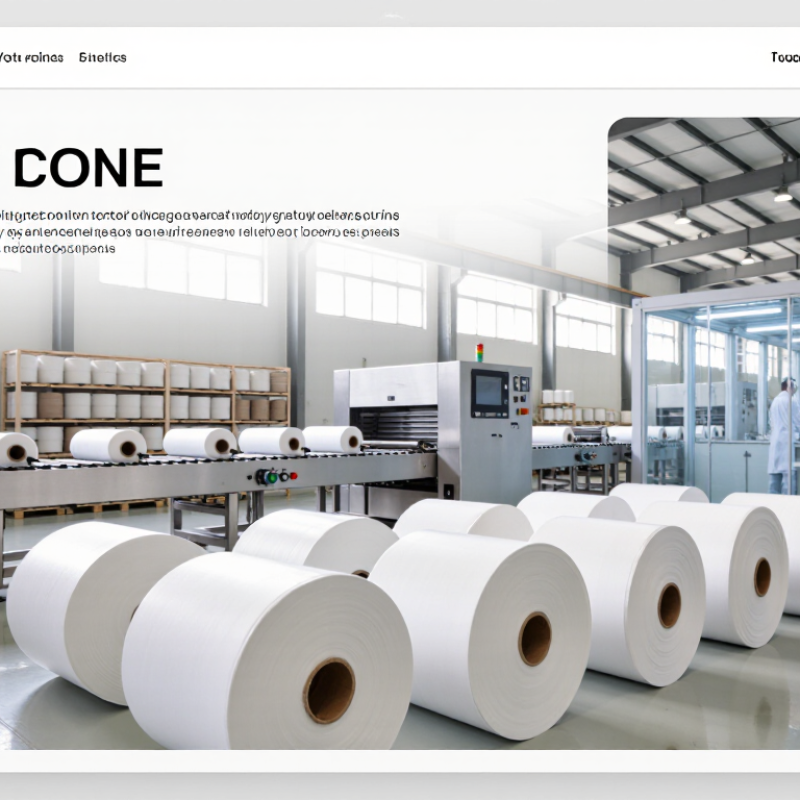
Definition and Key Features of Spunlace Nonwoven Fabric
Spunlace nonwoven fabric is a web of fibers bonded by high-pressure water jets. Unlike woven cloth, it has no yarn grid or traditional interlacing pattern. The water entangles the fibers, creating a flexible and fabric-like surface. Production may use viscose, polyester, cotton, wood pulp, or blended fibers. Fiber choice affects softness, strength, absorbency, and drying speed.
The material often feels smooth against skin and produces little lint when properly finished. Its open structure can support lotion absorption, filtration, and controlled liquid distribution.
Basis weight, thickness, tensile strength, elongation, and absorbency should be checked before purchasing. These figures reveal more than a soft sample. A sample can feel excellent yet perform poorly after wetting, folding, or packaging.
In supplier evaluations, I ask for batch records, test methods, and production tolerances. Reliable suppliers should explain fiber content and hydroentanglement conditions clearly. Certificates help, but they do not replace physical testing.
A common mistake is treating “biodegradable” as a complete performance description. It is not. Fiber origin, additives, and disposal conditions still matter.
I have seen buyers choose a lighter fabric to reduce cost, then face tearing during converting. That choice looked efficient, but the finished product suffered. Spunlace quality is never defined by softness alone.
Major Applications Across Healthcare, Hygiene, and Industry
Spunlace nonwoven fabric suppliers worldwide support demanding work in healthcare, hygiene, and industrial production. Their fabrics use high-pressure water jets to entangle fibers without traditional weaving. This structure creates softness, strength, and useful surface uniformity. In healthcare, manufacturers use spunlace materials for surgical gowns, drapes, wound-care pads, and examination-room wipes. Suppliers should provide fiber details, basis weight, tensile strength, and cleanliness records. A soft surface is not enough.
In hygiene products, spunlace appears in baby wipes, personal-care wipes, and household cleaning cloths. Its open structure can improve liquid absorption and lotion distribution. However, absorbency varies with fiber type, bonding pressure, and finishing treatment. Production teams should test wet strength, lint release, and skin-contact performance under real conditions. Small variations matter. Some suppliers offer biodegradable fiber options, but buyers must verify the actual composition and disposal requirements.
Industrial applications include polishing cloths, protective covers, filtration components, and lightweight technical liners. These uses demand controlled thickness, tear resistance, and consistent roll quality. A supplier may pass a laboratory test yet struggle during high-speed converting. That gap deserves attention. Reliable sourcing includes batch traceability, sample approval, factory audits, and clear complaint handling. Price remains important, but unstable supply can damage production schedules and increase waste. In practice, the best material is not always the strongest one; it must match the process, exposure, and intended service life.
Leading Spunlace Nonwoven Fabric Suppliers Worldwide
Leading Spunlace Nonwoven Fabric Suppliers Worldwide
Leading spunlace nonwoven fabric suppliers serve hygiene, medical, household, and industrial markets. Their materials use hydroentanglement, where high-pressure water jets bind fibers without traditional adhesives. A technical review by Smithers identifies rising demand for soft, absorbent, and flushable alternatives as a major market driver. However, “flushable” claims still require careful testing.
Grand View Research estimates the global nonwoven fabrics market will expand at roughly 7% annually through 2030.
Spunlace remains important because it combines drape, strength, and low-lint performance. Leading suppliers usually offer viscose, polyester, cotton, or blended webs. Their production lines may include carding, cross-lapping, water-jet bonding, drying, and roll inspection. Small differences matter. Basis weight, tensile strength, absorbency, and surface uniformity affect converting performance.
Supplier evaluation should include test reports, lot traceability, and consistent technical support. ISO 9073 methods are widely used for measuring nonwoven properties, including mass, tensile strength, and elongation.
The European Disposables and Nonwovens Association also emphasizes responsible product claims and fiber selection. Yet supplier comparisons are not perfectly uniform. Some reports measure revenue, while others measure volume. That distinction is easy to miss.
Buyers should request samples from multiple production lots, not one attractive roll. A clean-looking sheet can still show weak cross-direction strength, uneven moisture uptake, or excessive lint during high-speed processing.
Quality Standards, Sustainability, and Supply Considerations
Reliable spunlace sourcing starts with measurable fabric behavior, not attractive sample photographs. Request basis weight, thickness, tensile strength, elongation, absorbency, lint, and microbial data. ISO 9073 test methods support comparisons between laboratories. For hygiene and medical applications, suppliers should document contamination controls and batch traceability. ISO 9001 supports process discipline, but it cannot replace lot testing. Samples can mislead.
Environmental claims need numbers. Textile Exchange’s Materials Market Report 2024 recorded 124 million tonnes of global fibre production in 2023. It projects approximately 160 million tonnes by 2030, increasing pressure on resource efficiency. Ask whether recycled or renewable inputs have verified chain-of-custody records. Measure recycled content, energy, water, waste, and packaging per finished kilogram. ISO 14001 can strengthen environmental management. However, lifecycle data may reveal uncomfortable trade-offs. Recycled fibres can affect whiteness, strength, or filtration. That compromise deserves testing.
Supply resilience depends on more than quoted price. Smithers’ Future of Global Nonwovens to 2028 report forecasts continued market expansion beyond US$70 billion by 2028. Forecasts are not promises. Confirm monthly capacity, minimum order quantities, lead times, port options, and contingency plans. Ask for production records from comparable grades, not generic certificates. Dual sourcing may reduce disruption, yet changing suppliers can alter handle and absorbency. I would approve a supplier only after pilot rolls, independent testing, and a documented corrective-action process. Even then, annual reassessment remains necessary.
