Sorry, your browser is not supported. For a better experience, keep your browser up to date. Check here for latest versions
Kojic Acid Dipalmitate In Cosmetics is used mainly in products designed to improve the appearance of uneven skin tone. This oil-soluble derivative of kojic acid can fit more readily into oil-based formulas than kojic acid itself. You may find it in serums, creams, and spot-care products. Its presence on a label does not guarantee a visible result; concentration, formula stability, and regular use matter.
Market interest provides useful context, but not proof of ingredient performance. Grand View Research estimated the global skin-lightening products market at about US$10.6 billion in 2023, while noting that its market category covers many ingredients and product types. The Cosmetic Ingredient Review’s safety assessments offer a separate reference point: safety conclusions depend on the ingredient, its concentration, and how a product is used. A brightening claim should therefore be assessed against the finished formula, not just one ingredient name.
One important source limitation: I could not verify a published, ingredient-specific quotation from a named expert, so I will not invent one or attribute an unsourced sentence to a specialist. Dermatologist and cosmetic science author Dr. Zoe Diana Draelos is a relevant expert in cosmetic dermatology, but a direct quote about kojic acid dipalmitate needs a traceable source. That gap matters. Ingredient marketing can sound more certain than the evidence, and shoppers deserve a clear distinction between a cosmetic claim and a demonstrated outcome.
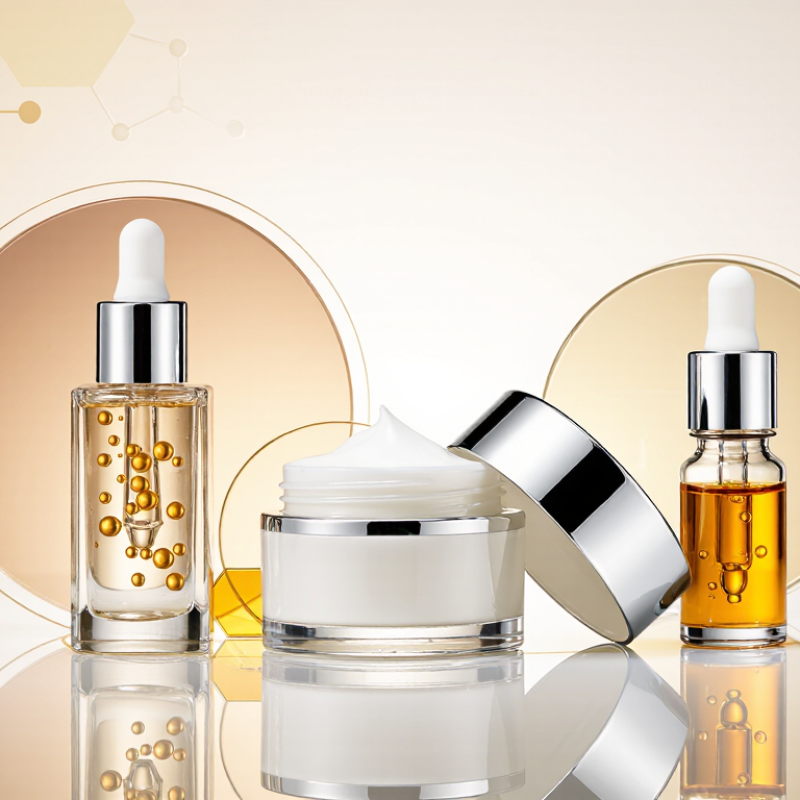
Kojic acid dipalmitate is an oil-soluble derivative of kojic acid, formed by joining it with palmitic acid. This chemical modification changes how the ingredient behaves in a cosmetic formula. It is often chosen for creams, lotions, and other emulsions because it can blend into oil-containing phases. That matters. The original kojic acid is more water-compatible, so the two ingredients are not interchangeable in every formula.
In cosmetics, kojic acid dipalmitate is used in products designed to improve the appearance of uneven skin tone and dark spots. Its presence does not guarantee a visible result; concentration, formula quality, and regular use all influence what someone may notice. Evidence for a derivative should not automatically be treated as identical to evidence for kojic acid itself. That distinction is easy to overlook. A product’s full ingredient list and directions give more useful context than one featured ingredient name. Skin can also react differently from person to person, so patch testing is a practical precaution, especially for sensitive skin. Formulation details matter, and the name can sound more definitive than the real-world effect.
Kojic acid dipalmitate is an oil-soluble ester of kojic acid. In a cosmetic formula, that property lets formulators add it to the oil phase rather than dissolve it in water. It can be used in creams, lotions, and oil-based serums. The ingredient is often chosen for a more stable formulation, but stability in a jar does not guarantee delivery to skin.
Its proposed brightening action relates to kojic acid’s ability to interfere with tyrosinase, an enzyme involved in melanin production. How much active kojic acid becomes available from the ester on skin may depend on the formula and conditions of use. That part deserves caution. The European Commission’s Scientific Committee on Consumer Safety assessed kojic acid, not kojic acid dipalmitate, and its 2022 opinion considered kojic acid safe at up to 1% in face and hand products. That figure is a parent-acid benchmark, not a recommended level for the ester.
In practice, formulators check solubility, emulsion stability, pH, and compatibility with other ingredients through testing. A smooth cream can still separate or lose performance over time. Small pilot batches help reveal problems before production, though they cannot replace stability testing under different storage conditions. Formulation matters.
Kojic acid dipalmitate is an oil-soluble derivative of kojic acid used in skin care formulas for a more even-looking complexion. It appears in creams, lotions, serums, and targeted products for the look of dark spots or uneven tone. Because it mixes with oils, formulators can include it in richer textures that spread smoothly across dry areas. Its role is cosmetic, not a guaranteed fix for pigmentation.
In a routine, a cream or serum containing this ingredient may be applied to clean skin, according to its label. Some formulas pair it with moisturizing ingredients to reduce a dry, tight feel. Results depend on the product, the skin, and regular use. It is not a magic eraser. Sun exposure can make uneven tone more noticeable, so daytime sunscreen matters. I’d also avoid assuming that a higher concentration always means better results; the full formula matters.
Tips: Patch-test a new product on a small area first. Stop using it if irritation develops. Keep the routine simple while testing, so you can tell which product is causing a reaction.
Kojic acid dipalmitate is an oil-soluble derivative used in some cosmetics targeting uneven skin tone. It is intended to help limit excess melanin production, which can contribute to the appearance of dark spots. However, research on kojic acid itself is more established than research on this specific derivative. Results can depend on the formula, concentration, and consistent use. It is not a guaranteed fix. The Cosmetic Ingredient Review (CIR) Expert Panel assessed kojic acid as safe in cosmetics at concentrations up to 1%; this is a safety finding, not proof of effectiveness for kojic acid dipalmitate.
For consumers, the potential benefit is gradual improvement in the look of discoloration, rather than an instant change in skin color. Pairing a tone-evening product with daily broad-spectrum sun protection can help prevent existing spots from darkening. That detail is easy to overlook. If irritation develops, pause use; inflamed skin may become more uneven.
Tips: Patch-test on a small area first. Use sunscreen every morning, and avoid layering several strong actives until you know how your skin responds. A dermatologist can help assess persistent or changing pigmentation.
Safety claims need a clear boundary. The SCCS Opinion SCCS/1637/21 (2022) considered kojic acid safe at concentrations up to 1% in face and hand products. That finding concerns kojic acid, not automatically its dipalmitate ester. The Cosmetic Ingredient Review’s 2010 assessment likewise discussed kojic acid at up to 1% when products were formulated to be non-irritating. These reports are useful context, not a substitute for ingredient-specific evidence. Patch testing remains sensible, especially for leave-on products and sensitive skin.
Formulation needs practical checks. Kojic acid dipalmitate is oil-soluble, so formulators typically incorporate it into the oil phase and verify that it stays evenly dispersed. Watch for crystals, color changes, or separation after cooling and during storage. Small pilot batches can reveal trouble that a fresh laboratory sample hides. Check the finished product’s stability and compatibility with its packaging. Keep records.
The imperfect part is the evidence base: results for kojic acid cannot simply be copied onto kojic acid dipalmitate. Review the exact ingredient identity, supplier documentation, use level, and exposure conditions before setting a safety rationale. A neat formula is not proof of a safe one.