Sorry, your browser is not supported. For a better experience, keep your browser up to date. Check here for latest versions
Choosing a Dancing Water Fountain in 2026 requires more than comparing photos, prices, and colorful lighting effects. A fountain may look impressive online, yet perform poorly in a shallow pool, windy plaza, or crowded hotel entrance. The right choice should match the site, water depth, viewing distance, climate, and expected operating hours.
Begin with the fountain’s movement system. Reliable pumps, adjustable nozzles, responsive lighting controls, and well-designed filtration create smoother performances. Ask suppliers for flow rates, power requirements, noise levels, installation drawings, and maintenance schedules. These details reveal more than promotional claims. Stainless steel components can improve durability, especially in humid or outdoor environments. Energy-efficient pumps may also reduce long-term operating costs.
Think beyond opening day.
A professional supplier should provide clear warranties, replacement-part access, safety guidance, and documented installation support. Review the control software carefully, because complicated programming can slow daily operation. Consider water loss from evaporation, splash, wind, and cleaning cycles. Local technicians may offer practical advice that online specifications cannot provide. Still, no fountain is maintenance-free. Filters clog, lights fail, and water chemistry changes with the seasons. That reality deserves attention before purchase.
The best Dancing Water Fountain balances visual drama with dependable engineering. It should fit the surrounding architecture, protect visitors, and remain manageable for the available staff. Some features may be unnecessary. A smaller, carefully engineered installation can sometimes create a stronger experience than an oversized system with expensive upkeep. This guide examines the key selection criteria, helping buyers compare performance, durability, safety, operating costs, and supplier credibility before making a confident decision.
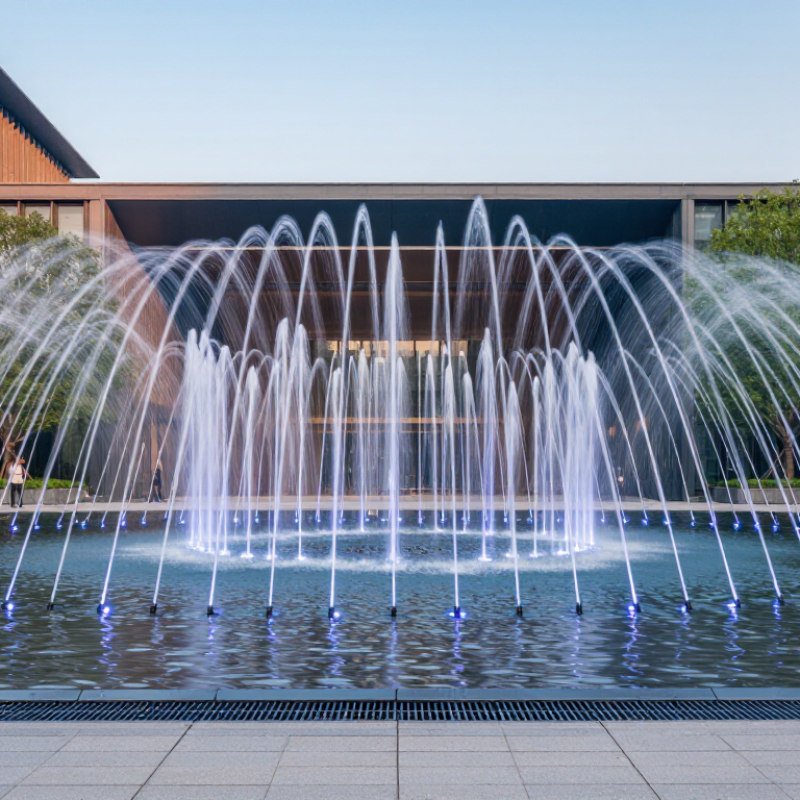
Before choosing a dancing water fountain in 2026, define its job. Is it welcoming visitors, guiding movement, cooling a plaza, or creating a quiet focal point? A hotel entrance may need elegant, controlled arcs. A public square may need wider spray patterns and stronger visibility. The setting decides the fountain’s scale, rhythm, lighting, and sound.
Measure the space in daylight and after dark. A fountain that looks impressive at noon may disappear beside tall buildings. The U.S. Environmental Protection Agency reports that outdoor water use can represent about 30% of household consumption. Its WaterSense data also notes that nearly half of landscape irrigation may be wasted through evaporation or overwatering.
Choose recirculating equipment, covered basins, and adjustable spray cycles. These details reduce waste without weakening the visual effect.
Think about maintenance before appearance. A fountain near trees needs reliable filtration because leaves quickly block nozzles. In a windy coastal setting, lower jets may perform better than tall ones. Industry market analyses, including Grand View Research’s water features reports, identify commercial and public spaces as important application areas, but market growth does not guarantee a suitable design.
I have seen attractive installations fail because their controls were too complex. Leave room for practical human error. A simple operating panel, safe drainage, slip-resistant paving, and clear service access often matter more than extra lighting.
How to Choose a Dancing Water Fountain in 2026?
Compare Fountain Types, Water Effects, and Control Features
Choosing a dancing water fountain starts with the site, not the appearance. I once saw a narrow plaza fitted with powerful vertical jets. The spray looked impressive, but wind carried water onto nearby paving. A dry deck fountain usually suits public spaces with limited room. Pond fountains work better where water depth and maintenance access are available. Cascading designs create softer movement, although they often need more cleaning.
Water effects should match the atmosphere and viewing distance. Vertical jets provide height and ceremony. Fan nozzles create broad, rhythmic sheets. Laminar streams look like glass, but they reveal poor water quality quickly. Aerated jets appear fuller and brighter. Keep the pattern readable. Too many effects can make the display feel noisy.
Control features determine how the fountain behaves daily. Timer controls are simple and reliable for fixed schedules. Sensor-based systems can reduce operation during strong wind or low water levels. Advanced controllers coordinate pumps, lighting, music, and changing sequences. Ask whether staff can adjust programs without specialist software. This detail is easy to overlook. Remote access sounds useful, but weak network security can create operational problems. Select pumps with variable-speed control when possible. They can reduce energy use and soften sudden spray changes. A qualified technician should verify electrical protection, drainage, water treatment, and local safety requirements before installation. My own preference has changed: the most beautiful effect is not always the most practical one.
| Fountain Type | Typical Water Effect | Common Display Height | Typical Water Movement | Control Options | Best Applications | Main Advantages | Key Considerations |
|---|---|---|---|---|---|---|---|
| Vertical Jet Fountain | Individual upward streams with a clean, symmetrical appearance | 0.5–5 m | Moderate flow with clearly defined jets | Pump speed DMX Timer | Residential gardens, courtyards, entrances, and small public spaces | Simple layout, easy to combine in groups, and generally straightforward to maintain | Wind can bend taller jets; nozzle alignment affects visual symmetry |
| Laminar Jet Fountain | Clear, glass-like streams that appear to form smooth arcs | 0.5–3 m | Low-turbulence, precisely directed flow | Programmable timing RGB lighting DMX | Modern landscapes, hotel lobbies, entrances, and interactive displays | Distinctive visual effect and strong performance in choreographed sequences | Requires clean water, accurate leveling, and protection from wind and vibration |
| Aerated Jet Fountain | White, foamy streams with a fuller and brighter appearance | 0.5–4 m | Higher visible turbulence caused by air mixing with water | Pump control Timer Lighting | Parks, plazas, commercial landscapes, and decorative ponds | Highly visible in daylight and usually less sensitive to minor water discoloration | Can create more splash and noise; wind may increase water loss |
| Cascade or Tiered Fountain | Water flows over steps, bowls, ledges, or textured surfaces | 0.3–3 m | Continuous gravity-assisted flow | Flow valve Pump speed Timer | Gardens, resorts, courtyards, wellness areas, and architectural features | Relaxing sound, strong texture, and good integration with surrounding structures | Surfaces need regular cleaning; uneven water distribution can affect appearance |
| Sheet or Curtain Fountain | Thin, continuous sheets or curtains of falling water | 0.5–4 m | Wide, uniform flow across a weir or slot | Flow control LED lighting DMX | Building facades, shopping areas, reception zones, and architectural walls | Creates a strong vertical feature and can partially screen or define spaces | Needs accurate leveling and a stable collection basin to prevent uneven edges |
| Mist or Fog Fountain | Fine water droplets that create a cloud, veil, or atmospheric effect | 0.5–3 m | Very fine spray with low individual droplet visibility | Humidity control Timer Lighting | Experiential landscapes, themed displays, gardens, and cooling installations | Creates an immersive effect and can provide limited evaporative cooling | Wind disperses mist easily; nozzles require filtration and frequent inspection |
| Interactive Splash Fountain | Pop-up jets, floor sprays, and changing water patterns for user interaction | 0.1–2.5 m | Rapidly changing intermittent flow | Sensors PLC Safety shutoff Timer | Public plazas, family attractions, parks, and recreational areas | Engaging for visitors and can operate without a deep open-water basin | Requires strict water hygiene, slip-resistant surfaces, drainage, and safety controls |
| Floating Fountain | Large vertical or angled jets positioned on a floating platform | 1–10 m | High-volume display from a lake or large reservoir | Remote control DMX Wind sensor Timer | Lakes, reservoirs, golf-course ponds, and large outdoor venues | Uses existing open water and creates a strong long-distance focal point | Needs suitable anchoring, safe electrical protection, adequate water depth, and weather monitoring |
| Musical or Choreographed Fountain | Precisely timed water, light, and sometimes sound sequences | 1–15 m | Multiple independently controlled jets and patterns | PLC or show controller DMX Audio synchronization Remote access | Tourist attractions, civic squares, resorts, and event venues | High visual impact, programmable shows, and flexible seasonal programming | Higher installation complexity, energy demand, commissioning requirements, and maintenance workload |
Note: Performance ranges are typical planning values for outdoor decorative fountains. Actual height, flow rate, pump size, energy use, and control capability depend on nozzle design, water depth, basin dimensions, wind conditions, filtration, and local installation requirements.
Evaluate Size, Materials, Safety, and Installation Requirements
Start with the space, not the fountain’s appearance. Measure the basin area, ceiling height, viewing distance, and nearby walkways. A tall jet can look impressive, yet wind may scatter water onto pedestrians or electrical equipment. For a small courtyard, a compact basin with moderate spray height is usually easier to control. Measure twice.
Material choice affects service life and maintenance. Stainless steel resists corrosion and creates a clean appearance, while reinforced concrete offers weight and structural stability. Check the basin’s inner finish for cracks, rough edges, and areas where algae may collect.
I once underestimated cleaning access, and a beautiful design became difficult to maintain. That mistake still influences my recommendations.
Safety and installation deserve equal attention. Use pumps and lighting rated for wet environments, with suitable grounding and residual-current protection installed by a qualified professional. Non-slip surfaces matter around splash zones. Confirm drainage capacity before installation, especially after heavy rain. The foundation must support the filled basin, pump vibration, and water movement. Review local building and electrical requirements before purchasing. Leave service access around pumps and control panels; cramped equipment rooms make routine repairs slower and riskier. Automatic shutoff sensors can help prevent pump damage when water levels fall. Installation plans sometimes look complete on paper, but site conditions may reveal unexpected pipe runs or weak ground. Allow room to revise the design.
Choosing a dancing water fountain in 2026 starts with its running profile, not its display height. Ask for pump input in kilowatts, LED wattage, daily schedule, and control-system consumption.
A 2.2 kW pump running eight hours uses 17.6 kWh daily, before lighting and filtration. Multiply that figure by your local electricity rate. Real bills can differ. Peak tariffs, standby power, and seasonal programming are easy to miss.
Prefer variable-speed pumping when the design allows it. Lower speed can reduce power sharply, although the spray pattern may lose height.
Maintenance affects cost just as much. Inspect intake screens weekly during dusty or leafy seasons. Clean nozzles before mineral deposits distort the arcs. Hard water is especially unforgiving.
Ask whether the basin needs drainage, level sensors, automatic top-up, or chemical monitoring. Each feature saves labor, but each adds parts that can fail.
In my project estimates, labor was often underestimated. A technician may spend more time accessing a buried pump than replacing it. Leave safe, dry access around service equipment.
Compare a five-year operating estimate, not just the purchase price. Include electricity, water replacement, filters, LED modules, pump seals, winter protection, and scheduled inspections.
Request written duty-cycle assumptions from the installer. Test those assumptions during a busy weekend. My first forecast was too optimistic because I ignored frequent water loss from wind. That mistake changed the annual budget.
A smaller fountain with efficient controls may perform better financially than a dramatic model running continuously.
Keep a simple log. It exposes waste quickly.
Choosing a reliable dancing water fountain in 2026 starts with budget discipline, not visual excitement. Grand View Research reports that the global decorative fountains market is expanding steadily, with residential and commercial installations driving demand. That growth brings more low-cost options, but price alone can hide weak pumps, poor seals, and expensive maintenance.
Set aside 15–25% of your budget for installation, filtration, lighting, and electrical protection. The U.S. Department of Energy notes that pumping systems can account for about 20% of industrial motor electricity use, so pump efficiency matters even in a small fountain. Request the pump’s flow rate, power consumption, duty cycle, and replacement cost. A beautiful 1,000-watt display may become costly after hundreds of operating hours.
Look for corrosion-resistant metal, accessible filters, automatic water-level protection, and documented safety testing. The International Electrotechnical Commission’s standards for water-related electrical equipment emphasize protection against moisture and electric shock; ask for test documentation rather than trusting a sales label. In practical testing, observe the fountain for at least 30 minutes. Check spray height, noise, splashing, and water loss. Some models look impressive for five minutes, then drift badly. I once underestimated wind exposure on an outdoor site; that mistake increased cleaning work and water use. Buy for your actual space, climate, and maintenance ability.