How to Choose a Luggage Manufacturer in 2026?
Choosing a luggage manufacturer in 2026 requires more than comparing prices on a supplier website. Travel products face repeated impacts, rough handling, wet surfaces, and strict customer expectations. A reliable partner must prove performance through samples, factory records, and consistent communication.
The evaluation should begin with the product itself. Inspect wheel movement, handle stability, zipper alignment, shell thickness, lining quality, and stitching tension. Roll each sample across uneven flooring. Open and close the case repeatedly. Small failures often appear before large claims do. Ask for material specifications, testing procedures, production capacity, minimum order quantities, and realistic delivery schedules.
A capable luggage manufacturer should explain how quality is controlled from raw materials to final packing. Factory audits, documented inspections, traceable components, and recognized product certifications can support that assessment. Sustainable materials may also matter, but vague environmental language deserves careful questions. Request evidence instead of trusting attractive promises.
Design support is another important factor. The right supplier can improve a prototype while protecting its function, appearance, and manufacturing cost. Clear communication matters when colors, logos, dimensions, or packaging change. A detailed warranty process also reveals whether the company stands behind its products.
No checklist is perfect. A polished showroom can still hide weak production control. Likewise, a smaller factory may offer stronger attention and flexibility. It is easy to overvalue a low quotation and underestimate rework, delays, or inconsistent batches. Careful buyers compare total cost, verified capability, and long-term reliability before making a decision. The best choice is not always the cheapest. It is the partner that can repeatedly deliver dependable luggage as market expectations evolve.
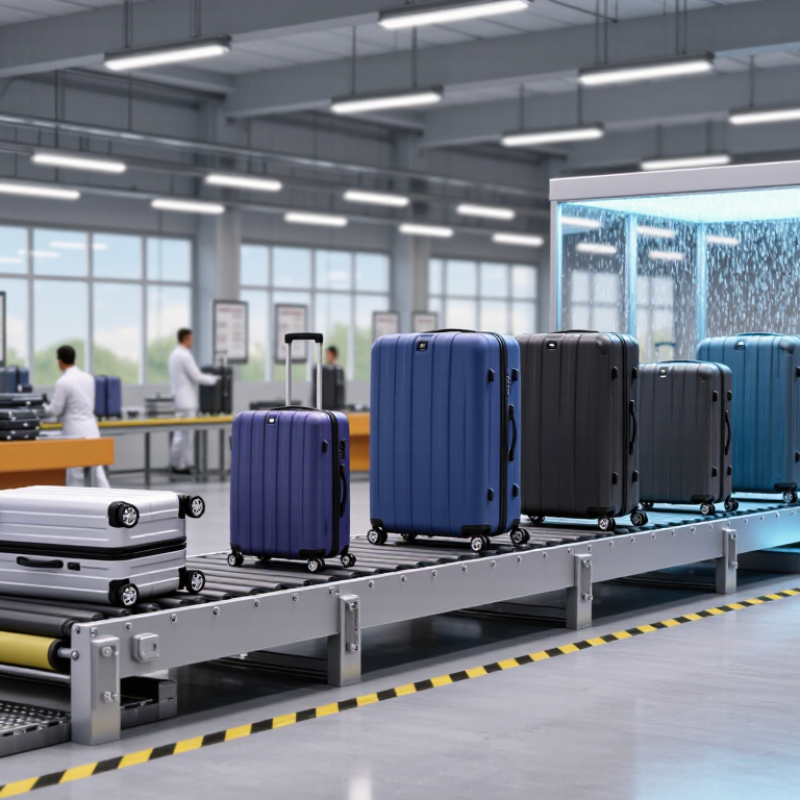
What to Define Before Choosing a Luggage Manufacturer in 2026
Choosing a luggage manufacturer in 2026 starts with defining your own requirements. Decide the luggage type, target customer, retail price, and expected order volume. A travel case for frequent flyers needs different testing than a lightweight fashion case. Write down dimensions, shell material, lining, wheel size, handle height, zipper quality, and color limits.
Do not rely on catalog photos alone. Request a physical sample and inspect it like a customer. Roll it across uneven flooring, pull the handle repeatedly, and check every corner for weak stitching. Define acceptable defects before production begins. Confirm the minimum order quantity, sample charges, tooling costs, payment terms, and production lead time in writing. Small details often become expensive problems.
Ask how the manufacturer controls materials and finished goods. They should explain incoming inspections, assembly checks, drop testing, wheel testing, and final packing procedures. Request relevant test reports and production records where appropriate. Also clarify communication responsibilities and how design changes receive approval. A factory may promise fast delivery, yet its capacity could be unclear during peak seasons. I have learned that a confident presentation is not proof of reliable execution. An independent factory audit can reveal crowded workspaces, weak storage practices, or inconsistent processes. Leave room in your schedule for corrections; perfect planning rarely survives the first sample.
How to Choose a Luggage Manufacturer in 2026?
Before selecting a luggage manufacturer, define the target markets, compliance requirements, quality system, and product-safety responsibilities that apply to your product.
What to Define Before Choosing a Manufacturer
Use the applicable standards as a screening checklist. ISO 9001 was published in 2015, the EU REACH Regulation entered into force in 2007, the U.S. Consumer Product Safety Improvement Act was enacted in 2008, and California Proposition 65 was approved in 1986. Confirm with the manufacturer which requirements they can document for your destination markets, materials, and product category.
Reference years: ISO, European Commission REACH, U.S. Consumer Product Safety Commission, and California Office of Environmental Health Hazard Assessment. Regulations and applicable thresholds should be verified for the specific product and market.
How to Compare Pricing, Minimum Orders, and Production Capacity
How to Choose a Luggage Manufacturer in 2026?
When comparing luggage manufacturers in 2026, start with a cost breakdown, not a headline price. Request separate figures for shell material, lining, wheels, handles, packaging, tooling, inspection, and freight. A $24 unit price may become $31 after small add-ons. Ask whether pricing covers one color, one size, or a mixed order. Confirm payment stages and quotation validity in writing. Currency changes can quietly damage a launch budget.
Minimum order quantities deserve careful negotiation. Request tiered pricing for 300, 1,000, and 3,000 units. A smaller trial order may cost more per piece. That is often reasonable. However, an excessive MOQ can trap cash in slow-moving colors or unused packaging. Ask whether the manufacturer can combine colors while keeping one shared design. Check sample charges, mold fees, and reorder quantities before approving production. One common mistake is choosing the cheapest unit price without calculating storage and unsold inventory.
Production capacity is not the same as factory floor space. Ask for monthly output, active production lines, staffing levels, and average lead times. Request recent, verifiable records rather than general claims. Check how capacity changes during holiday peaks. A supplier may promise 20,000 pieces monthly but deliver only 8,000 during busy periods. Discuss backup equipment and quality inspection points. A short pilot order can reveal real performance. Still, a pilot may not expose every weakness. That is worth remembering. Evaluate communication, defect handling, and schedule accuracy alongside price. Reliable manufacturing depends on evidence, not confident promises.
How to Choose a Luggage Manufacturer in 2026? — Comparing Pricing, Minimum Orders, and Production Capacity
| Manufacturer Profile | Typical Product Focus | Indicative FOB Price
for a 20-Inch Case | Typical MOQ
per Color or Model | Estimated Monthly Capacity | Sample Lead Time | Mass Production Lead Time | Tooling and Development Cost | Best Fit for Buyers |
| Small Custom Workshop | Basic soft-sided or ABS luggage with limited customization | US$18–30 | 300–800 units | 3,000–15,000 units | 7–15 days | 30–45 days | US$300–1,500 for simple modifications | Start-ups, test orders, and small retail programs |
| Mid-Sized OEM Factory | ABS, polycarbonate, polyester, and mixed-material collections | US$25–45 | 500–1,500 units | 15,000–60,000 units | 10–18 days | 35–55 days | US$1,000–5,000 for new molds or product changes | Growing brands requiring flexible customization |
| Large Integrated Factory | High-volume hard-shell and soft-sided luggage collections | US$28–55 | 1,000–3,000 units | 60,000–250,000 units | 12–20 days | 45–70 days | US$3,000–15,000 for dedicated molds and engineering | Established retailers and seasonal volume programs |
| Premium Polycarbonate Specialist | Virgin polycarbonate cases, aluminum frames, and premium fittings | US$45–95 | 500–2,000 units | 10,000–80,000 units | 15–25 days | 50–75 days | US$5,000–25,000 for premium tooling and testing | Premium collections and durability-focused products |
| Private-Label Stock Supplier | Existing designs with logo, packaging, and color adjustments | US$16–38 | 100–500 units | 5,000–40,000 units | 5–12 days | 20–40 days | Usually US$0–1,000 for artwork and packaging setup | E-commerce sellers and buyers validating demand |
| Fully Customized Development Partner | New molds, structural redesigns, proprietary features, and coordinated testing | US$35–85 | 1,000–3,000 units | 20,000–120,000 units | 20–35 days | 60–90 days | US$8,000–40,000 depending on mold complexity | Buyers building differentiated long-term collections |
Planning note: The figures above are indicative 2026 industry benchmark ranges for export orders and may vary according to material grade, case size, order quantity, decoration method, testing requirements, packaging, shipping terms, and production season. Request a written quotation, approved sample, production schedule, and capacity evidence before placing an order.
How to Verify Communication, Customization, and Long-Term Reliability
How to Choose a Luggage Manufacturer in 2026?
How to Verify Communication, Customization, and Long-Term Reliability
Choosing a luggage manufacturer in 2026 requires more than comparing unit prices. Communication should be tested before any deposit or development fee. Send a detailed product brief with dimensions, shell material, wheel type, lining, logo placement, and target quantity. Ask for a written reply within an agreed time. Clear answers matter more than fast promises. Keep every revision in one shared document. This prevents small changes from disappearing.
Customization becomes visible during sampling. Request a numbered prototype with a measurement sheet and photos of stress points. Check handle wobble, zipper alignment, wheel noise, corner protection, and interior stitching. Ask which changes affect tooling, cost, or delivery. A capable team explains limitations instead of saying yes to everything. I have seen attractive samples fail after repeated trolley pulls. One sample is not enough. Request a second unit after corrections, then compare both against approved specifications.
Long-term reliability depends on systems, not friendly conversations. Review inspection procedures, material traceability, replacement-part availability, and capacity during peak seasons. Ask for production records, defect classifications, and a clear process for handling rejected goods. A factory should explain who owns each decision and how quickly problems are escalated. Video calls can help, but independent inspections add stronger evidence. No supplier is flawless. I would record weaknesses openly, including my own unclear instructions. A quarterly review of quality, response time, and delivery accuracy can reveal whether cooperation is genuinely improving.
