Sorry, your browser is not supported. For a better experience, keep your browser up to date. Check here for latest versions
Choosing a Light Down Sleeping Bag is not simply a matter of finding the lowest weight. A bag that saves 150 grams but leaves your shoulders cold can make a quiet campsite feel long. Backpacking educator Ryan Jordan’s ultralight approach suggests a useful principle; in paraphrase: “Save weight where you can, but protect warmth where it counts.” Treat that as a starting point, not a substitute for checking a bag’s specifications.
For this guide, we’ll look at the details that matter outdoors: temperature ratings, down fill power, total fill weight, fit, and packed size. Fill power describes loft, but it does not tell you how much down is inside. A high number on a product page can look reassuring. It is only one part of the story. Compare the bag’s comfort rating with the coldest conditions you realistically expect, then consider your sleep habits and clothing. Cold sleepers may need more margin. So may campers using a thin pad on damp ground.
Small details count. Check whether the hood closes snugly, whether the zipper snags, and whether your knees can bend without compressing the insulation. Feel the fabric if you can. Read the care instructions, too; down needs thoughtful drying after a wet trip. No rating removes every uncertainty. Weather shifts, and personal comfort is stubbornly individual. A careful choice balances warmth, weight, durability, and price—without pretending one bag suits every sleeper.
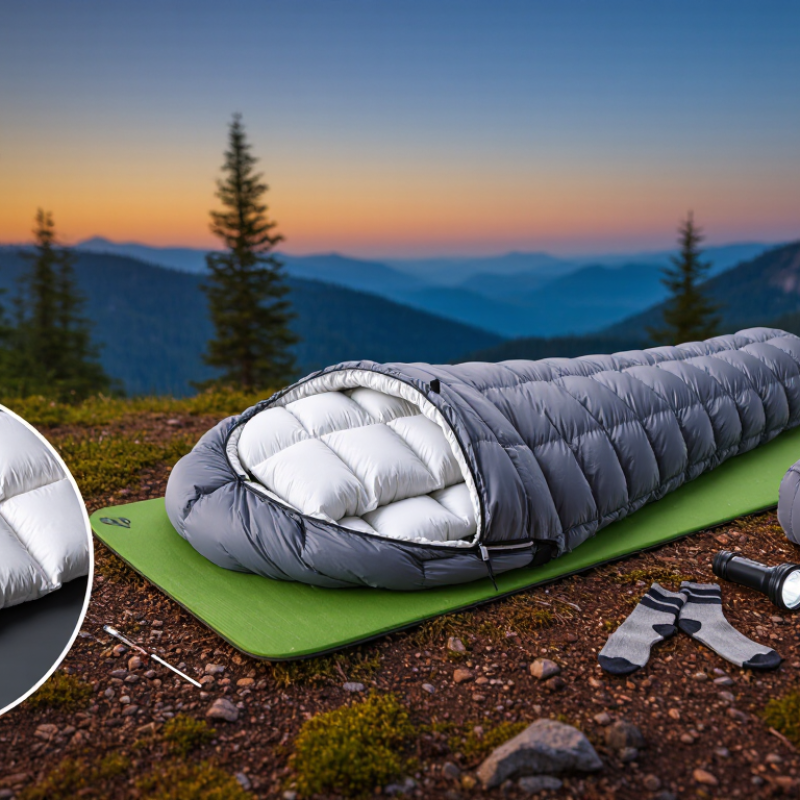
A light down sleeping bag is not defined by its loft number alone. Total weight also depends on down quantity, shell fabric, zipper, hood, and baffle design. IDFL’s published down-testing guidance measures fill power in cubic inches per ounce. Under the same test method, 800-fill down provides about one-third more loft per ounce than 600-fill down. That is useful, but it does not mean the finished bag is automatically warmer or lighter. A well-cut 700-fill bag may weigh less than a roomier bag with higher-fill-power down. Small details matter.
Check the listed bag weight and down fill weight separately. Lighter shell fabrics can reduce grams, but may offer less abrasion resistance. Baffle construction helps keep down distributed; poorly placed insulation can leave cold spots. ISO 23537-1:2022 sets standardized requirements and test methods for sleeping bags, making temperature ratings more comparable across products. Treat those ratings as laboratory reference points, not personal guarantees. Fit, sleeping-pad insulation, and damp conditions change the experience. I still find it easy to overvalue a tidy specification sheet. Feel the packed bag, inspect its seams, and consider where you will actually sleep.
A light down sleeping bag should match the coldest likely night, not the trip’s average temperature. ISO 23537-1 provides standardized sleeping-bag temperature ratings using thermal-manikin tests, including Comfort and Limit values. Comfort is the more cautious reference for many sleepers; Limit is a lower boundary, not a promise of warmth. These are laboratory comparisons, not campsite guarantees. Wind, damp insulation, fatigue, and a thin sleeping pad can all change how warm you feel. Small details matter.
Check the forecast low, then leave a buffer if conditions are uncertain or you tend to sleep cold. For a forecast near 28°F (−2°C), a bag with a Comfort rating around 20°F (−7°C) offers more margin than choosing by its Limit rating. A warmer sleeper in a sheltered, dry campsite may need less buffer. Down is light and compressible, but moisture can reduce its insulating performance. It is easy to over-trust one number; your pad and sleep habits matter too.
Tips: Match your bag rating to the expected low. Check your pad’s insulation rating, and keep your sleep layers dry. Test the setup on a nearby overnight trip before relying on it in colder conditions.
When choosing a light down sleeping bag, compare fill power and fill weight together. Fill power describes how much space one ounce of down can loft into; higher numbers generally mean more warmth for less weight. But a high rating alone does not make a bag warmer. The total fill weight tells you how much down is inside, so check it alongside the bag’s temperature rating and fit. A roomy cut may feel less warm, while a tight fit can compress insulation. Small details matter.
Construction affects how evenly that down stays around you. Box-baffle designs let down loft more fully and help reduce cold spots, though they may add weight and cost. Sewn-through construction is often lighter, but stitching can create narrow areas with less insulation. Look closely at the baffle layout, especially around the shoulders and feet. I would not choose by fill power alone; it is an easy number to fixate on. Compare the complete bag, then consider your sleep habits and expected conditions. There is no perfect number. A damp night or a poor-fitting hood can still make a carefully chosen bag feel disappointing.
Choosing a light down sleeping bag starts with fit, not just its packed weight.
Check the length and shoulder room while wearing your usual sleep layers. You should be able to bend your knees without pulling the footbox tight. Too roomy? Warmth can suffer. Too tight? Loft may be compressed against your body.
Try lying on your side and back; a quick shop-floor test can reveal pressure points that size charts miss. A shaped hood, insulated neck collar, and draft tube along the zipper help limit heat loss. Small details matter.
Look closely at stitching, zipper movement, and the shell fabric.
Fine, lightweight fabric saves grams but may snag more easily on rough tent hardware. That trade-off is easy to underestimate. Ask how the bag should be cleaned, and follow its care instructions; damp down loses loft until it dries.
For packability, compare the packed dimensions and test whether the bag fits your actual backpack, not an idealized loadout. Use a stuff sack on the trail, but store the bag loosely at home. A tiny packed bundle is appealing, though comfort and durability matter more after several nights outdoors.
A light down sleeping bag should fit your trips, not just look impressive on a scale. Start with the coldest conditions you genuinely expect, then compare comfort ratings rather than relying on a bag’s lowest limit. Ratings can vary between testing systems, so check how each figure was measured. If you sleep cold, leave a little margin. Your sleeping pad and clothing also affect warmth.
Set a budget that includes more than the bag. A very light model may cost more and use thinner fabric, while a heavier option may offer a tougher shell for frequent use. Check the packed size, zipper length, hood shape, and shoulder room. A bag that feels cramped can be miserable, even when its rating looks right. Try lying in it with your usual sleep clothes if possible. Small details matter.
For occasional summer trips, a modestly priced bag with suitable warmth may be more useful than an expensive, ultra-light model. For longer hikes, every saved ounce can matter, but only if the bag still suits your sleep style. I would compare care instructions and repair options, too; down needs to stay dry and regain its loft after storage. That part is easy to overlook. My own preference could change after a few cold nights, so treat specifications as a guide, not a promise.