How to Choose a Hardwood Bathroom Vanity
Choosing a Hardwood Bathroom Vanity means balancing natural character with the demands of a humid room. Wood brings visible grain, warmth, and variation that manufactured surfaces may not reproduce. Yet hardwood is not automatically waterproof. Daily splashes, poor ventilation, and standing water can damage finishes or joints over time. Wood moves. That matters.
Start with the room itself. Measure the available width, depth, and doorway, then note where plumbing and drawers must fit. A vanity that looks generous in a showroom may crowd a narrow bathroom or block a cabinet door at home. Check the construction details, too: solid-wood components, stable joinery, and a well-sealed finish are useful indicators, but product descriptions can use “hardwood” loosely. Ask which parts are solid wood and which are veneer or engineered material.
Species, finish, and upkeep deserve equal attention. Oak often has a pronounced grain, while maple tends to look smoother; color and pattern still vary between pieces. Choose a finish designed for bathroom use, and follow the maker’s care instructions. A simple habit helps: wipe up pooled water and keep the room ventilated. Details matter. No finish makes a vanity maintenance-free, and even a carefully chosen unit may show wear where hands and water meet most often. Compare warranty terms, replacement-part availability, and installation requirements before deciding. The right Hardwood Bathroom Vanity should suit your storage needs and daily routine, not just the photograph. A little hesitation is reasonable; wood has its own character, and that is not always perfectly uniform.
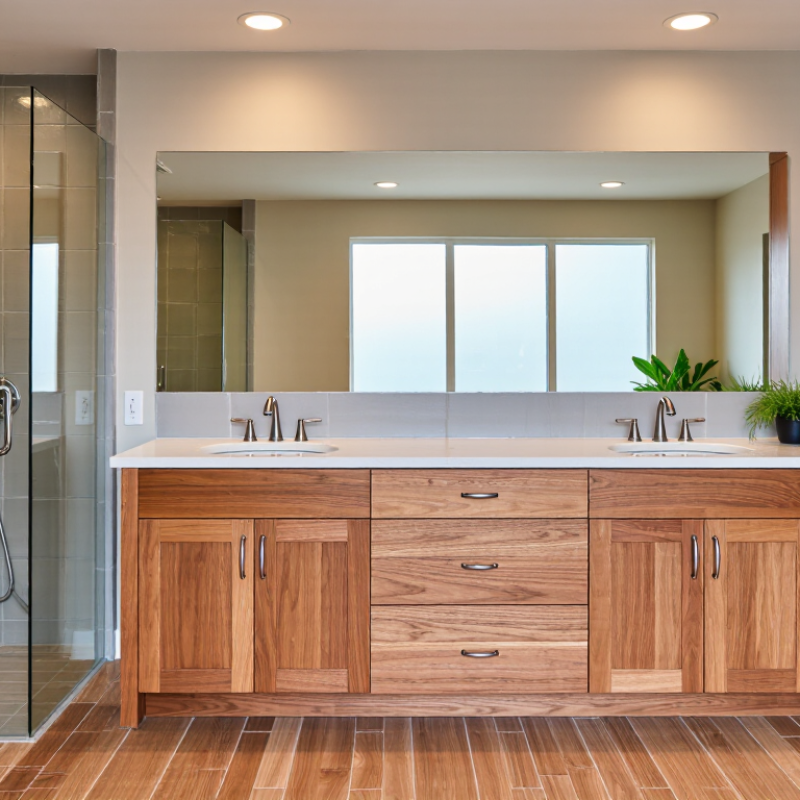
Assess Bathroom Space, Plumbing, and Storage Needs
Before choosing a hardwood bathroom vanity, measure the room at floor level and again where the countertop will sit. Walls are not always perfectly straight. Note door swings, drawer clearance, and the space between the vanity and the shower. A vanity that fits on paper may still make the bathroom feel cramped.
Check where the drain, water lines, and shutoff valves sit. Photograph them and measure from the floor and side wall; these details help you compare cabinet layouts accurately. If pipes enter through the floor, a deep drawer may need a cutout or a different configuration. Moving plumbing can add cost, so confirm the plan with a qualified plumber before ordering. Small detail, big consequence.
Think about what the vanity must hold each day. Measure tall bottles, folded towels, and the waste bin rather than guessing. Deep drawers can keep toiletries visible, while a shelf may suit bulky supplies. Hardwood needs a durable bathroom-rated finish and good ventilation, because standing water and persistent dampness can damage wood over time. I have found that storage looks generous in a showroom, yet feels awkward when pipes steal the middle section. Leave room for the things you actually use.
Compare Hardwood Species and Moisture Resistance
Choosing a hardwood vanity means comparing how each species handles humidity, not just how it looks. White oak has a tight grain and naturally occurring compounds that help it resist moisture better than many common woods. Its visible grain also suits a warm, textured bathroom. Teak contains natural oils and performs well in damp settings, though it still needs sound joinery and a suitable finish. Neither species is waterproof.
Maple is dense and smooth, but standing water can stain it or damage its finish. Walnut offers rich color and stable construction, yet its moisture performance depends heavily on sealing and care. A species name alone is not enough. Check whether exposed edges, drawer fronts, and sink cutouts are properly sealed; these areas often meet splashes first.
Look closely at construction, too. A well-finished vanity with tight joints may fare better than a poorly assembled cabinet made from a more moisture-tolerant wood. Keep the room ventilated, wipe up puddles, and inspect the finish around the basin. Small habits matter. I would not treat a “water-resistant” label as a guarantee; humidity can still find a weak seam, and finishes wear unevenly. Even careful buyers can miss that.
How to Choose a Hardwood Bathroom Vanity – Compare Hardwood Species and Moisture Resistance
| Wood species | Approx. Janka hardness | Moisture-related characteristics | Bathroom vanity suitability | Practical selection note |
Teak
Tectona grandis | About 1,000 lbf | Heartwood contains natural oils and is naturally resistant to decay. It is not waterproof and can still respond to changing humidity. | Very good when properly constructed and finished. | A strong choice for humid rooms; confirm that the wood is responsibly sourced and that all cabinet surfaces are protected. |
White oak
Quercus alba | About 1,360 lbf | Heartwood vessels commonly contain tyloses, which can limit liquid penetration compared with red oak. The wood still absorbs moisture and moves with humidity. | Very good with a durable finish. | A durable, widely used option. Ask specifically for white oak, since red oak has more open vessels. |
Black walnut
Juglans nigra | About 1,010 lbf | Heartwood has some natural decay resistance, but it is not considered waterproof; prolonged wetting can cause damage. | Good in a well-ventilated bathroom with careful sealing. | Chosen often for its dark color and refined grain. Wipe up standing water and protect cut edges and joints. |
American black cherry
Prunus serotina | About 950 lbf | Heartwood has limited natural decay resistance. Like other solid woods, it changes dimension as moisture levels fluctuate. | Good for a controlled, well-finished bathroom environment. | Its color deepens with light exposure. Use a complete finish system and avoid repeated water exposure. |
Hard maple
Acer saccharum | About 1,450 lbf | Hard and dense, but not naturally decay-resistant. A dense surface does not make the wood moisture-proof. | Fair to good with excellent sealing and ventilation. | Resists dents well, but standing water and unsealed edges require particular attention. |
Red oak
Quercus rubra | About 1,290 lbf | Its open vessel structure allows liquid to travel through the wood more readily than in white oak. It can also move with humidity changes. | Fair; use only with thorough finishing and good moisture control. | Often more affordable than white oak, but less suitable where splashes or leaks are frequent. |
Selection tip: Janka values measure resistance to denting, not water resistance. Regardless of species, choose a vanity with a durable finish on all exposed and hidden surfaces, sealed end grain and joints, sound construction, and adequate bathroom ventilation. Approximate hardness figures are commonly reported averages and can vary by sample and test conditions.
Inspect Joinery, Finish, and Hardware Quality
A hardwood bathroom vanity should feel solid before its finish catches your eye. Pull a drawer fully open and inspect the corners: tight, even dovetails or well-fitted mortise-and-tenon joints resist loosening better than exposed staples or uneven gaps. Press gently on the drawer front. It should not rack from side to side. The USDA Forest Products Laboratory’s Wood Handbook explains that wood changes dimensions as its moisture content shifts below the fiber-saturation point, typically around 30 percent. That makes sound joinery and stable construction especially important in a bathroom. A flawless showroom surface is not the whole story.
Look closely at the finish around sink cutouts, door edges, and the cabinet’s underside. Thin or skipped coating can leave end grain vulnerable to splashes. Ask whether the finish seals these areas, and check for a smooth, continuous film rather than rough patches. Test hinges and drawer slides several times; they should move evenly, without scraping or a sharp clunk. Stainless or corrosion-resistant hardware is a practical choice near frequent moisture. One caveat: “hardwood” alone does not guarantee quality. Species, construction, and upkeep matter too.
Tips: Bring a small flashlight. Check inside corners, behind drawers, and beneath the sink. These spots reveal rushed finishing. I still find it easy to be distracted by attractive grain; the hidden edges deserve a slower look.
Choose a Vanity Style, Size, and Sink Configuration
A hardwood bathroom vanity should suit the room’s daily rhythm, not just its photos. A simple Shaker-style cabinet feels calm and works with many tile patterns; a furniture-style vanity adds carved legs and visual weight. Look closely at the wood grain and finish under bathroom lighting. A dark stain can make a narrow room feel smaller, while a pale finish may show water marks more readily. Hardwood is durable, but standing water can still damage finishes and joints, so check that exposed edges are sealed.
Measure twice. Record the wall width, available depth, and space needed for doors and drawers to open. Small rooms punish guesswork. Leave enough clearance for the toilet, shower door, and walking path; plumbing locations may also limit drawer layouts. I’d rather choose a slightly narrower cabinet than squeeze past one every morning.
A single sink leaves more counter space for soap, a cup, and the occasional forgotten hairbrush. Double sinks can help shared bathrooms, but only when the vanity is wide enough to provide comfortable elbow room. Consider basin shape, too: an undermount sink is easy to wipe around, while a vessel basin sits higher and may require a lower cabinet or shorter faucet. It is easy to focus on appearance and overlook faucet reach. Check the actual basin and faucet dimensions together before settling on a configuration.
Review Installation Needs, Maintenance, and Budget
How to Choose a Hardwood Bathroom Vanity
Before choosing a hardwood vanity, measure the room, plumbing, and door swing. The National Kitchen & Bath Association recommends at least 21 inches of clear space in front of a lavatory. That clearance can disappear quickly in a narrow bathroom. Check wall levels, floor slope, and drain position, too. Moving pipes or adding wall blocking can raise installation costs.
Moisture deserves equal attention. The USDA Forest Products Laboratory’s Wood Handbook explains that wood changes dimension as its moisture content shifts. A strong finish helps, but it cannot prevent damage from standing water or persistent leaks. Look for sealed edges, ventilate the room after showers, and wipe splashes around the sink. Hardwood is not maintenance-free. That is easy to overlook.
Set the budget for the whole job, not just the cabinet. Houzz’s 2024 U.S. Bathroom Trends Study reported a $15,000 median spend for bathroom renovations; that figure covers projects, not vanity prices. Include delivery, installation, faucet and countertop costs, and any plumbing work. Ask for itemized estimates. A cheaper cabinet may need more fitting or touch-up work, and those costs are annoyingly easy to miss. I would also keep a small contingency, especially in older homes where the wall behind the vanity may hide surprises.
