How to Choose the Best Ice Hockey Shirt?
Choosing the best Ice Hockey Shirt is not only about team colors or a sharp logo. It is about movement, comfort, protection, and lasting performance. A reliable shirt should feel light across the shoulders, stay secure during quick turns, and manage sweat beneath heavy pads. It should also survive repeated washing, locker-room benches, and hard contact along the boards.
Hockey equipment specialist Dave Art once said, “A jersey must look powerful, but it must work even harder.” That idea is useful, although appearance still influences confidence. Check the fabric first. Polyester blends often provide strength, stretch, and faster drying. Examine the seams near the shoulders and underarms. Weak stitching can become a problem after only a few games. Fit matters too. A shirt that is too tight may restrict your arms. One that is too loose can bunch under protective equipment.
Measure carefully.
Players should consider their position, playing level, and personal habits. A goalkeeper may prefer extra room and stronger airflow. A recreational player may value softness over elite durability. Parents should inspect sizing charts instead of guessing from age labels. Those labels are inconsistent. I have seen two shirts marked “medium” fit completely differently.
Do not ignore maintenance. Follow the washing instructions, avoid unnecessary high heat, and inspect the collar after each season. Even the best Ice Hockey Shirt will fade or lose shape when treated carelessly. There is no perfect choice. The practical goal is a dependable balance between fit, breathability, durability, and identity. Your ideal shirt should disappear during play, except when it helps you feel ready.
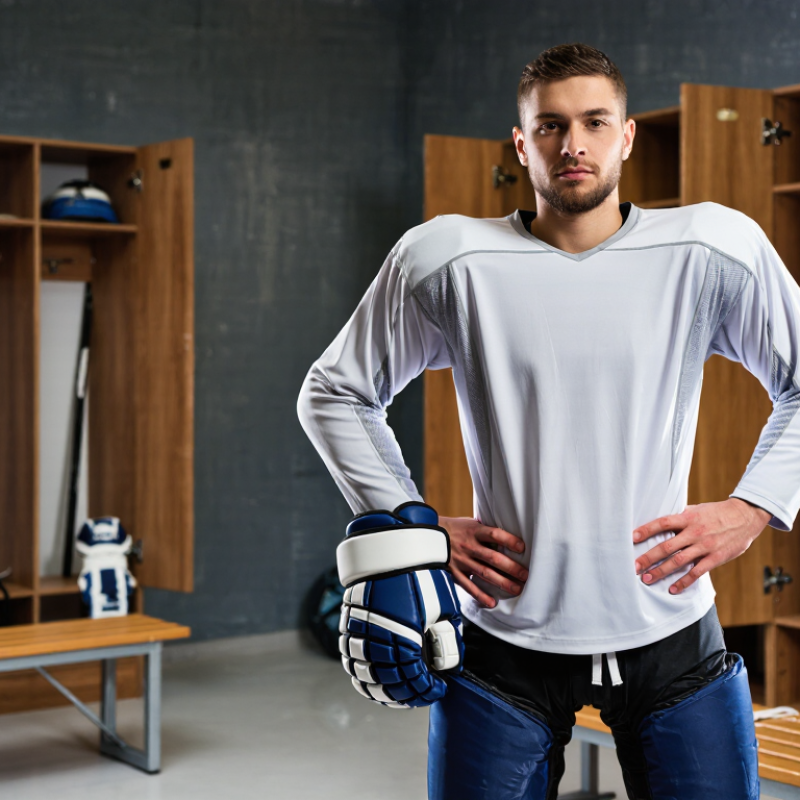
Understand the Purpose and Playing Conditions
Choosing the best ice hockey shirt begins with its purpose, not its appearance. A game jersey mainly identifies players and allows movement. It does not replace protective equipment. For training, select a close-fitting base layer that moves sweat away from the skin. Polyester or blended technical fabrics usually dry faster than cotton. Cotton can feel heavy after repeated shifts.
Playing conditions change the right choice. Indoor rinks often feel cold and damp, while outdoor sessions add wind and uneven temperatures. The ASHRAE Handbook recommends careful humidity and temperature control for ice arenas, because moisture affects both comfort and ice quality. A breathable shirt helps during intense skating, but a thin thermal layer may work better during long bench periods. Do not choose excessive compression without testing it first. It can restrict shoulder movement.
Protection also matters. A padded shirt may reduce discomfort from contact, although it cannot prevent every injury. A peer-reviewed study in Pediatrics reported that body checking was linked with roughly three times the concussion risk among youth players. That figure should influence equipment decisions, especially for developing athletes. Fit the shirt over shoulder and chest protection, not underneath by guesswork. Try a full skating session. Small problems become obvious then: chafing at the neck, trapped sweat, or sleeves riding above the gloves. I once underestimated sleeve length; it looked fine standing still, but failed during a slap shot.
Evaluate Fabric, Fit, and Freedom of Movement
Choosing the best ice hockey shirt starts with fabric, fit, and movement. Polyester remains common because it dries quickly and resists repeated washing. Textile Exchange’s Materials Market Report 2024 states that polyester represented 57% of global fiber production in 2023. That figure shows availability, not guaranteed performance. Ask for moisture-management test results, such as AATCC TM195 data, rather than trusting vague claims.
Fit should feel close, but never restrictive. A shirt that bunches under shoulder pads can create pressure near the neck and wrists. Raise both arms, rotate your shoulders, and bend forward before buying. The hem should stay tucked during a skating stance. I once preferred a tighter base layer, but it limited my reach during crossovers. That mistake changed my fitting method.
Tips: Test the shirt with your actual shoulder pads. Check the underarm panel and sleeve length. Look for flat seams around the collar and elbows. If possible, skate for ten minutes before deciding. ISO 11092 can assess thermal and water-vapour resistance, but laboratory results cannot predict every player’s comfort. Personal testing still matters. Some players need maximum ventilation; others need warmth during long bench periods. Don’t assume thinner always means better.
Compare Ventilation, Protection, and Durability
How to Choose the Best Ice Hockey Shirt?
A good ice hockey shirt must balance ventilation, protection, and durability. During hard shifts, heat gathers beneath shoulder pads and elbow guards. Mesh panels can release sweat, but oversized openings may expose skin during contact. The NCAA Injury Surveillance Program’s 2014–2019 report recorded 7.0 injuries per 1,000 athlete-exposures in men’s ice hockey. A shirt cannot prevent every injury, yet a close fit can keep protective equipment positioned correctly. Look for reinforced seams around the shoulders, elbows, and collar. These areas often rub against straps and boards.
Protection begins with fit, not thickness. The shirt should cover the torso without restricting a full skating stride. Stretch fabric helps movement, while a longer back reduces exposed skin when bending. However, many shirts feel protective only because they are tight. That impression can be misleading. ASTM F1045 covers requirements for ice hockey shoulder, body, and spine protectors, but it does not make a base shirt protective by itself. The hard equipment does the main work.
Tips:
Test the shirt with your complete gear. Raise both arms, rotate your shoulders, and crouch deeply. Check whether the sleeves ride upward. After each use, inspect loose stitching and stretched cuffs. Industry durability testing cannot fully copy repeated practices, sweat, washing, and impact. My practical preference is moderate compression, breathable panels, and double-stitched stress points. A lighter shirt may ventilate better, but it can wear faster under daily use. A durable shirt is valuable only when it still dries comfortably between sessions.
Choose the Correct Size and Design
How to Choose the Best Ice Hockey Shirt?
Choosing the correct size starts with your equipment, not your casual T-shirt. A hockey shirt must sit comfortably over shoulder pads, elbow guards, and protective base layers. Measure your chest while wearing your usual gear. Then compare that measurement with the manufacturer’s size chart. Do not rely on age labels alone. The SFIA 2024 Topline Participation Report recorded about 2.8 million U.S. ice hockey participants in 2023. That broad group includes juniors, recreational adults, and competitive players, so body shape varies widely. A loose shirt improves airflow, but excessive fabric can catch during skating. Fit is not fashion. Movement matters more.
Design should support visibility and repeated washing. Choose reinforced stitching around the shoulders, cuffs, and side panels. Look for breathable fabric under the arms, especially if you play in a warm rink.
A longer back can help keep the shirt tucked during contact and fast turns. Colors should contrast clearly with the ice and team equipment. Simple numbers and high-contrast lettering are easier to identify from the bench. Industry sportswear reports consistently identify durability and comfort as major purchase factors, but personal preference still affects the final choice.
Tips: Try the shirt with full pads before buying. Lift both arms and reach forward. Check whether the sleeves twist or the hem rides up. I sometimes size up for winter layers, yet that choice can reduce control. Recheck the fit after washing, because some fabrics shrink slightly. A practical mistake is ignoring sleeve length. Your wrists should stay covered without blocking your gloves.
Assess Maintenance, Price, and Overall Value
A hockey shirt should survive repeated skating, washing, and contact. Check reinforced shoulder seams, dense stitching, and breathable mesh before comparing prices. Textile Exchange’s 2024 Materials Market Report records 124 million tonnes of global fiber production in 2023. Polyester represented about 57% of that volume. This makes durability important, not decorative.
Maintenance affects real value. Follow the care label, wash inside out, and avoid high heat. Air-drying protects printed numbers and reduces energy use. The European Environment Agency reports that synthetic textiles can release microfibers during washing. A washable shirt with secure graphics may therefore create less waste over time. Small details matter.
Price alone misleads. Divide the purchase price by expected wears, then add replacement costs for damaged lettering or stretched cuffs. WRAP’s clothing research indicates that extending garment life by nine months can reduce carbon, water, and waste footprints by around 20–30%. A cheaper shirt may fail after one season. I once focused too heavily on the lowest price and ignored seam quality. That was not a smart saving. Examine the fabric after washing, if possible, because showroom confidence can disappear at home. A practical choice balances maintenance effort, service life, comfort, and repairability.
