How to Choose the Right Hydraulic Tilting Carbon Paste Kneader?
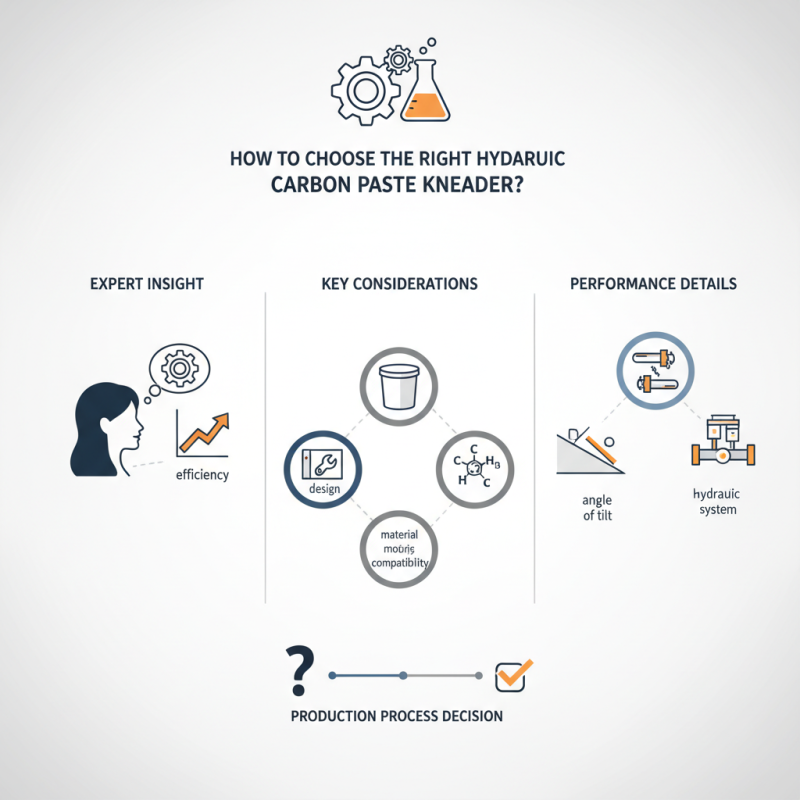
Choosing the right Hydraulic Tilting Carbon Paste Kneader is crucial for optimizing production efficiency and product quality. According to Dr. Emily Carter, a leading expert in materials processing, “The right kneader can make or break your entire operation.” Her extensive research underscores the importance of selecting equipment that aligns with specific processing requirements.
Investing time in understanding the features of a Hydraulic Tilting Carbon Paste Kneader can yield significant returns. It's essential to consider factors such as design, capacity, and material compatibility. These choices impact not only the functionality but also the longevity of the machine.
Many buyers overlook the details that can affect performance. Each aspect, from the angle of tilt to the type of hydraulic system, plays a vital role. Mistakes in selection can lead to costly delays or product defects. Therefore, it is vital to reflect on the unique demands of your production process before making a decision.
Understanding the Functionality of Hydraulic Tilting Carbon Paste Kneaders
Hydraulic tilting carbon paste kneaders play a crucial role in various industries. They are designed to mix, knead, and refine carbon paste materials efficiently. Understanding their functionality helps in making informed choices. These kneaders utilize hydraulic systems for tilting, ensuring easy discharge of materials. This feature enhances productivity and reduces labor costs.
The design of a hydraulic tilting kneader is not just about mixing. It's about achieving optimal consistency and viscosity. Operators need to monitor the process closely. Improper adjustments can lead to inconsistent product quality. This can affect downstream applications. It is essential to comprehend the material properties being processed. Variations in particle size can impact the kneading performance.
Furthermore, maintenance is a critical aspect of these machines. Regular checks on hydraulic systems can prevent unexpected breakdowns. Many users often overlook this. They focus solely on performance and ignore wear and tear. Understanding the importance of maintenance can improve overall reliability and extend the machine's lifespan. Each decision in the selection process significantly influences the final output quality.
Evaluating Different Sizes and Capacities for Your Production Needs
When evaluating hydraulic tilting carbon paste kneaders, assessing sizes and capacities is crucial. Each production line has unique demands, and the right size ensures optimal performance. A small kneader may struggle with large batches. Conversely, a large one could be inefficient for smaller volumes. Understanding your production needs is essential for selecting an appropriate model.
Consider the specific application and volume of material processed. For smaller operations, a compact kneader might suffice. Larger factories may require significant capacity to maintain efficiency. It’s important to analyze throughput requirements to avoid bottlenecks. If you misjudge your needs, it could lead to unforeseen delays and increased costs.
Local regulations might also impact the choice. Some regions mandate specific safety features or environmental considerations. Evaluating these aspects can guide your decision. A balance between capacity and operational efficiency must be struck. Aim for a model with flexibility to adapt to changing production needs. Over time, assessments of your chosen kneader can yield insights for future improvements.
Examining the Material Quality and Durability of Kneader Components
When selecting a hydraulic tilting carbon paste kneader, examining the material quality and durability of components is essential. The materials used in the construction of these kneaders directly impact their efficiency and longevity. High-quality steel alloys are often preferred due to their resistance to wear and corrosion. According to recent industry reports, stainless steel components can enhance durability by up to 30% compared to standard steel.
Another crucial aspect is the design of the kneader's mixing blades. Blades made from hard carbide materials not only ensure efficient mixing but also extend the lifespan of the machine. Data indicates that components with enhanced wear resistance can reduce maintenance costs by 20% over five years. Operators must be cautious, as low-quality materials may lead to premature failures, affecting production and causing unexpected downtime.
It's important to perform regular inspections. A thorough evaluation of wear patterns can inform future maintenance or replacements. Without this, many may find themselves facing unplanned shutdowns, which can disrupt the production line. Additionally, established guidelines suggest that manufacturers verify the grade of materials used in their machines, aiming for internationally recognized standards. Vigilance in this area can contribute significantly to efficiency and cost management in production.
How to Choose the Right Hydraulic Tilting Carbon Paste Kneader? - Examining the Material Quality and Durability of Kneader Components
| Component | Material | Durability Rating (1-10) | Cost Estimate ($) |
| Kneader Body | Stainless Steel | 9 | 3000 |
| Mixing Blades | High Carbon Steel | 8 | 1500 |
| Hydraulic System | Aluminum Alloy | 7 | 2500 |
| Control Panel | Plastic Composite | 6 | 800 |
| Sealing Gaskets | Silicone Rubber | 5 | 200 |
Assessing the Brand Reputation and Customer Support of Manufacturers
When selecting a hydraulic tilting carbon paste kneader, evaluating the manufacturer's brand reputation is crucial. According to a recent industry report, 75% of customers prioritize a company's history and credibility. A well-established brand often indicates reliability and quality. Seek manufacturers with at least a decade of experience.
Customer support is equally important. A study found that 68% of users experienced issues post-purchase, and adequate support impacted their satisfaction. Ensure the manufacturer offers comprehensive service, including troubleshooting and spare parts availability. Quick response times are vital. Ideal support can significantly reduce downtime, which in turn maximizes productivity.
Reputation doesn't guarantee perfection. Even reputable brands may face challenges. Many users report delays in parts delivery. It’s essential to read reviews and connect with existing users. They can provide insights into real-world performance. Make informed decisions based on a combination of brand reputation and customer feedback.
Evaluation of Hydraulic Tilting Carbon Paste Kneader Manufacturers
Reviewing Maintenance and Operating Costs for Long-Term Efficiency
Choosing a hydraulic tilting carbon paste kneader can significantly impact your production efficiency. However, understanding the maintenance and operating costs is crucial for long-term success. Regular maintenance helps prevent unexpected breakdowns. It is essential to establish a routine that fits your production schedule. Spare parts should be kept on hand to reduce downtime during repairs.
Operating costs can vary based on usage. The type of materials processed influences wear and tear on the machine. Sometimes, these costs accumulate unnoticed over time. Routine checks can identify potential issues early. Ignoring minor concerns can lead to expensive repairs later. Operators should document any irregularities they observe during use.
Training staff is equally important. Well-trained operators can recognize early signs of mechanical stress. This proactive approach can save on maintenance costs. Regularly reviewing operational procedures can refine efficiency. Remember, every kneader will require adjustment over its lifespan. Emphasizing a culture of continuous improvement is vital. Adaptability in managing costs will ensure your operations remain sustainable.
