How to Choose Gray Suit Fabric in 2026?

Choosing Gray Suit Fabric in 2026 requires more than matching a color to a dress shirt. The fabric must perform under real conditions. Think of a crowded train, a warm office, or a long evening reception. Each setting exposes different strengths and weaknesses.

Menswear author Alan Flusser has written, “Gray is the most versatile of all suit colors.” That versatility still matters, but modern buyers should examine the cloth more carefully. Superfine wool can feel smooth and luxurious, yet it may crease faster during travel. A midweight wool blend can resist wrinkles better, although it might lose some natural breathability. The best choice depends on climate, movement, maintenance, and how often the suit will be worn.

Look closely at the weave. A tight twill offers structure and a subtle professional sheen. A sharkskin weave creates a sharper appearance under office lighting. Brushed flannel feels softer and warmer, but it may appear too casual for formal meetings. Charcoal gray usually communicates authority, while medium gray feels more adaptable. Light gray can look fresh, but stains become visible quickly.

There is no perfect fabric.

This is where many buying guides oversimplify the decision. They focus on appearance and ignore friction at the elbows, seat, and trouser crease. A reliable evaluation should consider fiber quality, fabric weight, recovery, breathability, and tailoring compatibility. In 2026, responsible shoppers should also ask about traceability and durable construction. Sustainable labeling can be vague. Check the evidence.

This guide explains how to compare Gray Suit Fabric options with practical judgment, not marketing promises.
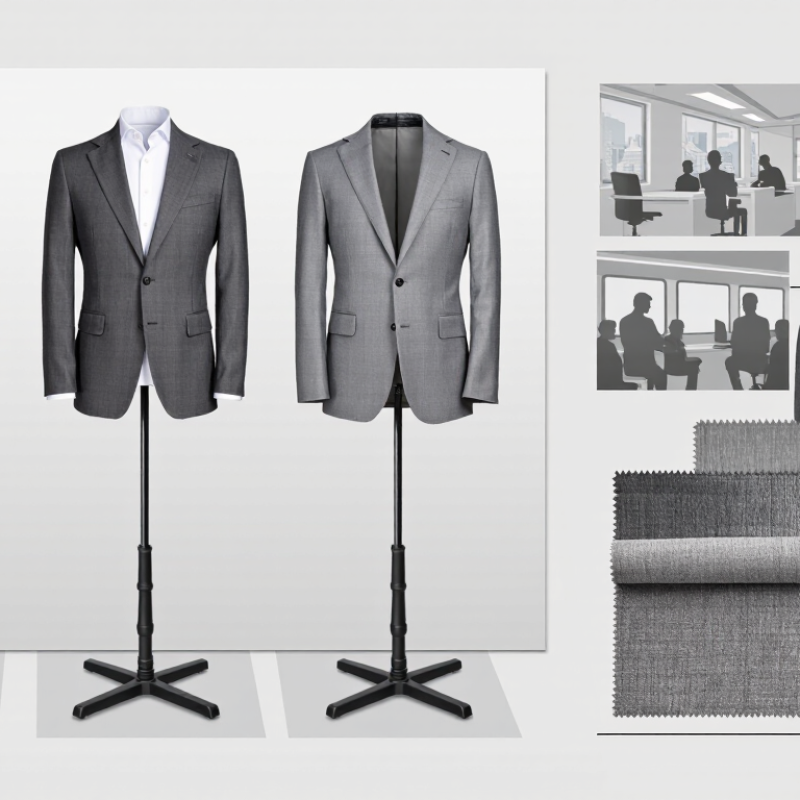
How to Choose Gray Suit Fabric in 2026?

Understanding Gray Suit Fabric Types

Choosing gray suit fabric starts with understanding how each fiber behaves. Worsted wool has a smooth surface, firm drape, and natural wrinkle recovery. It suits office wear and formal travel. Flannel wool feels softer and warmer, but its brushed texture looks less sharp under strong light. Lightweight wool, around 230–270 grams per square meter, works well in mild climates.

Fiber data explains why wool remains relevant. Textile Exchange’s Materials Market Report 2024 estimated polyester at about 59% of global fiber production in 2023, while wool represented roughly 1%.

Scarcity is not proof of superiority. Still, wool manages moisture and temperature better than many basic synthetics.

A gray wool-polyester blend can reduce cost and improve abrasion resistance. Check the ratio carefully. A small wool percentage may not create a wool-like hand.

Linen blends feel cool and dry, especially in summer, but they crease quickly. Cotton twill offers a casual gray appearance, with a denser, more grounded texture.

For daily commuting, I usually inspect the cloth under daylight, then bend the sleeve and watch its recovery. This simple test is useful. It is not perfect.

Color can also shift between charcoal, graphite, and silver-gray. A swatch near your skin reveals undertones that showroom lighting hides.

The International Wool Textile Organisation has repeatedly identified wool’s limited supply as a defining market characteristic, so responsible sourcing and traceable fiber claims deserve careful verification.

Choosing Fabric Weight for Climate and Comfort

How to Choose Gray Suit Fabric in 2026?

Choosing Fabric Weight for Climate and Comfort

Fabric weight matters more than a gray color’s appearance. A lightweight gray suit can look elegant, but it may crease quickly and reveal pocket outlines. For hot, humid climates, choose wool around 230–280 grams per square meter (gsm). The International Wool Textile Organisation reports that wool can absorb up to 30% of its weight in moisture vapor without feeling wet. That supports comfort during crowded commutes. However, ventilation still matters. A half-lined jacket often feels cooler than a fully lined one.

For changing seasons, 280–330 gsm offers useful balance. It gives structure without feeling heavy in an office. In cold regions, 330–400 gsm provides more insulation and better drape. The European Outdoor Conservation Association notes that layering remains more reliable than depending on fabric thickness alone. This principle also works for tailoring. A medium-weight suit with a breathable shirt can adapt better than one very heavy suit.

Ask the tailor to show the cloth under direct light. Thin fabric may look uneven across the shoulders. I once chose a lighter cloth for summer travel, but its trousers creased by lunchtime. That choice was comfortable, not practical. The Hohenstein Institute’s textile testing work also emphasizes moisture management and thermal comfort as separate performance factors. Do not judge weight by touch alone. Check the weave, lining, climate, and daily movement.

Comparing Fiber Blends, Weaves, and Texture

How to Choose Gray Suit Fabric in 2026?

Gray suit fabric should be judged by fiber blend, weave, and surface texture. Textile Exchange’s Materials Market Report 2024 reports polyester at 57% of global fiber production in 2023. Cotton represented 19%, while wool accounted for about 1%. These figures show scale, not quality. A fiber’s performance still depends on yarn design, finishing, and fabric construction.

For regular office wear, a wool-polyester blend can resist creasing and frequent commuting. Pure wool usually offers better breathability and a more natural drape. I prefer a fine twill for versatile gray suits because its diagonal structure gives quiet depth under indoor light. Hopsack feels airier, but its open weave may reveal wrinkles sooner. Test the cloth by bending the sleeve. A good fabric should recover without looking shiny.

Texture changes the suit’s visual weight. A lightly brushed flannel softens charcoal gray and suits colder months. A smooth worsted surface looks sharper and reflects more light. Textile Exchange also notes that recycled polyester is growing within the fiber market, but recycled content alone does not prove durability. Ask about fabric weight, finishing, and testing. Numbers can mislead.

I still find fabric selection imperfect. Some durable blends feel too warm. Some beautiful wool wrinkles quickly. Touch the cloth. View it outdoors. Then reconsider the setting, season, and maintenance you can realistically provide.

Matching Gray Fabric to Occasion and Suit Style

Choosing gray suit fabric starts with the occasion, not the color chart. For office wear, medium-gray worsted wool gives a clean surface and controlled shine. Its smooth weave works with white shirts, leather shoes, and frequent pressing. Charcoal fabric feels more formal, especially for evening events or conservative meetings. Choose matte cloth for quiet authority. Very shiny gray can look inexpensive under strong indoor lighting. I learned this after wearing a polished suit beneath conference lights. It photographed poorly.

For weddings, dinners, and travel, texture changes the message. Subtle birdseye or flannel adds depth without appearing too casual. Flannel feels soft and warm, but it may crease faster in humid weather. A lightweight wool blend can breathe better, though blends vary in recovery and drape. Check the fabric in daylight, then move under warm lighting. Gray can shift from silver to brownish charcoal. That detail matters. For summer ceremonies, choose an open weave and lighter gray. For winter, denser cloth supports a structured jacket and sharper trousers.

Suit style should guide fabric weight and pattern. A slim two-button suit usually looks best in smooth, flexible cloth. A relaxed cut can carry brushed texture or a faint windowpane. Avoid heavy fabric in narrow trousers. It can create bulky folds at the knee. Also consider your habits. If you sit on trains daily, wrinkle resistance may matter more than softness. I sometimes favor richer texture, then regret it after a long commute. Ask a tailor to test the fabric against your posture and movement.

How to Choose Gray Suit Fabric in 2026? Matching Gray Fabric to Occasion and Suit Style
Fabric Type Typical Weight Surface and Breathability Best Gray Tone Recommended Occasion Best Suit Style Practical Considerations
Superfine Merino Wool 220–280 g/m² Smooth, refined, naturally breathable, and comfortable across much of the year. CharcoalMedium Gray Business meetings, interviews, formal office wear, and evening events. Two-button notch-lapel suit; structured single-breasted tailoring. Fine fibers create a luxurious hand, but the cloth can be less resistant to abrasion than heavier wool.
Worsted Wool 240–320 g/m² Firm, smooth, and resilient with a clean drape and reliable crease recovery. CharcoalSlate Gray Daily business wear, presentations, ceremonies, and formal travel. Classic two-piece or three-piece suit with a clean, tailored silhouette. A versatile year-round choice; medium-weight cloth generally offers the best balance of comfort and durability.
Flannel Wool 280–380 g/m² Soft, brushed, warm, and matte with a fuller drape. Mid GrayDove Gray Autumn and winter weddings, smart-casual offices, dinners, and weekend tailoring. Soft-shoulder suit, double-breasted jacket, or relaxed pleated trousers. Its brushed surface gives depth to gray but may feel too warm for hot climates and can show wear at high-friction areas.
Tropical Wool 180–240 g/m² Lightweight, open, and breathable with a crisp rather than bulky drape. Light GraySilver Gray Summer business wear, warm-weather ceremonies, and indoor events without heavy layering. Unlined or half-lined two-piece suit; lightly structured jacket. Excellent for heat management, although very light cloth can crease more easily and may be less opaque.
Wool-Mohair Blend 220–300 g/m² Crisp, slightly lustrous, breathable, and resistant to losing its shape. Silver GrayCool Gray Summer weddings, formal receptions, and sharp evening occasions. Clean single-breasted suit; high-twist or lightly structured tailoring. Mohair adds brightness and crease resistance, but the fabric can feel drier and less soft than pure wool.
Wool-Silk-Linen Blend 200–280 g/m² Textured, breathable, and naturally relaxed with a subtle visual irregularity. Stone GrayLight Gray Outdoor weddings, resort events, daytime celebrations, and elevated summer casual wear. Unstructured jacket, patch pockets, or relaxed two-piece suit. Silk improves softness and drape, while linen adds airflow; natural creasing is part of the intended look.
Wool-Cashmere Blend 260–340 g/m² Exceptionally soft, warm, and luxurious with a gentle, fluid drape. CharcoalSmoke Gray Winter dinners, executive evening wear, and special-occasion tailoring. Softly structured jacket, double-breasted suit, or refined evening separates. Cashmere enhances softness and warmth but generally requires more careful handling than standard worsted wool.
Wool-Stretch Blend 200–280 g/m² Smooth and flexible, with added ease of movement and strong suitability for commuting. Medium GrayGraphite Daily office wear, business travel, conferences, and long working days. Modern slim or contemporary regular-fit suit with flat-front trousers. A small amount of elastane can improve comfort; excessive stretch may reduce the traditional drape of tailored wool.
High-Twist Wool 220–280 g/m² Dry, crisp, breathable, and highly resistant to wrinkling and bagging. Mid GrayCharcoal Frequent travel, warm offices, business-casual settings, and all-day wear. Travel suit, contemporary two-piece, or trousers-and-jacket separates. Its springy yarn structure supports durability and crease recovery, but the hand may feel less plush than flannel.
Gray Tweed 320–450 g/m² Textured, insulating, and highly durable with a pronounced weave or flecked appearance. Heather GrayCharcoal Mix Cold-weather country events, weekend wear, outdoor gatherings, and heritage-inspired dressing. Sporting jacket, odd jacket with trousers, or relaxed three-piece suit. Best in cool conditions; the substantial texture pairs well with denim, corduroy, flannel trousers, and leather footwear.

Checking Quality, Durability, Care, and Budget

How to Choose Gray Suit Fabric in 2026?

A good gray suit starts with fiber content, not color alone. Textile Exchange’s 2024 Materials Market Report places wool at about 1% of global fiber production. That scarcity partly explains its price. For regular office wear, choose tightly woven worsted wool around 240–280 gsm. It feels structured without becoming heavy. A wool blend can reduce cost and resist creasing. However, too much synthetic fiber may trap heat and create shine.

Check durability under bright light. The surface should look even, with no loose slubs or weak patches. Ask for the fabric’s abrasion test results, ideally using the Martindale method under ISO 12947. There is no universal “durability score” for every suit. Context matters. A commuter needs different performance from a wedding suit. I still distrust cloth judged only by touch. Some soft fabrics age badly.

Care affects the real budget. Air the jacket after wearing it, then brush away dust with gentle strokes. Steam can relax wrinkles, but excessive heat may flatten the texture. Professional cleaning should be occasional, not automatic. The International Wool Textile Organisation emphasizes wool’s natural resilience and moisture management, yet wool is not maintenance-free. Calculate cost per wear before choosing. A moderately priced suit worn twice weekly may outperform an expensive suit kept in a closet. My own weak point is overvaluing fine fabric numbers; higher fineness can mean greater delicacy.

How to Choose Gray Suit Fabric in 2026

Quality
Look for an even surface, consistent gray color, clean selvage, and a tight weave. Fabric weight is a useful starting point, but fiber quality and finishing also affect performance.
Durability
Midweight wool and wool-blend fabrics generally offer a practical balance of structure, comfort, and resistance to everyday wear. Abrasion resistance should be checked from the supplier’s specification.
Care
Air the suit after use, use a clothes brush, store it on a shaped hanger, and avoid frequent washing. Follow the garment-care label for professional cleaning.
Budget
Compare the fabric price per metre together with lining, tailoring, alterations, and expected cleaning costs. A moderately priced fabric with good construction can offer better value than a heavier luxury cloth.

The chart shows common approximate weight ranges for suiting fabrics in grams per square metre (g/m²). Lightweight fabrics are cooler and easier to wear in warm conditions; midweight fabrics are the most versatile; heavyweight fabrics provide more structure and warmth. Actual specifications vary by weave, finish, fiber quality, and supplier.