Sorry, your browser is not supported. For a better experience, keep your browser up to date. Check here for latest versions
A Leather Recliner Sofa Set can turn a quiet evening into a comfortable ritual, but the wrong choice may become an expensive regret. The best-looking set is not always the best-supported one. Before comparing colors, consider how the sofa will fit your room, your body, and your daily routine.
Upholstery specialist Claire Bennett puts the principle simply: “Choose a recliner for the support you feel, not just the style you see.” Check the seat depth with your feet on the floor. Notice whether the lumbar area feels supported when you lean back. Then test the reclining mechanism more than once. It should move smoothly, without a clunk or a strained pull. Small details matter.
Leather also deserves a closer look. Ask what type of leather covers the seats and which areas use matching materials. “Leather” on a product page can describe different constructions, and the details affect feel, appearance, and care. Check the frame, cushion filling, warranty, and cleaning instructions before you buy. Measure the room with the recliner fully extended. Leave space behind it, too, if its design requires clearance. No checklist can predict personal comfort perfectly. I would still sit in the actual model, if possible.
These seven tips will help you compare materials, comfort, construction, size, features, maintenance, and value with clearer expectations. Some compromises are normal. The key is knowing which ones you can live with.
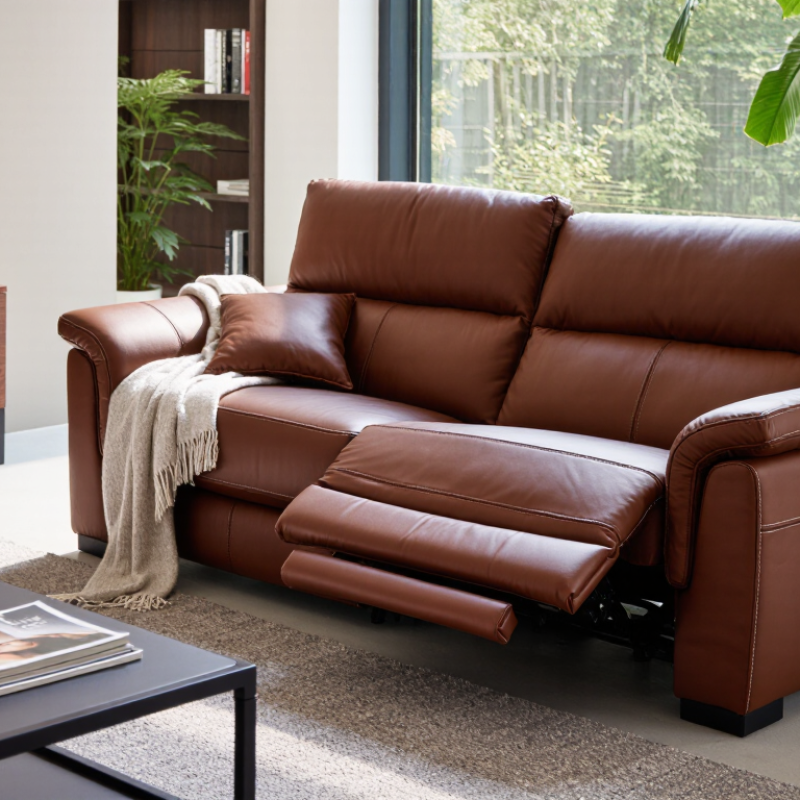
Before choosing a leather recliner sofa set, measure the room, doorway, and route from the entrance. A sofa that fits the wall may still block a walkway when fully reclined. Mark its footprint with painter’s tape, then leave room for footrests and side tables. Check the product’s open-depth measurement, not just its closed dimensions. It is easy to miss that detail.
Seating needs depend on who uses the room and how. The U.S. Census Bureau’s 2023 American Community Survey puts average household size at roughly 2.5 people; your household may need more seats for guests or shared movie nights. Try the seat depth and arm height in person if possible, especially if users differ in height. For budget planning, the Bureau of Labor Statistics’ 2023 Consumer Expenditures report says housing represented 32.9% of average household spending. That is a broad benchmark, not a furniture allowance. Set a firm sofa budget, then include delivery, care products, and any matching pieces. I would leave a small cushion for those costs; estimates can be optimistic.
Assess your space, seating needs, and budget before you buy.
Typical width planning estimates: a two-seat recliner sofa is about 60 inches wide, a three-seat model about 84 inches, and a four-seat model about 108 inches. These are general estimates; check the exact product dimensions. Measure doorways and room space, allow room for the recliners to extend, consider how many people will use the sofa, compare leather types, and set a budget that includes delivery and care.
A recliner’s leather can feel soft in a showroom yet show wear quickly at home. Full-grain leather keeps the hide’s natural surface, including small marks. Top-grain leather is refined and may receive pigment for a more even color. Split leather comes from lower hide layers and is often coated; bonded leather contains reprocessed leather fibers, not a whole hide. “Genuine leather” alone does not explain the construction. FAO’s World Food and Agriculture Statistical Yearbook 2023 reports about 1.5 billion cattle worldwide in 2021. That figure describes livestock, not sofa quality, but it highlights how much sourcing and processing can vary.
Finishes matter as much as hide type. Aniline leather shows natural pores and marks, and can develop a patina, but it stains more easily. Semi-aniline adds light protection. Pigmented leather has a more uniform surface and is usually easier to wipe clean. Not invincible, though. A coating can conceal grain details, so ask how it feels and ages, not only how it looks.
Tip: Request the exact hide layer and finish in writing. Check a swatch in daylight, then gently rub it with a clean, dry cloth to see whether color transfers. Ask about scratch care, cleaning instructions, and warranty exclusions. If the seller cannot explain the finish clearly, pause. I would not choose by grade label alone; those terms can vary, and a protected surface may suit a busy household better than a softer, more delicate one.
A leather recliner sofa set should feel steady before you judge its softness. Ask what the frame is made from, and check whether its joints feel firm rather than loose. If possible, look underneath for reinforced corners and secure fasteners. Check underneath. A sturdy frame should not twist noticeably when you press gently on opposite corners. Construction details matter, though a neat finish alone cannot prove long-term durability.
Tip: Sit down and recline slowly. The mechanism should move smoothly, without grinding, sharp knocks, or sudden drops. Raise and lower the footrest several times, then check that it locks securely. Listen for squeaks. A quick showroom test is imperfect; it cannot reveal years of wear, but rough movement is still worth questioning.
Inspect the stitching where the seat meets the arms and back. Look for loose threads, uneven seams, or gaps that widen when you sit. Press the cushions and notice whether they recover, but remember that personal comfort varies. It is easy to focus on the leather’s color and overlook what supports it. Take notes on frame materials, mechanism operation, and visible construction, then compare those details before choosing.
| Tip | What to Inspect | How to Check | What to Look For |
|---|---|---|---|
| 1. Check the frame | Frame material, joints, and overall rigidity | Ask what materials are used in the load-bearing frame. Sit in different seats and gently shift your weight to check for excessive movement. | A sturdy, well-joined frame with no obvious looseness, cracking, or unexpected creaking. Frame materials and construction can vary, so review the written specifications. |
| 2. Test the reclining mechanism | Operation, stability, and moving parts | Open and close each recliner several times. Check that the footrest extends and retracts smoothly and that the seat returns to its upright position. | Consistent movement without binding, scraping, or unusual noise. Ask whether the mechanism is manual or powered and what maintenance or service it requires. |
| 3. Examine the construction | Connections, support, and finish beneath and behind the sofa | Inspect accessible underside and rear areas, along with the seams and points where sections connect. Ask how the frame and reclining hardware are secured. | Neat, secure-looking assembly and even alignment. Avoid relying on appearance alone; request details about the internal construction and any available warranty coverage. |
| 4. Confirm the leather type | Leather description and coverage by panel | Ask whether the upholstery is full-grain, top-grain, split leather, bonded leather, or a combination of leather and other materials. Check which areas use each material. | Clear, written material descriptions. “Leather” can refer to different materials and constructions, so verify the product specification rather than assuming every panel is the same. |
| 5. Assess comfort and fit | Seat depth, support, arm height, and reclined position | Sit in each seat for several minutes and try the fully reclined position. Check whether your feet are supported and whether the back and headrest feel comfortable. | A comfortable fit for the people who will use it. Body proportions and preferences differ, so test the actual sofa rather than choosing by appearance alone. |
| 6. Measure the room and access route | Upright and fully reclined footprint, doorways, and delivery path | Measure the sofa, the room, and the route from the entrance to its final position. Ask for the fully reclined dimensions and required wall clearance for the specific model. | Enough room for the recliner to operate without blocking walkways or nearby furniture. Clearance needs vary by design; confirm them in the product measurements. |
| 7. Review care and warranty terms | Cleaning instructions, exclusions, and coverage details | Request the care guide and read the written warranty for the frame, reclining mechanism, upholstery, and labor. Ask how to arrange service if a component fails. | Understandable care instructions suited to the specified upholstery and clearly stated coverage periods, exclusions, and service conditions. Warranty terms differ by product and seller. |
Spend at least ten minutes in each recliner, not just a quick sit. Check whether your feet rest flat and your lower back feels supported. Lean back slowly. Does the headrest meet your neck, or leave it tilted forward? Notice pressure behind your knees, too. A seat can feel plush at first and uncomfortable later.
Try every control several times. The handle or button should be easy to reach without twisting. Raise the footrest, pause, then return the chair upright. Listen for grinding and watch for jerky movement. Make sure the sofa has enough clearance from the wall when fully reclined. A showroom test is not perfect; a quiet store rarely shows how the mechanism feels after a long evening.
Test the set as you would use it at home. Move between seats, reach for a table, and check whether the armrests support your elbows. If several people will share the sofa, have them try it too; one person’s ideal firmness may feel too soft to another. Leather can also feel cool or sticky against bare skin, depending on the room. I might overlook that during a brief visit, so sit in ordinary clothing and take your time. Notice small annoyances. Those tend to matter later.
Check the care instructions before choosing a leather recliner sofa set. Leather types respond differently to moisture, heat, and cleaning products. Some need periodic conditioning; others do not. Follow the maker’s guidance, and test any approved cleaner on a hidden spot. Keep the sofa away from sunny windows and heating vents. Small habits matter.
Read the warranty details, not just its headline length. Check whether coverage includes the frame, reclining mechanism, motor, and leather upholstery. Look for exclusions, labor costs, and who pays for transport if repairs are needed. A long warranty sounds reassuring. The fine print may tell a different story. Keep your receipt and care records in one place.
Consider repairability and upkeep when judging long-term value. Ask whether common parts, such as a power recliner’s motor or switch, can be replaced. Compare expected maintenance costs with the sofa’s price and how often your household will use it. It is tempting to choose the softest leather in the showroom, but pets, sunlight, and daily use can change how it wears. I’d weigh those trade-offs again before buying.