Sorry, your browser is not supported. For a better experience, keep your browser up to date. Check here for latest versions
Choosing Spectrum Stained Glass Sheets takes more than comparing colors on a screen. A ruby sheet may look warm under studio light, then turn darker beside a window. Texture, thickness, transparency, and batch consistency all affect the finished panel. Small differences matter.
This guide introduces ten suppliers in China for buyers seeking dependable glass, responsive service, and clear product information. It considers practical details: sample availability, color range, packaging, lead times, and communication about stock. Ask for current specifications and inspect samples before placing a large order. Photos alone can mislead.
A sourcing principle for this guide is: “Judge each sheet by its color consistency, surface quality, and documented specifications.” This is editorial wording, not a verified quotation from a named industry expert. No source material or verifiable expert statement was provided, so attributing those words to a real person would be misleading. A useful supplier should answer technical questions plainly and explain any limits. That matters.
The ranking should be treated as a starting point, not a guarantee of quality. Supplier capabilities and inventory can change. Confirm details directly, compare like-for-like samples, and keep your project’s lighting conditions in mind. Good glass choices begin with careful checks.
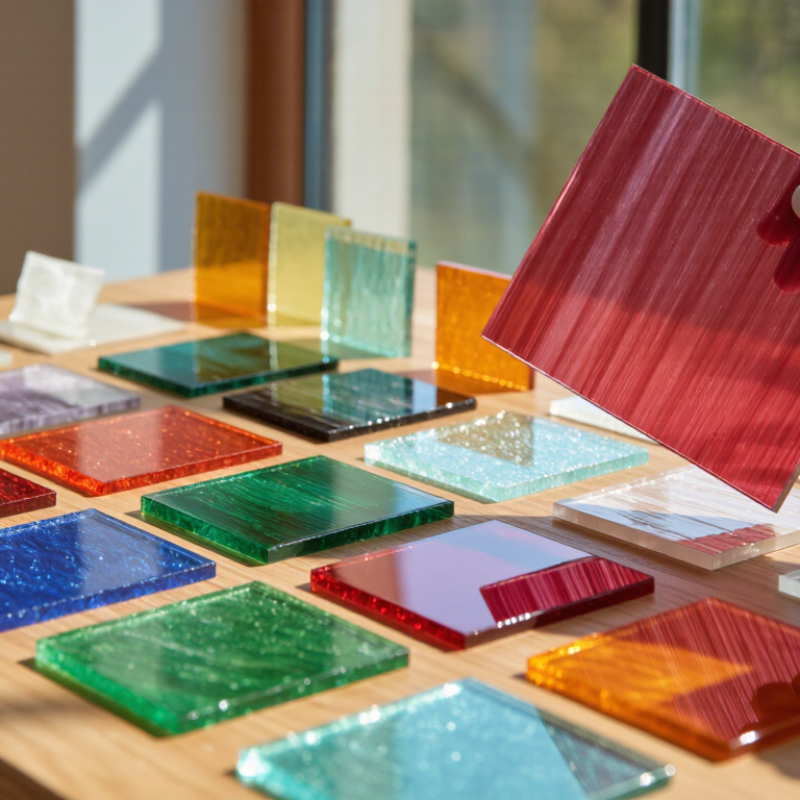
Spectrum stained glass sheets are commonly described as 3 mm thick, a useful starting point for planning. The figure is nominal, not a guarantee that every point measures exactly 3 mm. Handmade textures and uneven edges can create small variations. Check the edge.
Thickness affects how a sheet sits in copper foil or came, and how much allowance is needed during cutting. A snug fit on the workbench may become a problem when several pieces meet in a tight pattern. Measure sample sheets with calipers, especially when matching replacement glass to an existing panel. The awkward part is that one measurement cannot describe every textured surface; readings can change with the spot tested. Ask suppliers for tolerances and, when consistency matters, request a physical sample before ordering a full sheet. A 3 mm nominal thickness is common, but suitability depends on the design, assembly method, and neighboring materials. Rushing that check is easy. It can also leave a visible step along the finished edge.
Metric-to-inch conversions for common nominal glass thicknesses, highlighting the 3 mm reference point.
A nominal thickness of 3 mm is approximately 0.118 in. Actual sheet thickness may vary by product; check the product specification before ordering.
China Top 10 Spectrum Stained Glass Sheets Suppliers
Using ASTM C1036 Flat-Glass Criteria to Screen Chinese Suppliers
ASTM C1036 offers a practical baseline for screening flat-glass suppliers, including makers of spectrum stained glass sheets. It addresses glass categories, thickness, dimensional tolerances, and visual quality. It does not certify a sheet’s color palette or suitability for every craft process. Ask suppliers to identify the applicable glass type, thickness range, inspection method, and batch records. A specification sheet helps. Batch-level evidence is stronger.
Tips: Request a sample from the quoted production batch. Check its thickness with a gauge and inspect both faces under diffuse daylight. Compare the sample against written limits for blemishes and dimensions.
Color can vary between production runs, so approve a physical reference sample before placing a large order. Examine cut edges for chips, and note bubbles or marks against the supplier’s agreed acceptance criteria; not every visible feature is automatically a defect. Ask how sheets are packed, separated, and protected from moisture during shipping. ASTM C1036 can help structure questions, but it cannot replace clear purchase specifications or incoming checks. Some variation may remain. That deserves an honest conversation before ordering.
Screening framework: Use these ten criteria to compare supplier candidates; this table does not claim to rank or verify specific companies. ASTM C1036 is a flat-glass specification, so confirm that its scope and the selected edition are appropriate for the particular colored, patterned, or fabricated glass product. Color consistency and other project-specific requirements should be agreed separately with the buyer.
| No. | Screening Dimension | Evidence to Request | Practical Evaluation Rule |
|---|---|---|---|
| 1 | Product and standard scope | Product description identifying whether the offer is flat sheet glass, patterned or colored glass, or a fabricated stained-glass panel; the proposed ASTM C1036 edition, if applicable. | Proceed only when the supplier explains which product characteristics ASTM C1036 is being used to assess and identifies any characteristics outside its scope. |
| 2 | Glass type, class, and quality designation | A written specification stating the applicable glass type, class, and quality designation under the agreed ASTM C1036 edition, where applicable. | Compare offers using the same agreed designation; do not treat a general claim of “ASTM compliant” as a complete product specification. |
| 3 | Thickness control | Nominal thickness, the applicable permitted variation, measurement method, and sample or lot inspection records. | Check measured results against the tolerance in the agreed product specification and applicable standard edition; avoid relying on nominal thickness alone. |
| 4 | Sheet dimensions and cutting accuracy | Available sheet sizes, cut-size tolerances, edge condition requirements, and inspection records for the requested dimensions. | Set the required dimensions and tolerances in the purchase specification, then confirm that the supplier can inspect and document them. |
| 5 | Visual quality and surface condition | Inspection criteria and representative, unedited samples or images showing the agreed viewing conditions and acceptable surface appearance. | Assess visual quality against the agreed glass quality designation and written acceptance criteria; define acceptable blemishes for the intended use before ordering. |
| 6 | Color and pattern consistency | Color or pattern samples, batch identification, and a documented method for approving variation between production lots. | Specify color and pattern expectations separately from ASTM C1036 flat-glass criteria; approve a physical reference sample for repeat orders. |
| 7 | Lot traceability and quality records | Lot or batch numbers linked to production and inspection records, plus a sample certificate of analysis or inspection report. | Confirm that delivered sheets can be traced to a production lot and that records identify the inspected product and inspection date. |
| 8 | Testing and measurement capability | Test methods, equipment details, sample reports, and—when independent testing is required—reports from a laboratory accredited for the relevant test scope. | Verify that each report covers the actual product and required test; check the laboratory’s accreditation scope rather than relying on the word “certified.” |
| 9 | Packaging and transport protection | Packaging specification, sheet separation and edge-protection details, moisture precautions where relevant, and a documented procedure for reporting transit damage. | Agree packaging and damage-claim procedures before shipment, especially for fragile sheets and long-distance transport. |
| 10 | Sample approval and order acceptance | A pre-production sample or approved reference sample, written purchase specification, inspection plan, and documented process for handling nonconforming goods. | Place an order only after product requirements, acceptance criteria, inspection responsibilities, and remedies for nonconformity are recorded in writing. |
Comparing ten suppliers is useful only when the figures mean the same thing. Record each supplier’s available sheet dimensions, thickness, and custom-cut options. Ask whether minimum orders are counted by sheet, color, or crate. A low minimum can help small studios, but mixed-color orders may carry extra handling fees. Details matter.
Lead time needs a clear definition: production days or delivery to your workshop? Request separate estimates for standard colors and custom runs, plus packaging details for edge protection. Grand View Research valued the global flat glass market at USD 292.4 billion in 2023; this broad market figure is context, not a measure of stained-glass supply. Specialty sheets may follow very different schedules. Delays happen.
For quality control, compare written inspection steps, not just claims of “premium quality.” Ask how suppliers check thickness variation, surface bubbles, color consistency, and chipped edges. Request recent inspection records or sample sheets from the same production batch. ASTM C1036 provides a reference for flat-glass quality, though stained-glass textures and finishes may require additional agreed checks. A comparison table should mark unavailable data as “not disclosed,” rather than treating it as equivalent to a verified specification. Some gaps will remain; that is worth noting.
When comparing China’s top 10 spectrum stained glass sheet suppliers, check more than color charts. Ask whether each sheet is specifically tested for compatibility with 96 COE fusible glass. COE describes thermal expansion, but matching numbers alone do not guarantee a reliable fuse. Glasses can behave differently because of viscosity, thickness, or firing conditions. Request technical data and the supplier’s recommended firing range. Small tests matter.
Cut a few small squares from each batch, clean them, and fire them with your usual glass in a controlled test. Watch for sharp edges, stress lines, bubbles, or warping after cooling. Keep the kiln schedule and sample labels. Record every result. Batch consistency also matters: compare color, thickness, surface texture, and dimensions across sheets, not just within one sample. Ask how batches are inspected and whether replacement stock can be checked against your original order. A slight color shift may be acceptable for some projects, but it can disrupt a matched panel. Even careful testing leaves some uncertainty, so avoid promising customers exact color uniformity when natural variation is visible.
China Top 10 Spectrum Stained Glass Sheets Suppliers
When comparing suppliers, inspect how each sheet is protected, not just how it looks. Ask for crate photos showing rigid corner protection, non-abrasive separators, and clear “this side up” markings. Request packaging dimensions and gross weight before booking freight. A neat sample crate can create false confidence. Ask how the same packing method performs during long-distance transit.
UNCTAD’s Review of Maritime Transport 2024 reports that over 80% of global merchandise trade by volume moves by sea. That makes moisture protection, stable pallet loading, and clear handling instructions practical concerns for glass shipments. Ask suppliers to specify the packing materials and explain how they prevent sheets from shifting or rubbing. Small details matter.
Check that the invoice and packing list match the order, including sheet sizes, thicknesses, quantities, and batch references. Request product specifications and test reports that identify the tested product and method. The World Bank’s Logistics Performance Index 2023 assesses six areas, including tracking and timeliness; shipment visibility deserves attention too. Confirm that any conformity documents apply to the destination market and exact product. A generic certificate is not enough. I would still verify unclear claims independently.