What Are the China Top 10 Dock Shelter Manufacturers?

A Dock Shelter may look like a simple frame with a curtain, but its performance is tested in rain, wind, and repeated contact with trucks. Small gaps can admit water and dust. Poorly matched dimensions can slow loading and strain the fabric. Buyers comparing China’s leading manufacturers should look beyond product photos and price lists.

As a practical editorial perspective, composite dock-equipment specialist Lin Wei offers this principle: “A reliable shelter must seal consistently, flex under contact, and recover for the next truck.” Lin Wei is a composite voice, not a named source; the quotation is original wording, not a verified industry quotation. It expresses the questions a careful buyer can ask: What materials are used? How are dimensions confirmed? What installation guidance and after-sales support are available? Evidence matters.

This overview examines ten China-based Dock Shelter manufacturers through product range, customization, manufacturing capability, quality information, and service support. It also considers details that are easy to overlook, such as curtain thickness, frame construction, and fit around an uneven dock opening. No single supplier suits every warehouse. A busy distribution center may prioritize durability and fast replacement parts, while a smaller facility may need a simpler configuration. Rankings can never replace direct checks. Request specifications, review references, and confirm that proposed dimensions match the site. The comparison is a starting point, not a guarantee.
What Are the China Top 10 Dock Shelter Manufacturers?

What a Dock Shelter Does at the Vehicle-to-Warehouse Interface

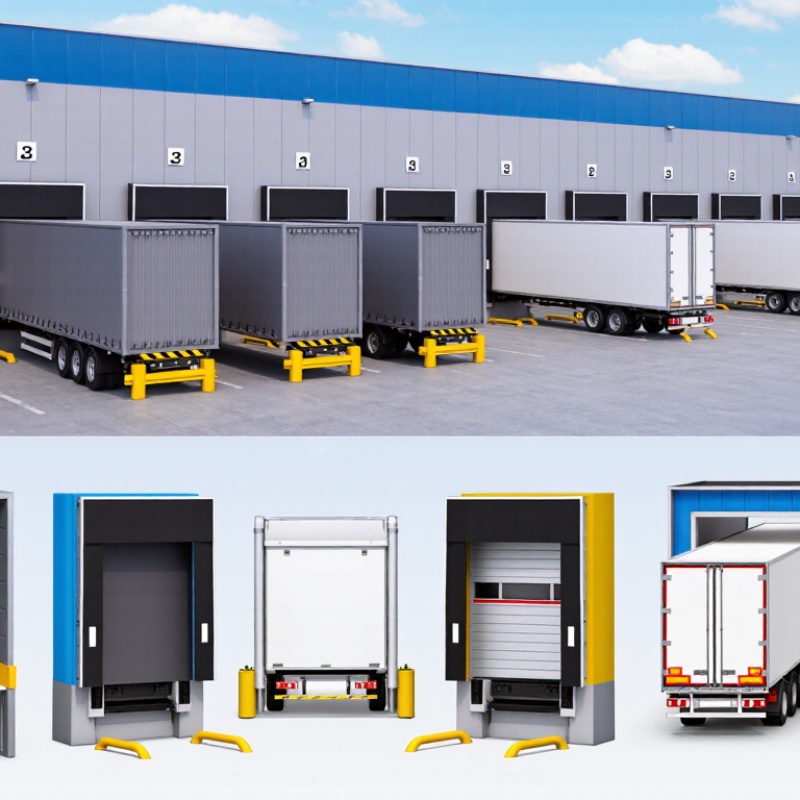
At the vehicle-to-warehouse interface, a dock shelter forms a flexible perimeter around a backed-in truck. Its side curtains and head section meet the trailer surfaces, helping limit rain, wind, dust, and unwanted air exchange. That matters when staff move pallets between a cold room and an outdoor yard. Small gaps matter. A shelter can make the loading area more comfortable, but it is not an airtight seal. Trailer sizes vary, and poor alignment can leave openings or strain the fabric.

When comparing dock shelter manufacturers in China, ask how their products fit your actual vehicle dimensions, dock height, and daily traffic. Check curtain materials, frame flexibility, attachment details, and replaceable wear parts. Request clear dimensions and installation guidance. A useful specification reflects site measurements, not just a catalogue drawing. Regular checks can catch torn fabric, loose fixings, or compressed sections early. Still, a shelter cannot correct unsafe reversing or a poorly positioned dock. That distinction is easy to overlook.

What Are the China Top 10 Dock Shelter Manufacturers? - What a Dock Shelter Does at the Vehicle-to-Warehouse Interface

This table provides a product and interface overview, not a ranked list of manufacturers. It contains no company or brand names.

No. Shelter Type or Feature How It Works at the Interface Typical Application Practical Consideration
1 Curtain dock shelter Flexible side and top curtains press against the vehicle body to reduce the open gap around a docked trailer. Facilities serving vehicles with broadly similar body dimensions. Vehicle-positioning accuracy and curtain material affect the quality of the seal.
2 Retractable curtain shelter Flexible curtains are mounted on a frame designed to move or deflect when contacted by a vehicle. Docks where vehicle contact or variation in vehicle size is expected. Frame movement and clearance should be compatible with the approach path and dock layout.
3 Inflatable Dock Shelter Inflatable cushions expand around the vehicle after it is positioned, creating contact at the sides and top. Operations handling a range of vehicle widths or heights. Requires an inflation system and operating controls; the shelter must be deflated before vehicle departure.
4 Foam-pad dock shelter Compressible pads contact the rear of a vehicle as it backs into the dock opening. Dock positions with relatively consistent vehicle dimensions and careful alignment. Vehicle dimensions and loading method should be checked to avoid obstructing doors or access.
5 Head curtain The top curtain covers part of the gap above a vehicle when it is backed into position. As part of a curtain-style shelter at a loading dock. Its coverage depends on vehicle height and how centrally the vehicle is positioned.
6 Side curtains Side curtains cover the gaps between the vehicle sides and the dock opening. Dock openings where the vehicle width is within the shelter’s intended operating range. Excessive vehicle-to-dock width variation can reduce contact and sealing effectiveness.
7 Wear-resistant contact surfaces Reinforced or replaceable material is used in areas exposed to repeated rubbing or vehicle contact. Busy docks with frequent trailer arrivals and departures. Inspect high-wear areas regularly and replace damaged sections as needed.
8 Vehicle-size compatibility Shelter dimensions and flexibility determine how well the assembly accommodates different vehicle heights and widths. Sites handling more than one vehicle or trailer configuration. Compare the expected vehicle range with the shelter opening and its operating limits before selection.
9 Dock and building integration The shelter is fitted around the dock opening and works alongside the dock leveler, door, and wall structure. New dock installations and upgrades to existing loading bays. Confirm clearances, mounting surfaces, door operation, and dock equipment positions during planning.
10 Inspection and maintenance access Accessible components make it easier to check frames, curtains, pads, fasteners, and inflation equipment. All loading docks, particularly those operating frequently. Routine inspection helps identify tears, loose fixings, wear, or operating faults before they worsen.

Which of the 3 Main Dock-Shelter Types Fits Each Loading Bay?

A dock shelter should match the trucks that actually visit, not just the dimensions on a drawing. Measure trailer widths and heights across several deliveries, and note how far each vehicle sits from the loading bay. Small differences matter. A foam dock seal suits a bay serving trailers with similar dimensions and frequent daily movements. Its padded sides compress against the trailer, helping limit drafts and rain. But mismatched trailers can wear the foam quickly or leave gaps. That trade-off is easy to overlook.

A retractable shelter is often more forgiving when vehicle sizes vary. Its curtains surround the trailer without pressing as firmly against it, while the frame can move when trucks reverse imperfectly. It needs enough space around the bay, and exposed curtains may require regular inspection. A tight site can make this option awkward. Check the turning approach, too.

For stronger weather and temperature control, an inflatable shelter may fit facilities with varied trailer sizes and demanding indoor conditions. Air-filled cushions extend after a truck parks, then retract before departure. The added equipment needs power and maintenance, so it may be excessive for a simple, high-throughput bay. That sounds tidy, but real docks rarely are. Compare expected traffic, trailer variation, and service access before selecting a type.

China Dock-Shelter Selection: Which of the 3 Main Types Fits Each Loading Bay?

A practical comparison of curtain, foam, and inflatable dock shelters across common loading-bay needs.

Higher scores indicate a stronger typical fit. These qualitative ratings summarize general design characteristics, not measured test results or manufacturer rankings. Curtain shelters suit varied vehicle sizes and straightforward operation; foam shelters work best with consistent vehicle dimensions; inflatable shelters adapt to vehicle variation and provide a close seal, but require an inflation system.

How ISO 6780’s 6 Pallet Footprints Affect Dock-Bay Compatibility

What Are the China Top 10 Dock Shelter Manufacturers?

How ISO 6780’s 6 Pallet Footprints Affect Dock-Bay Compatibility

ISO 6780 defines six principal pallet footprints used in international handling: 1200 × 1000 mm, 1200 × 800 mm, 1219 × 1016 mm, 1140 × 1140 mm, 1100 × 1100 mm, and 1067 × 1067 mm. The differences look small on paper. At a busy dock, they affect load overhang, turning space, and floor area needed for staging. The 1219 × 1016 mm footprint is commonly associated with a 48 × 40 inch pallet, but check the actual pallet and its load.

A dock shelter should be selected around vehicle dimensions and docking position, not pallet footprint alone. Measure trailer width and height, rear-door clearance, and the range of vehicles using the bay. Then check that the curtains compress evenly without blocking doors or catching protruding freight. A 1200 × 800 mm pallet may fit neatly inside a truck, yet an overhanging carton can scrape a curtain during unloading. Small mismatch.

When comparing manufacturers, request drawings, usable opening dimensions, installation tolerances, and guidance for mixed vehicle fleets. Check the dock leveler, bumper projection, and approach alignment as one system; each can change where the shelter seals. ISO dimensions provide a useful baseline, not a guarantee of compatibility. Real loads are rarely as square as the pallet beneath them. Recheck with loaded pallets and the actual truck before specifying the shelter.

How to Compare China’s Top 10 Dock Shelter Manufacturers by Key Specifications

Comparing China’s top 10 dock shelter manufacturers starts with the opening, not the brochure. Measure the dock doorway and check the shelter’s width, height, and projection. These dimensions should suit the trucks that actually visit your site. A tight fit can leave gaps; an oversized shelter may obstruct movement. Small details matter.

Compare fabric weight, coating, and abrasion resistance, then ask how each figure was tested. For the frame, check material, tube thickness, and corrosion protection. Also compare side and top seals, replaceable wear parts, and available repair instructions. Ask for drawings and test records, not only a list of ratings. A polished specification sheet can still omit useful conditions, such as test temperature or sample size.

Wind performance, insulation, and drainage deserve attention where local weather makes them relevant. Confirm whether performance figures apply to the complete shelter or just one component. Check lead time, installation support, spare-part availability, and warranty coverage in writing. A lower purchase price may not include fitting or maintenance. Request the same data from each supplier and compare like with like. Some specifications may remain unclear; note that uncertainty rather than guessing.

What to Verify in Product Range, Customization, Testing, and After-Sales Support

Treat any “China top 10” list as a shortlist, not a verified ranking. Compare each manufacturer’s product range: retractable head curtains, fixed shelters, foam pads, and models for different vehicle heights. For cold-chain sites, sealing deserves close attention. The IEA’s 2018 report, The Future of Cooling, projects global energy demand for space cooling to more than triple by 2050. That projection makes air leakage worth discussing, though it does not prove one shelter will deliver specific energy savings. Small details matter.

Customization should start with measurements, not promises. Ask whether the supplier checks dock opening size, vehicle variation, wall clearance, and daily loading frequency. Request a dimensioned drawing before production. A shelter that fits one truck neatly may leave gaps around another. That happens. Confirm how fabric, frame, and fastening options suit local weather and expected impact.

For testing, request dated reports showing the test method, sample, and results for fabric strength, abrasion, weathering, and repeated use. Ask what was tested in-house and what was independently verified. A certificate alone may not cover the complete shelter. After-sales support matters too: check spare-part availability, warranty exclusions, response times, and installation guidance. Get these terms in writing. A glossy brochure is not proof, and buyers should leave room to question their own assumptions.