Sorry, your browser is not supported. For a better experience, keep your browser up to date. Check here for latest versions
A Car Garage Lift raises a vehicle so technicians can inspect its underside, change tires, or reach components that are difficult to access from the floor. In a home garage, it can also create useful storage space. The basic idea is simple. Arms or platforms support the vehicle, while a powered lifting system moves it upward. Many lifts use hydraulic cylinders, which pressurized fluid extends; others use mechanical screw systems. The exact design matters.
A two-post lift holds a car by its frame or approved lifting points, leaving much of the underside open. A four-post lift supports the tires on long runways and often feels more stable for storage. Scissor lifts use crossed metal supports that expand beneath a platform. Each type has trade-offs. Space, ceiling height, vehicle weight, and intended tasks all affect the choice. So does the garage floor.
Safe operation depends on more than pressing a button. The lift must match the vehicle’s weight and lifting points, stand on a suitable, level surface, and receive regular inspection. Operators should follow the manufacturer’s instructions, secure the vehicle as directed, and never work beneath an unsupported load. Small details matter. A misplaced arm pad can cause serious trouble. This guide explains what a Car Garage Lift is, how its main parts work together, and what to consider before using one. The explanation cannot replace hands-on training or the lift’s manual, but it can help readers ask better questions.
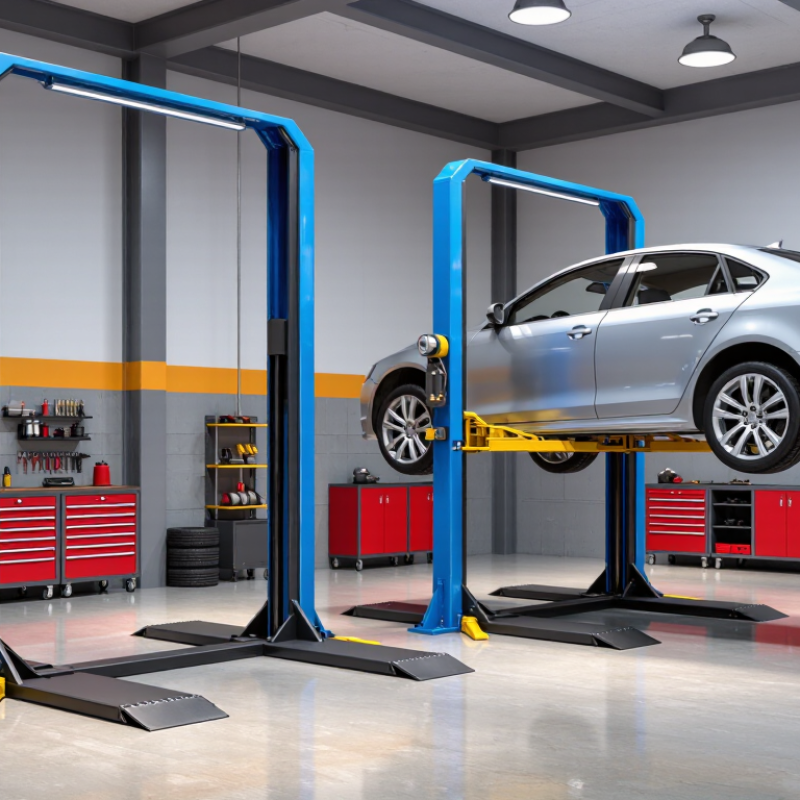
A car garage lift raises a vehicle high enough for a technician to reach its underside. Two-post lifts support the vehicle at approved lifting points, while four-post lifts carry its tires on parallel runways. Both types create working space for tasks such as oil changes, brake inspections, and exhaust repairs. The lift’s rated capacity matters: the vehicle’s weight and its position on the supports affect stability. A pump powers many lifts, and mechanical locks hold the vehicle at working height. Never treat hydraulic pressure alone as a safety support.
Before raising a vehicle, a technician checks the lift, positions the supports, and confirms that the vehicle sits securely. A short test lift can reveal shifting before the vehicle rises farther. Small detail. Big consequence. The U.S. Bureau of Labor Statistics recorded 5,283 fatal work injuries across all U.S. workplaces in 2023. That figure is not specific to vehicle lifts, but it is a useful reminder that workshop hazards deserve attention. A lift improves access; it does not remove risk. Following the equipment instructions and using its mechanical locks can make under-vehicle work safer. It is easy to assume the machine handles everything. It does not.
| Lift Type | How It Raises a Vehicle | How the Vehicle Is Supported | Service Access | Important Considerations |
|---|---|---|---|---|
| Two-post lift | Lift arms pivot beneath the vehicle’s approved lifting points. Depending on the design, an electric motor and hydraulic pump power the lifting cylinders, or an electric drive moves the lift directly. | Four adjustable arms support the vehicle at designated points on its frame or structure. | Typically provides access to the wheels, brakes, suspension, and much of the underbody. | Correct arm placement, suitable floor conditions, and engagement of the lift’s mechanical safety locks are essential. Vehicle lifting points vary by model. |
| Four-post lift | A motor-driven hydraulic system raises two runways, usually together, on which the vehicle has been driven. | The vehicle’s tires rest on parallel runways. | Useful for storage and many underbody inspections. Access to wheels and some components may require compatible rolling jacks or other approved equipment. | Check the lift’s rated capacity and runway dimensions against the vehicle. Use wheel restraints where specified and secure the lift with its mechanical locks. |
| Scissor lift | Hydraulic cylinders expand linked, crossed supports, raising a platform or pair of runways. | The vehicle rests on platforms or runways, depending on the lift design. | Access depends on the platform layout. Some designs leave the center area open; others can limit access to parts of the underside. | Confirm the lifting points and clearance required for the job. Keep hands and tools clear of moving scissor mechanisms. |
| Portable column lift | Separate powered columns raise a vehicle at its wheels, with the columns operated in coordination. | Each column engages a wheel; the columns raise the vehicle together. | Can provide broad access beneath the vehicle while keeping the wheels supported. | Use only with compatible vehicles and an approved column setup. Follow the operating procedure for synchronization, positioning, and safety locks. |
| Typical lifting sequence | Position the vehicle, identify its approved lifting points or wheel-support locations, raise it slightly, and check that it is stable. Continue to the required height, engage the mechanical locks, and verify stability before working underneath. | When finished, clear the work area, raise the lift slightly to release the locks if required, lower the vehicle under control, and remove it only when fully down. | Never exceed the lift’s rated capacity. Follow the lift and vehicle instructions, and do not rely on hydraulic pressure alone to support a raised vehicle. | |
A car garage lift raises a vehicle on mechanical arms, runways, or platforms, leaving space to inspect its underside. Two-post lifts use four adjustable arms that meet the vehicle at approved lifting points. They give good access to wheels and bodywork, but correct arm placement matters. A misplaced pad can damage a vehicle or create instability. Small details matter.
Four-post lifts support the tires on long runways, making them practical for storage and routine service. Scissor lifts raise a vehicle with linked metal supports beneath a platform; some models leave more floor space, but can limit access to certain underbody areas. In-ground lifts hide much of the mechanism below the floor, keeping the work area clear. They need suitable site preparation and careful maintenance. Each design suits different jobs, not every garage.
Capacity labels, safety locks, and regular inspections are essential across all designs. The Automotive Lift Institute recommends annual inspections by qualified lift inspectors. The U.S. Bureau of Labor Statistics recorded 5,283 fatal work injuries across all industries in 2023; its report does not isolate vehicle-lift incidents. That distinction matters. A lift that looks steady is not necessarily secured: operators should follow its instructions, engage its locks, and verify the vehicle’s stability before working beneath it.
Approximate rated-capacity ranges for common automotive lifts; actual ratings vary by model.
Two-post lifts raise vehicles by their frames, while four-post lifts support the tires on runways. Scissor lifts use linked, folding arms, and in-ground lifts raise vehicles with mechanisms installed below the floor. Always check a lift’s rated capacity and vehicle compatibility before use.
A car garage lift raises a vehicle through hydraulic force. A pump pushes fluid into cylinders, and the pressure moves pistons upward. The lift’s arms or platforms transfer that force to the vehicle at approved lifting points. Correct positioning matters: uneven contact can shift the load as the vehicle rises. Small details matter.
Mechanical locks provide support once the lift reaches a working height. They engage at set intervals, but an operator should confirm they are fully seated before going underneath. Hydraulic pressure helps move the lift; it should not be treated as the only protection while someone works below. Lowering the lift slightly onto its locks can take pressure off the hydraulic system. Never trust a sound alone. Check the locks visually and follow the lift’s operating instructions.
Before lifting, verify the vehicle’s weight is within the lift’s rating, and place it on a stable, suitable floor. Keep people clear while raising or lowering it. A lift may appear steady, yet poor arm placement or an obstructed lock can create risk. I still find that routine checks are easy to rush, especially in a busy garage, so pause and inspect each contact point.
A car garage lift raises a vehicle on arms or platforms, leaving space beneath for inspection and repair. Many lifts use hydraulic cylinders, while mechanical locks help hold the vehicle at working height. The capacity rating is a limit, not a suggested target. Check the vehicle’s actual weight, including fuel, tools, and cargo, against the lift’s stated capacity. Don’t rely on a model’s curb weight alone.
Load placement matters. A vehicle can be within the rating and still sit unsafely if its weight is unevenly distributed or its lifting points are wrong. Check the vehicle manual and the lift instructions for approved contact points. Make sure the arms and pads sit firmly before raising the car, then engage the locks. Small details count. I admit, a large capacity number can feel reassuring, but it cannot correct poor positioning.
ANSI/ALI ALCTV-2017 sets safety requirements for automotive-lift construction, testing, and validation. Ask for documentation showing that the exact lift model has been evaluated to the applicable standard; similar-looking models may differ. Also confirm the shop floor, installation, and maintenance meet the lift maker’s instructions. A standard is useful, not magic. It does not replace routine inspections, trained operation, or checking that locks and cables work as intended. If records are missing, pause and verify them before using the lift.
A car garage lift raises a vehicle so technicians can inspect and service areas beneath it. Safe work starts with positioning. Park on a firm, level floor, switch off the engine, and secure the vehicle as its manual recommends. Check the lift’s rated capacity, inspect its arms and pads, and place each pad at the vehicle’s specified lifting points. Keep doors, tools, and people clear.
Small details matter. It is tempting to rush this check. Don’t. Raise the vehicle only a few inches, then pause and check that all pads remain seated and the vehicle looks stable.
Once the vehicle is stable, raise it to the needed height and engage the lift’s mechanical safety locks. Lower the vehicle gently onto those locks before going underneath; hydraulic pressure alone is not a safe support. During service, keep the lift area clear and never exceed its capacity.
When work is done, remove tools and confirm everyone is clear. Raise the vehicle slightly to take weight off the locks, release them as directed by the lift’s instructions, then lower slowly. Watch the tires and body for contact with equipment or nearby objects. If the lift shifts, makes an unusual sound, or a pad moves, stop and reassess before continuing.