What Is Canned Pork and How Is It Made?

Canned Pork is cooked or cured pork preserved in a sealed container. It may be sold in chunks, slices, or a soft, easy-to-shred form. The exact texture and flavor depend on the cut of meat, seasonings, and processing method. Some products contain added salt, broth, or other ingredients, so checking the label gives a clearer picture than relying on the name alone.

It is tempting to assume that every can holds the same kind of pork. Not quite. In general, producers prepare and trim the meat, add any seasonings or liquid, then fill and seal containers. The sealed cans undergo heat processing designed for the specific product and package. This step helps make the food shelf-stable when handled and stored as directed. Details vary, and processing times or temperatures should not be guessed; they depend on validated procedures and equipment. The cans are then cooled and checked for defects.

The result is convenient, but convenience does not explain everything. Canned Pork can work in sandwiches, soups, or quick skillet meals, though its salt level and texture may differ from fresh pork. I sometimes think the word “canned” makes the process sound simpler than it is. Safe production depends on careful control at several stages. This overview explores what canned pork is, how it is made, and what to notice when choosing or using it.
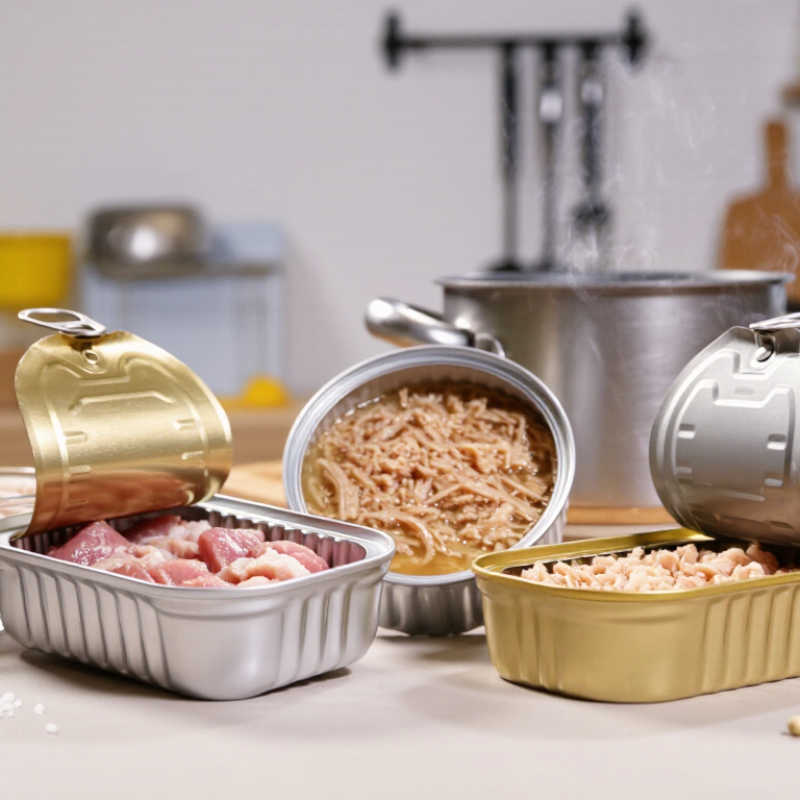
What Is Canned Pork and How Is It Made?

What Defines Canned Pork: FDA’s Low-Acid Threshold of pH 4.6

What Is Canned Pork and How Is It Made?

What Defines Canned Pork: FDA’s Low-Acid Threshold of pH 4.6

The key distinction is acidity. Under FDA regulation 21 CFR 113.3, a low-acid food has a finished equilibrium pH above 4.6 and water activity above 0.85. Canned pork generally belongs in this category unless its formulation changes those properties. The FDA’s Bad Bug Book identifies pH 4.6 as an important lower growth limit for Clostridium botulinum, a bacterium associated with dangerous toxins in improperly processed foods. That boundary matters. A sealed can creates a low-oxygen environment, so acidity alone cannot establish safety.

Commercial canned pork is packed in a sealed, airtight container and receives a controlled heat process designed for the specific product and package. FDA rule 21 CFR 113.83 requires processors to establish scheduled processes using qualified expertise. Factors include the can’s dimensions, product composition, and heating conditions. A number on a pH meter is not a substitute for that validated process. Nor does “heated until hot” describe the controls needed for shelf-stable low-acid food. In practice, the threshold is useful, but it can be easy to overread one number; formulation and processing records complete the safety picture.

How Pork Is Trimmed, Seasoned, and Prepared for Packing

Canned pork begins with inspected cuts that are chilled, deboned, and trimmed. Workers remove bruised areas, excess fat, bone fragments, and tough connective tissue, then cut the meat into pieces sized for even packing. The pieces are weighed so each can receives a consistent fill. It sounds simple. Trim too aggressively, though, and the finished pork may seem dry.

Seasoning is measured and mixed with the meat or added during filling. Depending on the product, cans may also receive broth or another packing liquid. Operators check fill weight and headspace, then inspect the seams before thermal processing. The exact heat schedule depends on the recipe, container, and equipment; FDA rules require low-acid canned foods to use an established scheduled process. USDA NASS reported about 27.8 billion pounds of U.S. pork production in 2023, a scale that makes consistent handling important. Still, uniform pieces cannot erase natural differences in fat and texture.

Tips: Look for evenly cut pieces and an intact can. Avoid cans that are swollen, leaking, or deeply dented at the seams.

How Cans Are Filled, Sealed, and Checked for Closure Integrity

Canned pork moves from trimming and portioning to filling, where measured pieces enter clean cans with broth or cooking liquid. Headspace matters: too little can cause product to press against the lid during heating; too much can leave excessive air. The exact fill and thermal process depend on the recipe, can size, and equipment. In a double seam, the lid and can body interlock in five metal layers. Can Manufacturers Institute technical guidance explains why seam dimensions matter: small defects can create a path for leakage.

After filling, the seamer rolls the lid and body together, then operators inspect the closure. They check seam thickness, width, overlap, and visible flaws; periodic teardown examinations reveal hidden defects. FDA regulation 21 CFR Part 113 requires processors of low-acid canned foods to establish scheduled processes and keep processing and closure-examination records. USDA’s 9 CFR 431.2 also sets container-closure requirements for canned meat products. A smooth-looking seam is not proof of integrity. That is easy to forget. Plants therefore combine visual checks with measurements and documented inspections, adjusting the seamer when readings drift. The detail that deserves reflection: a sound seal depends on repeatable settings, clean contact surfaces, and careful records—not appearance alone.

How Retort Processing Achieves Commercial Sterility Under 21 CFR 113

Canned pork is cooked and sealed in a hermetic container, then heated in a retort. The critical goal is commercial sterility, not absolute sterility. FDA’s 21 CFR 113 classifies low-acid foods as having a finished equilibrium pH above 4.6 and water activity above 0.85. Many plain meat products fall within this category. The rule requires a scheduled process established by a qualified person, rather than one universal heating time or temperature.

That distinction matters. Heat moves differently through a dense pork shoulder, a fatty broth, and a tightly packed can. A process authority studies the product, container, and retort conditions to identify the slowest-heating point. FDA’s 21 CFR 113 also requires controls for critical factors, container closure, processing records, and cooling. Retort operators monitor temperature and pressure; they do not rely on the dial alone. Small details count.

Commercial sterility means harmful microorganisms capable of growing under normal storage conditions have been controlled. It does not mean every microorganism has vanished. The FDA regulation sets process and recordkeeping requirements, but each product still needs a validated schedule. That can feel less tidy than a single recipe. It is also the safer way to account for real cans, real ingredients, and uneven heat transfer.

What Is Canned Pork and How Is It Made? - How Retort Processing Achieves Commercial Sterility Under 21 CFR 113
Stage or topic What happens Key control or consideration Connection to 21 CFR 113
What canned pork is Pork packed in a hermetically sealed container and processed to remain shelf-stable under normal, nonrefrigerated storage conditions. Many canned pork products are low-acid foods. Classification depends on the finished product’s characteristics, including equilibrium pH and water activity. Part 113 generally covers low-acid canned foods with finished equilibrium pH above 4.6 and water activity above 0.85 in hermetically sealed containers.
1. Prepare the pork Pork is inspected and prepared for the product style. Depending on the formulation, it may be cut, seasoned, cured, or combined with other ingredients. Ingredient proportions, piece size, and preparation conditions can affect heat penetration and must match the product used to establish the process. The scheduled process must apply to the specific product and its processing conditions.
2. Fill the container Prepared pork and any specified liquid or ingredients are filled into cans or other suitable containers. Fill weight, product temperature, headspace, and consistency are controlled because they can influence heating and container performance. Container type, dimensions, and fill conditions may be critical factors in the scheduled process.
3. Seal hermetically The filled container is closed to form a hermetic seal before retort processing, or is handled according to the validated process for its container system. Seams and closures must be formed and checked using appropriate procedures so that microorganisms cannot enter after processing. Part 113 includes requirements for container examination and records relating to closure integrity.
4. Retort processing Sealed containers are heated in a pressure vessel, or retort, using a scheduled time-and-temperature process designed for the product and container. The process must account for factors such as retort type, venting where applicable, come-up time, initial product temperature, container size, and heat penetration. A qualified process authority establishes the scheduled process. There is no single universal time or temperature for all canned pork.
5. Achieve commercial sterility The validated heat treatment reduces microorganisms, including relevant heat-resistant spores, to a level that supports shelf stability when the container remains intact. Commercial sterility is not the same as absolute sterility. It means the food is free of microorganisms capable of reproducing under normal nonrefrigerated storage and distribution conditions, including viable microorganisms of public-health significance. The scheduled process is designed to achieve commercial sterility for the specific food and container system.
6. Cool and handle After the scheduled process, containers are cooled under controlled conditions and handled to protect the closure and prevent contamination or damage. Cooling-water quality, pressure management, and container handling are important for preserving seal integrity. Processing and post-process handling records help document that the established process and applicable controls were followed.
7. Verify and document Operators monitor critical processing conditions, review records, and examine containers according to the facility’s procedures. Any deviation from the scheduled process requires evaluation and appropriate corrective action before affected product is released. 21 CFR 113 sets requirements for scheduled processes, personnel, processing records, and handling process deviations.
Important: Actual retort schedules are product- and container-specific. They must be established by a qualified process authority; the example stages above are descriptive and are not a processing schedule.

How Finished Cans Are Cooled, Inspected, and Stored for Quality

After retorting, canned pork is cooled in a controlled step so the product and container reach handling temperature without damaging the can. Cooling water matters: U.S. FDA regulation 21 CFR Part 113 requires water contacting containers to be chlorinated or otherwise sanitized at levels that prevent contamination. Operators then check seams, closures, leaks, and visible dents. Small defects can be easy to miss, so checks need consistent methods, not just a quick glance.

Cans are dried before labeling and storage; lingering moisture can encourage external corrosion. Inspection may include seam measurements and sampling, while damaged or swollen cans are separated for evaluation. Still, appearance has limits. A can that looks normal cannot, by itself, confirm that its thermal process was adequate. That distinction is easy to overlook.

For storage, USDA Food Safety and Inspection Service guidance recommends a clean, dry location below 85°F, with 50–70°F considered a good range. Avoid freezing, which can damage containers and affect quality. Store cases off damp floors and away from heat sources, and rotate older stock forward. These figures guide storage conditions; they do not promise identical quality in every warehouse. A careful process helps, but records and routine checks remain essential.

Canned Pork: Cooling, Inspection & Storage Quality

After heat processing, cans are cooled, checked for defects and stored in a cool, dry place. This chart compares general pantry-storage periods for best quality: commercially canned pork is a low-acid food.

Storage periods are general best-quality guidance, not expiration dates or a guarantee of safety. Follow label directions, and discard cans that are bulging, leaking, badly dented, or rusted.