Choosing the right Personal Scooter can feel like comparing ten small machines with very different personalities. Some models glide quietly across city pavements, while others handle hills, rough paths, or longer commutes more confidently. Global buyers need more than attractive photographs and impressive speed claims. They need practical evidence.
This guide reviews ten strong Personal Scooter options for international users. It considers motor performance, battery range, charging time, braking control, portability, weather resistance, and rider comfort. It also examines weight limits, replacement parts, warranty support, and the availability of local service. A scooter that performs well in a dry European city may feel less suitable on humid streets or uneven roads elsewhere.
Real-world details matter. A folded scooter should fit inside a train doorway or apartment lift. A bright headlight should remain visible near busy intersections. Solid tires reduce punctures, but they can transmit more vibration through the handlebars. Pneumatic tires usually feel smoother, though they require regular pressure checks. Small differences become obvious after several daily trips.
No ranking can suit every rider. That is worth remembering. Manufacturer range figures often use ideal conditions, not steep roads, cold weather, or heavy loads. This article therefore treats specifications as useful starting points, not absolute promises. Buyers should confirm local riding rules, road access, charging requirements, and product certification before purchasing. The best Personal Scooter is not always the fastest or cheapest. It is the model that fits the rider’s route, body, climate, budget, and support expectations with the fewest unpleasant surprises.
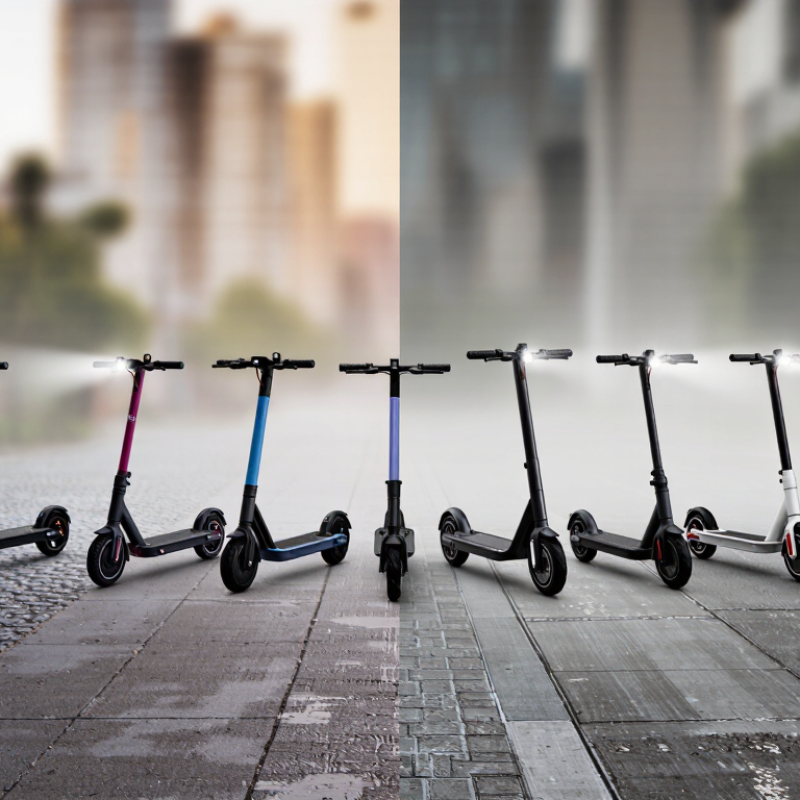
A personal scooter for international buyers is more than a compact electric vehicle. It is a practical mobility tool for short urban journeys, last-mile travel, and limited storage. The strongest definition combines portability, predictable range, braking control, weather resistance, and repair access. A 14-kilogram scooter feels manageable in a lift. A claimed 40-kilometer range may fall sharply on hills, cold streets, or rough pavement.
Industry data supports this growing use case. The IEA Global EV Outlook 2024 reports that electric two- and three-wheelers made up more than half of global electric vehicle sales in 2023. NACTO recorded about 157 million shared micromobility trips in the United States during 2023. These figures show demand, but they do not guarantee a good private purchase. Local charging habits, road quality, rider weight, and climate still matter. That definition remains imperfect.
Tips: Check the real-world range, not only laboratory figures. Measure the folded scooter beside your car trunk or apartment door. Look for published battery safety testing and clear maintenance guidance. Confirm the permitted equipment category in your destination before buying. Also inspect tire design, lighting, braking feel, and replacement-part availability. A powerful motor is not always better. For many riders, stable handling and simple servicing matter more. I would also test the folding latch personally, because specifications rarely describe daily frustration.
| Rank | Personal Scooter Type | Best For | Motor Output | Factory-Limited Top Speed | Typical Claimed Range | Battery Capacity | Approx. Weight | Wheel Size | Water-Resistance Target | Typical Charge Time | Recommended Payload | International-Buyer Advantage |
|---|---|---|---|---|---|---|---|---|---|---|---|---|
| 1 | Ultralight Last-Mile Scooter | Short urban trips and public-transport connections | 250 W nominal | 20–25 km/h | 15–20 km | 180–200 Wh | 12–14 kg | 8–8.5 in | IPX4–IP54 | 3–5 hours | Up to 100 kg | Low carrying weight and compact folding dimensions simplify commuting and storage. |
| 2 | Compact City Commuter | Daily travel on paved city streets | 300–350 W nominal | 25 km/h | 25–30 km | 250–300 Wh | 14–17 kg | 8.5–10 in | IP54 | 4–6 hours | Up to 120 kg | A practical balance of portability, range, braking performance, and replacement-part availability. |
| 3 | Comfort Commuter Scooter | Longer commutes and uneven pavement | 350–500 W nominal | 25–32 km/h | 30–40 km | 350–450 Wh | 17–21 kg | 10 in pneumatic or tubeless | IP54–IP55 | 5–8 hours | Up to 120 kg | Larger tires and suspension options improve comfort without requiring a full-size performance scooter. |
| 4 | Extended-Range Touring Scooter | Commuters who prioritize battery range | 500 W nominal | 25–35 km/h | 40–55 km | 450–650 Wh | 20–25 kg | 10 in pneumatic or tubeless | IP54–IP55 | 6–10 hours | Up to 120 kg | Greater battery capacity reduces charging frequency, which is useful where charging access is limited. |
| 5 | Dual-Motor All-Weather Scooter | Hills, heavier riders, and mixed urban terrain | 2 × 500 W nominal | 25–45 km/h | 40–60 km | 600–800 Wh | 24–30 kg | 10 in pneumatic or tubeless | IP54–IP55 | 7–11 hours | Up to 120–130 kg | Dual-motor traction helps on inclines, but local speed and power restrictions must be checked before purchase. |
| 6 | Suspension-Focused Urban Scooter | Cobblestones, cracked asphalt, and rough sidewalks | 350–500 W nominal | 25–32 km/h | 30–45 km | 400–550 Wh | 21–27 kg | 10 in pneumatic | IP54 | 6–9 hours | Up to 120 kg | Front and rear suspension can reduce vibration and improve control on imperfect road surfaces. |
| 7 | Performance Personal Scooter | Experienced riders seeking acceleration and high power | 2 × 800–1,000 W nominal | 45–60 km/h | 45–70 km | 700–1,000 Wh | 28–38 kg | 10–11 in pneumatic | IP54 | 8–12 hours | Up to 120–130 kg | Strong hill-climbing ability, but it may not be road-legal or permitted on public paths in many countries. |
| 8 | Seated Personal Mobility Scooter | Riders needing additional stability or reduced fatigue | 250–500 W nominal | 15–25 km/h | 25–45 km | 300–600 Wh | 22–35 kg | 10–12 in pneumatic or solid | IP54 | 5–10 hours | Up to 120–150 kg | A seat, wide deck, and stable chassis can make longer journeys more accessible and comfortable. |
| 9 | Long-Deck Utility Scooter | Riders carrying a backpack, groceries, or work equipment | 500–800 W nominal | 25–40 km/h | 35–55 km | 500–800 Wh | 25–33 kg | 10–11 in pneumatic | IP54–IP55 | 7–12 hours | Up to 130–150 kg | A longer deck and higher load rating provide more usable space, but increase storage and transport demands. |
| 10 | Rugged Mixed-Surface Scooter | Private roads, gravel paths, and light recreational use | 500–1,000 W nominal | 25–45 km/h | 35–60 km | 500–900 Wh | 25–40 kg | 10–12 in pneumatic | IP54 or higher | 7–12 hours | Up to 120–150 kg | Ground clearance, wide tires, and stronger frames suit mixed surfaces; off-road use may be restricted locally. |
Note: Range figures are typical manufacturer-claimed test ranges and can vary with rider weight, temperature, speed, terrain, tire pressure, and payload. Buyers should verify local rules for maximum speed, motor power, helmet use, lighting, registration, insurance, and permitted riding areas. Battery chargers should match the destination country's voltage, plug, and applicable safety requirements.
