10 Best Facial Analysis Machines for Your Business

Choosing the right facial analysis equipment can shape how clients understand their skin and treatment options. A reliable Facial Analysis Machine does more than capture a detailed image. It may assess visible concerns such as pores, pigmentation, redness, texture, and moisture levels under controlled lighting.

This guide reviews ten facial analysis machines for professional beauty businesses, clinics, and skincare studios. We consider image clarity, measurement consistency, software usability, reporting features, training requirements, and long-term value. We also examine practical details, including camera positioning, calibration, maintenance, and client data protection. A machine should fit your workflow, not complicate it.

No device is perfect. Results can change with lighting, makeup, skin preparation, and camera distance. That matters. Facial analysis supports consultation, but it should not replace professional judgment or medical diagnosis. Experienced practitioners can compare scan results with visual assessment, client concerns, and treatment history.

The strongest systems present findings in clear, understandable reports. Clients should see useful details without feeling overwhelmed by technical language. Trust grows when staff explain limitations honestly and avoid promising instant results. We also look at whether each machine encourages consistent consultations, accurate record-keeping, and informed skincare recommendations.

Some businesses need advanced imaging. Others need speed and simplicity. The best choice depends on your budget, space, staff expertise, and service model. Read on to compare the leading options and identify the Facial Analysis Machine that supports credible, responsible, and practical client care.
10 Best Facial Analysis Machines for Your Business

What Facial Analysis Machines Are and How They Work

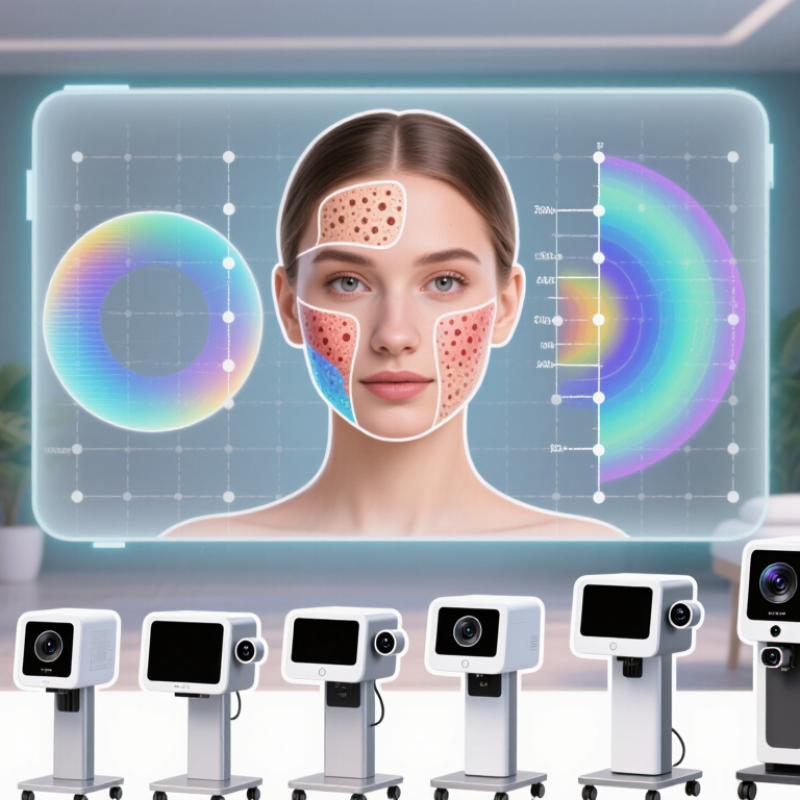
Facial analysis machines use cameras, controlled lighting, and software to examine visible skin features. They may map pores, fine lines, redness, pigmentation, and texture. Some systems also estimate hydration or oiliness. These measurements are indirect, not medical diagnoses. The machine captures an image, separates facial zones, and compares pixels with built-in reference data. It then produces scores, heat maps, and progress images for consultation.

NIST’s 2019 Face Recognition Vendor Test found demographic differences ranging from tenfold to over one hundredfold in some recognition algorithms. That study focused on identity recognition, not skincare analysis. Still, it shows why businesses should question automated scores. Lighting, makeup, camera distance, and skin tone can influence results. A professional operator should explain these limits clearly. A polished screen does not guarantee accurate measurement.

Tips: Clean the lens before every session. Remove makeup and keep lighting consistent. Photograph clients from the same distance each time. Record device settings with each image. Choose machines that explain their measurement methods and protect customer data. Review trends across several visits, rather than trusting one dramatic score. That approach feels less impressive, but it is usually more honest.

10 Best Facial Analysis Machines for Your Business - What Facial Analysis Machines Are and How They Work

Comparison based on commonly used facial-imaging technologies. Performance depends on lighting, device calibration, operator technique, skin preparation, and software settings. Results are generally intended for cosmetic consultation and are not medical diagnoses.
No. Facial Analysis Machine Type Main Technology Primary Measurements Typical Capture Time Best Business Use Important Consideration
1 Standardized Facial Photography System Controlled visible-light imaging with fixed positioning Visible redness, pigmentation appearance, pores, wrinkles, texture, and before-and-after changes 1–3 minutes Routine consultations, progress tracking, and treatment documentation Consistent lighting, camera distance, and facial expression are essential for reliable comparisons.
2 Polarized-Light Skin Analyzer Cross-polarized and parallel-polarized illumination Surface reflection, redness appearance, uneven tone, fine lines, and skin texture 1–5 minutes Skincare consultations where surface detail and tone variation must be shown clearly Polarization can reduce glare, but it does not directly measure every underlying skin condition.
3 UV Fluorescence Imaging System Ultraviolet illumination and fluorescence capture Subsurface pigment contrast, oil-related fluorescence patterns, and selected surface deposits 1–3 minutes Educational consultations focused on oil balance and uneven pigmentation appearance Images are influenced by cosmetics, sunscreen, cleansing, and camera exposure settings.
4 Multispectral Facial Imaging System Multiple visible and near-infrared wavelength bands Color variation, erythema-related contrast, melanin-related contrast, spots, and texture indicators 2–8 minutes Premium skin consultations and quantitative-looking visual reports Wavelength selection and calibration strongly affect image interpretation.
5 3D Facial Surface Scanner Structured light, stereo imaging, or depth sensing Facial geometry, symmetry, contours, volume, wrinkles, and surface depth 5–15 minutes Aesthetic treatment planning, contour visualization, and longitudinal measurement Head movement, hair, facial hair, reflective cosmetics, and facial expression can reduce scan quality.
6 Cross-Polarized RGB Camera Analyzer RGB camera imaging with glare-reducing polarized light Redness, pigmentation appearance, pore visibility, fine lines, and color uniformity 1–4 minutes High-volume salons and clinics needing repeatable, easy-to-read reports The system provides image-based indicators rather than definitive clinical diagnoses.
7 Sebum and Hydration Imaging Console Optical imaging combined with contact or non-contact skin sensors Surface oil distribution, hydration-related readings, texture, and selected pore indicators 3–8 minutes Personalized product recommendations and routine skin-condition monitoring Hydration readings vary with recent washing, temperature, humidity, and pressure applied by the probe.
8 AI-Assisted Facial Feature Analyzer Computer vision and machine-learning image classification Estimated counts or scores for wrinkles, spots, pores, redness, and other visible features Less than 1–3 minutes Fast consultations, customer engagement, and automated report generation Results can vary with skin tone, makeup, image quality, training data, and algorithm design.
9 Facial Thermal Imaging Camera Long-wave infrared thermal imaging Relative facial temperature patterns and thermal asymmetry 1–5 minutes Demonstrations of temperature changes during wellness or cosmetic procedures Room temperature, airflow, recent exercise, fever, and cosmetics can substantially affect readings.
10 Integrated Multi-Modal Facial Analysis Station Combined visible, polarized, UV, depth, or sensor-based imaging Appearance, texture, pigmentation indicators, redness indicators, facial geometry, and selected skin readings 5–15 minutes Full-service clinics, dermatology-support settings, and premium consultation programs Higher purchase cost, staff training requirements, data-protection responsibilities, and more complex maintenance.

Key Features to Compare Before Choosing a Machine

10 Best Facial Analysis Machines for Your Business

Key Features to Compare Before Choosing a Machine

A useful facial analysis machine should produce consistent images under different lighting conditions. Compare camera resolution, sensor quality, and lighting control before reviewing extra features. Uneven lighting can make dry areas look worse than they are. That creates poor recommendations and weakens customer trust. Ask whether the device captures visible skin concerns, texture, pores, redness, and pigmentation with clear reference images. Accuracy matters more than attractive screens.

Software is equally important. Look for simple navigation, adjustable analysis settings, and reports that staff can explain without technical confusion. A strong system should store progress photos securely and show changes over time. Check data protection practices, user permissions, backup procedures, and deletion options. These details support responsible business operations and customer confidence. Test the reporting speed during busy hours. Slow software becomes frustrating quickly.

Do not ignore training and maintenance. Compare setup support, cleaning requirements, warranty terms, software updates, and repair response times. A machine that requires constant technical help may cost more than expected. Request a live demonstration using different skin tones and age groups. That test may reveal limitations hidden in polished sales material. No device is perfect. Some readings still depend on hydration, recent skincare, and camera positioning. Staff should explain these factors honestly, rather than presenting every score as a medical fact. A careful comparison should include real workflow trials, not only impressive specifications.

The 10 Best Facial Analysis Machines for Business Use

The 10 best facial analysis machines for business use should support consultation, not replace professional judgment. A 2023 ISAPS Global Survey reported more than 19 million non-surgical aesthetic procedures worldwide. That demand increases the need for consistent skin assessments before treatment planning.

Strong machines typically combine high-resolution imaging, hydration measurement, pore mapping, pigmentation analysis, and progress tracking. Some systems also evaluate wrinkles, redness, oil balance, and skin texture under controlled lighting. The most useful model produces clear reports within minutes. It should also export client-friendly images for consultations and follow-up visits. According to Grand View Research, the global facial recognition market reached about $5.7 billion in 2023. Facial analysis is different, but the figure reflects growing investment in visual assessment technology.

Accuracy depends on more than sensors. Lighting, camera distance, skin tone, makeup, and operator training can change results. No device is perfectly objective. A 2024 NIST evaluation also showed that facial algorithms can vary in performance across demographic groups, reinforcing the need for human review. Businesses should select equipment with transparent measurement methods, regular calibration, consent-based data handling, and secure storage. Results should guide conversations, not create pressure. That distinction matters. A useful machine reveals patterns, while an experienced practitioner explains limits, checks the client’s concerns, and records changes honestly over time.

10 Best Facial Analysis Machines for Business Use

The chart highlights ten practical facial-analysis areas commonly used when comparing professional systems. Values represent the number of distinct indicators typically reported within each analysis area, rather than company-specific performance scores.

Common outputs include moisture, sebum, pore appearance, wrinkle depth, pigmentation, redness, texture, elasticity, UV-related spots, and acne-related observations.

How to Match Each Machine to Your Business Needs

10 Best Facial Analysis Machines for Your Business

How to Match Each Machine to Your Business Needs

Choosing among the 10 best facial analysis machines starts with workflow, not the brightest screen. An independent salon may need a compact device, quick scans, and simple client reports. A dermatology-focused practice may require higher image resolution, controlled lighting, and stronger validation records. Start with workflow.

McKinsey’s 2023 beauty-market analysis estimated skincare at roughly 44% of global beauty sales. That demand makes consultation quality commercially important. For a busy location, prioritize scan speed, appointment software compatibility, and easy staff training. For premium consultations, choose systems that show enlarged pores, redness, texture, and pigmentation clearly. A machine with too many features can slow service and confuse clients.

Reliability requires more than attractive images. Ask suppliers for repeatability results, testing conditions, calibration guidance, and evidence from independent evaluations. The NIST AI Risk Management Framework also emphasizes transparency, privacy, and ongoing performance monitoring. Do not treat a hydration score as a medical finding. Use it to guide cosmetic conversations, not diagnose disease. Store only necessary client data, explain consent clearly, and set deletion rules. Test the machine on different skin tones and lighting conditions before purchasing. That step is easy to skip. It should not be. A cheaper device may become expensive when staff distrust its readings or clients question inconsistent results.

Installation, Training, Maintenance, and Client Privacy Considerations

10 Best Facial Analysis Machines for Your Business

Installation starts with the room, not the machine. Use steady lighting, a neutral background, and controlled screen reflections. Poor lighting can distort skin-tone readings and weaken client confidence. Record calibration settings after installation. Train staff to explain the device’s purpose, limits, and cleaning process. They should never present cosmetic insights as medical diagnoses. NIST’s AI Risk Management Framework recommends clear governance, risk measurement, and ongoing monitoring for AI systems. A polished demonstration is not enough.

Tips: Keep a one-page setup checklist beside the device. Include camera height, lighting checks, consent steps, and restart instructions. Training should include difficult conversations. Clients may question accuracy, data use, or unexpected results. Staff need honest answers, not sales language. I would avoid promising perfect analysis. It is not perfect.

Maintenance should include scheduled calibration, software updates, cable inspections, and approved surface cleaning. Keep service records with dates, faults, and corrective actions. Remove unnecessary client images promptly. Restrict access through individual accounts, strong passwords, and limited administrator rights. The 2024 Cost of a Data Breach Report placed the average global breach cost at 4.88 million dollars. That figure makes privacy planning a business control, not a paperwork exercise. Obtain informed consent before scanning, explain retention periods, and provide a practical deletion route. Facial data may be highly sensitive, so review local privacy requirements before launch. A tidy installation can still hide weak consent records.