What Is the Best EVA Boat Deck Flooring in China?
Choosing the best Eva Boat Deck Flooring in China means looking beyond color and price. A sample may feel soft in a showroom, yet behave differently under wet shoes, hot sun, and repeated cleaning. On a working boat, small details matter: the grip around a swim platform, the fit beside a hatch, and whether edges stay firmly bonded. No single sheet answers every need.
Marine-decking specialist Lin Wei puts the trade-off this way: “Good EVA flooring balances traction, comfort, fit, and lasting adhesion—not just appearance.” That is a practical test, not a guarantee. Buyers should ask about foam density, UV resistance, adhesive compatibility, sheet thickness, and custom-cut accuracy. They should also inspect real installations, not rely on polished product photos. Details can vary.
This guide compares the features that help distinguish dependable Eva Boat Deck Flooring from options that only look convincing at first glance. It considers boat use, surface texture, installation, maintenance, and supplier quality. A fishing boat may need a tougher, easy-clean surface; a family cruiser may put more value on cushioning and bare-foot comfort. Even then, no material is perfect. EVA can mark, fade, or lift if the product, preparation, or installation is poor. The aim is to help readers ask sharper questions, compare evidence, and choose flooring suited to their own boat—not simply the loudest product claim.
What EVA Boat Deck Flooring Is and How It Works
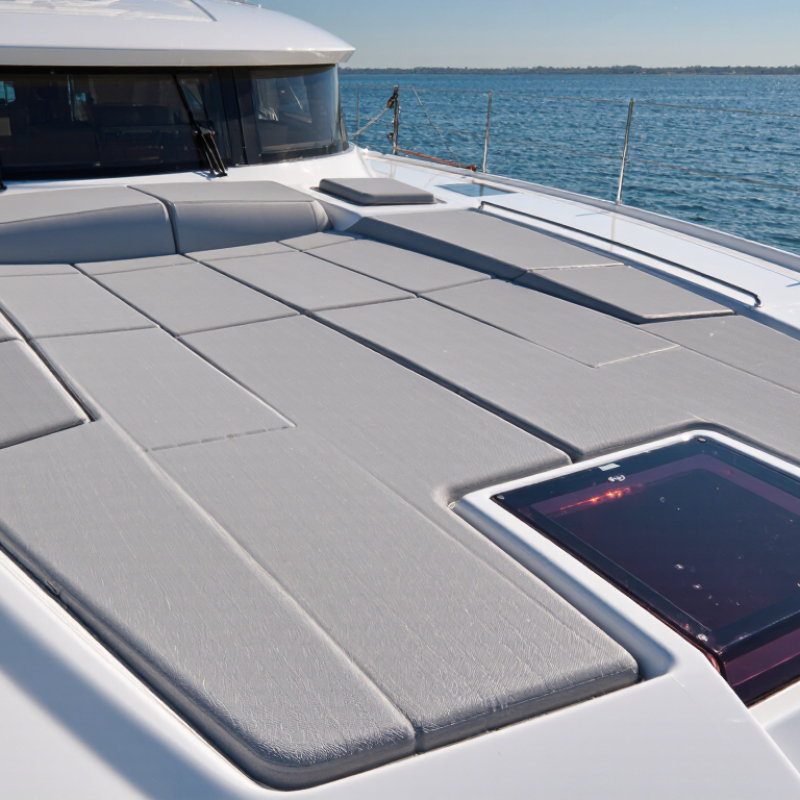
EVA boat deck flooring is a shaped sheet of ethylene-vinyl acetate foam, usually made with closed cells that limit water absorption. The trapped air gives the surface a softer feel underfoot than bare fiberglass or aluminum. It is cut into panels, then bonded to a prepared deck with pressure-sensitive adhesive. Some surfaces have grooves or a brushed texture to help channel water and improve grip. They are not a guarantee against slipping. Salt, sunscreen, grit, and heat still affect footing.
The NMMA’s 2023 boating participation summary estimates that about 100 million Americans go boating each year. That is a useful reminder: deck materials face repeated foot traffic, wet gear, and sun—not just showroom tests. For a buyer in China, check the foam’s thickness, density, adhesive compatibility, and available UV-weathering data; these details vary by product. A clean, dry, well-prepared deck matters as much as the foam itself. Installation can look easy. It is not always. Poor bonding may let edges lift, while deep grooves can hold dirt and require more scrubbing. A technical data sheet helps, but real-world wear deserves attention too.
What Is the Best EVA Boat Deck Flooring in China? - What EVA Boat Deck Flooring Is and How It Works
EVA (ethylene-vinyl acetate) boat decking is typically a closed-cell foam sheet with a textured surface and a pressure-sensitive adhesive backing. The foam provides cushioning and grip; the adhesive bonds the sheet to a clean, prepared deck. The best choice depends on the boat, exposure, desired feel, and installation conditions.
| Decking option | Typical thickness | Typical density range | Surface and underfoot feel | Good fit for | What to check |
| Standard closed-cell EVA sheet | About 5–6 mm | Often around 100–180 kg/m³ | Textured, lightweight cushioning; common in flat or lightly contoured areas. | General-purpose cockpit and deck coverage. | Confirm foam is closed-cell, the backing suits the substrate, and the surface texture is appropriate for wet use. |
| Thicker cushioning sheet | About 8–10 mm | Varies by formulation; compare like-for-like samples. | Softer, more cushioned feel, with greater material thickness. | Areas where added comfort is preferred and deck clearances allow it. | Check door, hatch, and fitting clearances; thicker foam may be more prone to edge lifting if poorly installed. |
| High-density EVA sheet | About 5–8 mm | Toward the upper end of the supplier’s stated range. | Generally firmer underfoot; may resist compression better, depending on formulation. | Frequently used or higher-traffic deck areas. | Request density and hardness test information; density alone does not establish durability or grip. |
| Grooved or brushed-top EVA | Commonly about 5–8 mm | Depends on the foam grade. | Textured finish can help provide traction and may channel surface water, depending on the pattern and installation. | Cockpits, walkways, and other exposed deck zones. | Evaluate grip when wet using a representative sample; texture does not guarantee slip resistance in every condition. |
| Cut-to-fit or routed EVA panels | Usually selected from standard sheet thicknesses, often 5–8 mm. | Depends on the chosen sheet. | Can be shaped around deck features; routed grooves may create a plank-style appearance. | Decks with hatches, curves, or a custom layout. | Allow for accurate templates, clean cut edges, drainage, and service access to removable fittings. |
How it works: Closed cells limit water uptake compared with open-cell foam, while the textured top adds surface detail for foot contact. A pressure-sensitive adhesive backing holds the flooring to a properly prepared deck; it does not compensate for a dirty, damp, oily, or unsound surface.
Practical selection: For many boats, a closed-cell sheet around 5–8 mm thick is a reasonable starting point. Compare samples for wet grip, firmness, UV and weathering performance, adhesive compatibility, and ease of cleaning. The ranges above are indicative rather than universal specifications; properties vary by formulation and test method.
How EVA Decking Materials Are Made and Tested
EVA boat decking starts with pellets of ethylene-vinyl acetate, colorants, and carefully measured additives. Heat and mixing soften the blend before it is pressed into sheets or molded into textured pads. The recipe affects softness, grip, color stability, and resistance to water. Small changes matter. A softer sheet may feel comfortable under bare feet, but it can dent more easily beneath a cooler or seat leg.
After cooling, sheets are trimmed, embossed, and often cut to fit deck layouts. Manufacturers check thickness and density across different points, since uneven foam can create weak spots. Test samples may be exposed to sunlight, saltwater, cleaning agents, and repeated abrasion. Wet-slip testing is especially useful: a dry sample can feel secure, while a wet surface may behave differently. Adhesion tests also measure how firmly the backing stays attached to a prepared panel.
Good quality control records test results by production batch, rather than relying on one sample. Still, a laboratory test cannot fully recreate years of heat, foot traffic, and hurried cleaning aboard a boat. That limitation deserves attention. Buyers can request material specifications and sample pieces, then check the texture when wet and inspect the backing before installation. A neat-looking sheet is not always a durable one.
Which Features Matter Most in Chinese EVA Boat Flooring
Choosing EVA boat flooring from Chinese suppliers means looking beyond color and price. A useful sheet should feel firm underfoot, yet compress slightly when pressed. Closed-cell foam helps limit water absorption, while a textured surface can improve footing on a damp deck. Grip matters. Ask for material thickness, density, and test information, then compare samples in wet conditions rather than relying on photographs.
UV resistance, saltwater exposure, and temperature changes also matter on working boats. Dark flooring may become uncomfortable under strong sun, while pale colors can show dirt quickly. There is no perfect shade. Check whether the surface texture stays comfortable for bare feet and whether the backing suits your deck material. A neat edge around seat bases and hatches is a practical sign of careful cutting, not just attractive product images.
Installation quality can affect service life as much as the foam itself. Confirm that the adhesive is suitable for marine use and that the deck is clean, dry, and properly prepared before fitting. Ask for a fitted sample or clear cutting template, especially around curved corners. One overlooked detail is drainage: grooves that look deep may still trap grit. Compare the flooring after rinsing and drying, and consider how easily you can remove sand from the pattern. Specifications help, but real samples can reveal small inconsistencies.
How to Compare EVA Decking Manufacturers and Products
When comparing EVA boat deck flooring manufacturers in China, look beyond catalog photos and price per sheet. Ask for the foam’s density, thickness tolerance, UV-resistance data, and adhesive specifications. Reliable suppliers should explain how these figures are measured and provide batch-level quality records. Vague answers are a warning sign.
Request samples and test them in conditions similar to your boat. Wet the surface, wear shoes with different tread patterns, and check grip without assuming one texture suits every deck. Press the foam with a thumb, then inspect how quickly it recovers. Feel the surface. Also examine cut edges and backing for uneven thickness, weak adhesion, or trapped air. A sample cannot predict every season of use, but it reveals practical differences.
Compare products by cleaning effort, color stability, installation method, and replacement options, not just softness. Ask manufacturers how they control cutting accuracy and inspect finished sheets before packing. Clear communication matters when discussing custom shapes or production delays. That matters. To be honest, technical sheets can look reassuring while real-world performance still varies with heat, salt, and maintenance. Keep written specifications, sample notes, and agreed tolerances together before placing a larger order.
What Is the Best EVA Boat Deck Flooring in China?
Compare EVA decking by checking product evidence—not by relying on a brand name alone.
The bars count the evidence items in this buyer’s checklist; they are not test results or manufacturer rankings. Ask for relevant specifications and test documentation, especially for wet traction, UV durability, and adhesive compatibility with your boat’s surface.
How to Choose the Right EVA Deck Flooring for Your Boat
Choosing EVA boat deck flooring starts with how you use your boat, not just its color. Fishing decks need firm footing and easy cleanup; family cruisers may benefit from cushioning under bare feet. Measure every panel, hatch, and curved edge before ordering. A few millimeters can affect hinge clearance. Compare thickness, density, surface texture, UV resistance, and stated temperature range. Request a physical sample, since screen images can hide texture and color differences.
Tips: Place the sample on a clean, dry deck in both sun and shade. Walk on it with wet shoes. Check grip, compression recovery, and whether the edges lift after repeated flexing. Confirm adhesive compatibility with your deck material, especially fiberglass, aluminum, or painted surfaces. Follow the supplier’s installation and curing instructions.
When comparing China-made flooring, review written specifications, sample quality, batch consistency, and packaging—not price alone. Ask what conditions any UV or slip-test results represent. Before bonding, remove dust, wax, and moisture; they can weaken adhesion. EVA feels comfortable, but it may retain heat and show wear in busy areas. That trade-off is real. I might choose a less decorative sheet for dependable grip and clean cuts, though one sample may not reveal every production variation.
