Sorry, your browser is not supported. For a better experience, keep your browser up to date. Check here for latest versions
A steaming bowl of chowder can arrive perfectly hot—or leak across the takeout bag. The right Disposable Soup Container helps restaurants protect food, simplify packing, and give customers a better meal away from the table. But “best” depends on the menu. Broth, creamy soup, chili, and noodle dishes place different demands on lids, insulation, capacity, and leak resistance.
The U.S. Environmental Protection Agency reported that containers and packaging generated 82.2 million tons of municipal solid waste in 2018, or 28.1% of the total. That figure covers many packaging types, not soup cups alone, but it shows why material choice deserves attention. In this guide, we compare seven restaurant-ready options by practical details: how securely each lid fits, whether the container handles hot liquids, how easily it stacks, and what customers experience during transport. Small differences matter. A lid that loosens in a crowded delivery bag can undo careful kitchen work.
The best choice is not always the cheapest or the most sustainable-sounding. Test containers with your actual portions and packing routine. One limitation: no source was provided for a named soup-container specialist’s exact quotation, so I won’t invent one.
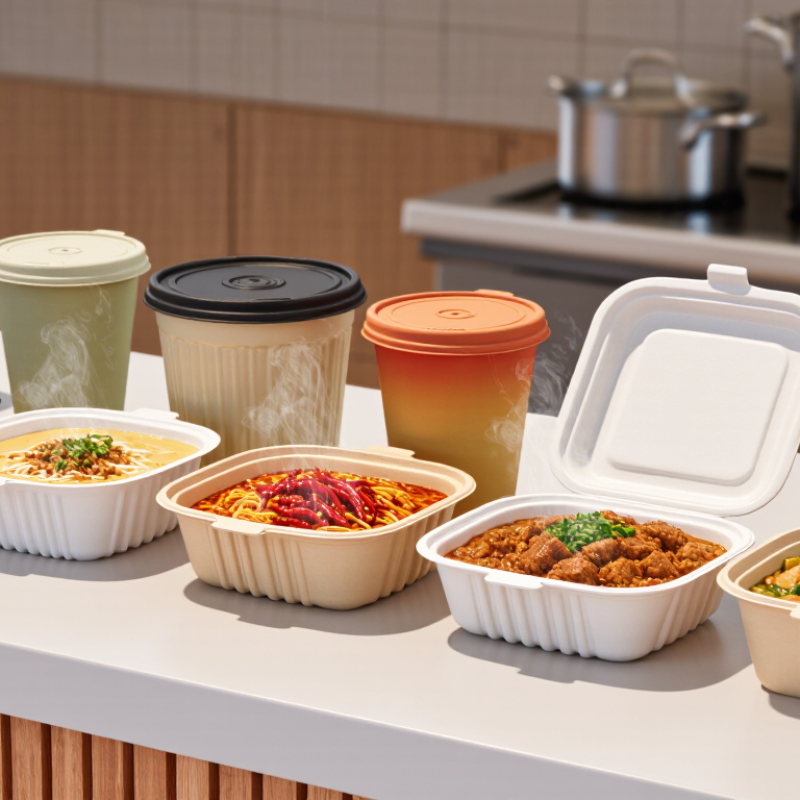
A soup container should fit the portion, not just the menu description. Measure a typical serving, including noodles, vegetables, or toppings that take up extra room. A 12-ounce cup may suit a side of broth, while a hearty lunch portion may need more space and headroom. Too little room can make lids messy. Too much can leave soup sloshing around during delivery. Test the actual serving before ordering a full case.
Heat changes the choice. Check that the container is rated for the soup’s serving temperature, and follow its handling instructions. For hot broth, a secure lid and a rim that stays firm matter more than appearance. Delivery adds another test: fill a sample, close it, tilt it gently, then place it in a takeout bag with a side dish. Small details matter. A lid that fits well on an empty container may behave differently when filled.
Budget by usable container, not just case price. Compare unit cost, lid cost, storage space, and how often containers leak or arrive damaged. A cheaper option can cost more if staff double-bag every order. It is tempting to buy one size for everything, but that can create awkward portions and wasted packaging. I’d review a week of orders before settling on sizes; the numbers may surprise you.
Restaurant soup containers vary more than their labels suggest. Common choices include coated paperboard, polypropylene, PET, aluminum, molded fiber, bagasse, and foam. Typical serving sizes run from 8 to 32 ounces; 16- and 24-ounce tubs suit many lunch orders. Paperboard feels familiar, but its lining matters: hot broth can soften weak seams. Polypropylene tolerates heat and often pairs with snap-on lids. PET lids show the soup clearly, but the base must be rated for hot fills. Aluminum handles heat well, though it is less convenient for microwave reheating. Fiber and bagasse look sturdy, yet coatings and lid fit affect leak resistance. Foam insulates effectively. But it can feel flimsy when stacked.
Check the rim and lid together, not separately. A lid that snaps on dry may loosen when grease reaches the rim. Fill a sample with hot soup, seal it, tilt it, then carry it in a delivery bag. Small detail. Also test after several minutes, when steam has softened the container. EPA’s 2018 Advancing Sustainable Materials Management report recorded 41.9 million tons of paper and paperboard containers and packaging, and 14.5 million tons of plastic containers and packaging in U.S. municipal waste. Those figures cover packaging broadly, not soup tubs alone, so they cannot predict a container’s environmental impact. They do show why material choice deserves scrutiny. I would not assume a thicker wall means a safer seal; lid geometry often matters more.
| Container material / type | Typical capacity range | Common lid style | Leak resistance | Best suited for | Key considerations |
|---|---|---|---|---|---|
| Polypropylene (PP) plastic tub | 8–32 fl oz | Matching snap-on PP lid; some styles use a vented lid | High when the lid and container are designed to fit together securely; test before transporting liquids. | Hot or cold soups, takeout, and reheating when the specific product is labeled for those uses. | Durable and widely used. Microwave suitability and temperature limits depend on the product; follow its instructions. |
| Expanded polystyrene (EPS) foam cup | 8–32 fl oz | Press-on foam lid, usually with a sip or vent opening | Generally good upright with a well-fitted lid; openings and loose fits can allow spills. | Hot soup served for immediate takeout, especially when insulation and low weight are priorities. | Not suitable for microwave use. Foam food-service packaging is restricted or prohibited in some locations. |
| PE-lined paperboard soup cup | 8–32 fl oz | Rolled-rim press-on lid, commonly paperboard or plastic | Good for upright service when the lining is intact and the compatible lid is firmly seated; not designed to be fully leakproof if tipped. | Hot soups, broths, and single-serve takeaway portions. | The polyethylene lining helps resist liquid penetration. Check local disposal rules, since a plastic lining may affect recycling or composting options. |
| PLA-lined paperboard soup cup | 8–32 fl oz | Compatible press-on paperboard or plastic lid | Good upright when properly assembled; lid fit and the cup’s lining determine performance. | Food service where a plant-derived lining is preferred and the cup is used within its stated temperature range. | PLA is not the same as ordinary polyethylene and typically requires suitable industrial composting conditions. Verify hot-fill limits on the product. |
| Aqueous-coated paperboard cup | 8–32 fl oz | Rolled-rim press-on lid matched to the cup diameter | Typically suitable for upright serving; resistance to prolonged contact and spills varies with coating and construction. | Hot or cold takeaway portions when the product is explicitly rated for the intended food and temperature. | “Aqueous-coated” covers different coating formulations. Confirm liquid-holding performance, hot-food suitability, and disposal guidance with the supplier. |
| Molded-fiber or bagasse bowl with barrier lining | 12–32 fl oz | Matching molded-fiber lid or a compatible clear lid | Moderate to high upright when lined and properly lidded; not all fiber bowls are leak-resistant. | Thicker soups, stews, and meal portions where a bowl-shaped container is useful. | Unlined fiber can absorb liquid over time. Check whether the barrier and lid are suitable for hot, oily, or acidic foods. |
| Aluminum foil container | 8–32 fl oz | Crimp-on foil lid or a compatible board/plastic lid | Good upright when the lid is securely crimped or fitted; a non-crimped lid may not prevent leakage if tipped. | Oven-heating applications and takeaway portions that need a rigid container. | Do not use in a microwave. Confirm that the lid is compatible with the container and the intended heating method. |
Capacity ranges and performance descriptions are typical examples, not guarantees. Available sizes, temperature limits, lid fit, and leak resistance vary by product; check the manufacturer’s specifications and test the assembled container with the intended soup before service.
Disposable soup containers must do more than prevent spills. They need to suit the soup’s temperature and the way staff serve it. The FDA Food Code benchmark is 135°F or hotter for hot holding, and 41°F or colder for cold holding. These limits apply to the food, not the container surface. Small details matter. Check the supplier’s temperature-use guidance, lid fit, and leak resistance before ordering. A container designed for cold soup may soften or warp with hot broth.
During service, check soup with a clean, calibrated probe thermometer. Measure the food itself, since steam and warm lids can mislead. Keep hot soup at or above 135°F, and cold soup at or below 41°F. Record readings at practical intervals, especially during a busy lunch rush. For cold service, small batches can reduce repeated warming on the counter. Disposable containers are not substitutes for proper holding equipment. Staff may still miss a reading when orders pile up; build checks into the service routine.
Tips: Test a filled sample before bulk purchasing. Carry it briefly, tilt it gently, and check for leaks. Label batches with preparation times, and keep spare lids nearby. If the container’s heat rating is unclear, ask the supplier rather than guessing.
Use food-grade, leak-resistant containers suited to your serving needs, and follow FDA Food Code temperature limits for holding soup.
How to read this: Keep cold-held soup at 41°F or below and hot-held soup at 135°F or above. The 94°F bar shows the difference between those thresholds, not a separate FDA limit. Choose containers that maintain suitable serving conditions; the chart does not rate container performance.
A compostable claim on a soup container needs evidence, not just green wording. ASTM D6400 evaluates plastics intended for industrial composting; EN 13432 covers packaging recoverable through composting and biodegradation. Both use controlled test conditions, including biodegradation and disintegration checks. They do not prove that a container will break down in a backyard heap or in every local facility.
The U.S. EPA’s 2018 Advancing Sustainable Materials Management report estimated that food made up 63.1 million tons, or 21.6%, of U.S. municipal solid waste. Better food-waste systems matter, but packaging claims still need careful checking.
For a restaurant, request the certificate and test scope for the complete item—not only its raw resin. A fiber bowl with a polymer lining, printed ink, adhesive, and separate lid may need separate evaluation. Check whether the documentation names the exact container format and standard, and confirm that local composters accept it.
A compliant test result is useful; it is not a promise of local processing. That distinction is easy to miss.
Tips: Ask suppliers for current third-party documentation against ASTM D6400 or EN 13432, plus written confirmation from your composting provider. Test containers with hot broth: leaks, softened rims, or lids that loosen can undermine service, even when compostability evidence looks strong. A label alone is not enough.
A good soup container should fit the meal’s journey, not just the menu. For quick takeout, lightweight paperboard cups with secure lids are easy to carry and store. Coated paperboard can help resist leaks, but performance varies by construction and soup temperature. For longer delivery routes, test the lid and container together. A small gap can turn a tidy bag into a mess.
Molded-fiber containers suit catering where a natural-looking presentation matters, while sturdy plastic containers make it easier to see portions and stack chilled items. Insulated designs can help soup retain warmth, though they may take up more storage space. For dine-in service, choose a container that feels comfortable to hold and opens without splashing. There is no perfect option. A container that works for chowder may be awkward for thin broth, and that detail is easy to miss.
Tips: Fill sample containers with your actual soup, then carry them in a delivery bag for the usual route length. Check for seepage, lid fit, and how easy the container is to open. Leave headspace, especially with hot liquids. Test stacking, too; one wobbly stack can slow down catering prep. When comparing seven options, record portion size, storage needs, and disposal instructions. Don’t rely on appearance alone.