2026 Best Custom Golf Hat Clips for Wholesale Buyers

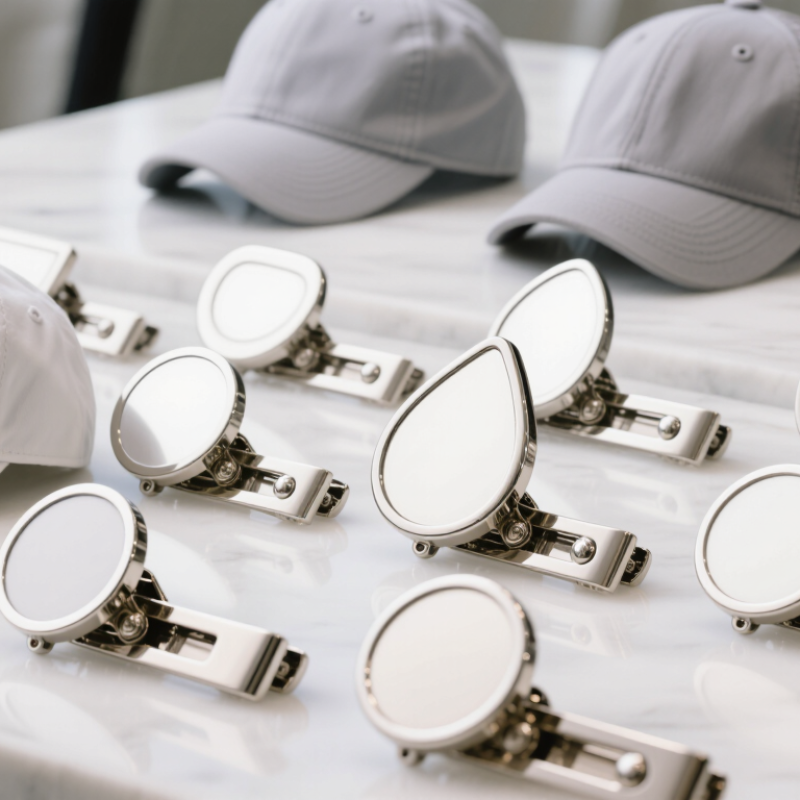
When sourcing golf accessories for a 2026 retail or promotional program, small hardware choices can affect both usability and perceived quality. Custom Golf Hat Clips give buyers a practical way to pair a branded marker with a cap, but the details deserve a close look. Check the clip’s grip, finish, and weight, then consider how it sits on different hat fabrics. Fit matters. A clip that feels secure on a structured cap may behave differently on a soft, unstructured brim. Request samples and test them on the styles your customers are most likely to wear.

Wholesale decisions involve more than choosing a logo and unit price. Ask suppliers about available materials, decoration methods, minimum order quantities, packaging, and production timelines. Review a physical sample where possible, especially when color matching or fine logo details matter. Test first. Artwork may look crisp on a screen and less clear on a small metal surface. Confirm what the quoted price includes, and ask how changes to the design could affect cost or delivery. It is tempting to rank suppliers by price alone; that can be a mistake, though not every low quote signals poor quality. Still, price is not the whole story. This guide explores the features, customization options, and supplier questions wholesale buyers can weigh before placing an order. No single clip suits every program, and a little hands-on checking can prevent an avoidable mismatch.
2026 Best Custom Golf Hat Clips for Wholesale Buyers

What Custom Golf Hat Clips Are and How They Work

A custom golf hat clip is a small holder that attaches to a cap brim and keeps a ball marker within reach. Many designs use a spring clip or sliding jaw to grip the fabric. A magnet holds the marker against the clip until a golfer pulls it free. On the green, the marker can be placed behind the ball to mark its position. Small detail. The clip itself does not mark the ball’s location; the removable marker does.

For wholesale buyers, the mechanism matters as much as the printed or engraved design. Check that the clip stays secure on different brim thicknesses without leaving sharp pressure points. Test the magnet with the actual marker, not just a similar sample; a weak hold can let it fall during movement. Not every clip fits. Surface decoration also needs practical review: fine lettering may be hard to read on a curved, compact piece. Ask for a production sample and inspect the grip, finish, and marker release by hand. A clip can look polished in a photo yet feel awkward on a real cap, so that gap deserves attention before ordering.

2026 Best Custom Golf Hat Clips for Wholesale Buyers

What custom golf hat clips are and how they work

A custom golf hat clip attaches to a cap and uses a magnet to keep a removable ball marker close at hand. The chart shows two official golf-size benchmarks—not hat-clip or marker dimensions: the golf ball must be at least 42.67 mm in diameter, and the hole is 108 mm in diameter. Buyers can select marker dimensions separately when specifying a custom design.

Sources: The R&A Rules of Golf, Rule 2.2 and Rule 4.2a.

Common Materials, Styles, and Customization Options

Golf hat clips commonly pair a metal clip with a removable magnetic ball marker. Stainless steel offers a clean, durable feel and resists everyday moisture, though its weight may not suit every design. Zinc alloy allows more detailed shapes and varied finishes. It can work well for decorative markers, but coatings may show wear after repeated handling. Small parts matter. Silicone or rubber accents add color and a softer touch, but they should fit securely and avoid snagging fabric.

Styles range from simple round markers to custom outlines, textured faces, and two-piece sets. A low-profile clip is practical for a cap brim; a larger marker gives more room for artwork. Not every finish ages gracefully. Ask for a physical sample and check the magnet’s hold, clip tension, edge smoothness, and finish after normal use. This step can reveal issues that product images miss.

Wholesale customization may include engraved or raised logos, custom colors, patterned surfaces, marker shapes, and individual packaging. Share clear artwork and confirm the usable marking area before production. For fine text, engraving may remain clearer than a shallow printed detail, depending on the surface. Keep the design legible at actual size. Too many colors or tiny details can look impressive on screen and muddy on a small marker. Test the final combination, not just the clip or marker alone.

How to Assess Clip Quality and Supplier Reliability

For wholesale buyers, clip quality shows in small details: a spring that closes firmly, smooth edges, and plating without bare spots. Test clips on several cap fabrics, including thick seams. Open and close each sample repeatedly, then check for looseness, scratches, or fabric snags. The National Golf Foundation’s 2024 participation report counted 26.6 million U.S. on-course golfers in 2023. That broad audience makes durable, comfortable accessories worth checking carefully, rather than judging by appearance alone.

Supplier reliability needs evidence. Request a pre-production sample, written material specifications, and inspection records tied to each production lot. Confirm clip dimensions, finish, attachment strength, packaging, and lead times in writing. ISO 2859-1 provides a recognized framework for lot-by-lot sampling, but sampling cannot guarantee every piece is flawless. Ask how defects are recorded and corrected. I still treat a perfect showroom sample with caution; bulk runs can vary.

Tips: Keep one approved “golden sample” for comparison. Ask the supplier to test clips on your actual hat material, not just a generic swatch. Check a small pilot order before committing to volume, and save photos of defects. A clear response to a quality problem matters too. Fast promises are not proof.

2026 Best Custom Golf Hat Clips for Wholesale Buyers - How to Assess Clip Quality and Supplier Reliability

Assessment Dimension What to Check Practical Buyer Benchmark How to Verify Supplier Reliability Evidence
Clip body material Confirm the specified metal or polymer and any coating. Common options include stainless steel, zinc alloy, and molded plastics. Require the exact material grade or alloy designation in the product specification; do not rely on “metal” alone. Review material declarations and, where required, obtain a test report for the supplied production lot. The supplier can provide consistent specifications, lot identification, and traceable material documentation.
Attachment and retention Check whether the clip holds securely on the intended hat brim without slipping, excessive force, or visible fabric damage. Set a project-specific pull-off-force range and fabric-damage limit in the purchase specification; there is no single fit target for every brim. Test samples on representative brim materials and thicknesses, using repeatable attachment and pull-off procedures. Ask for documented sample results and confirmation that production units will use the approved clip geometry and spring components.
Opening and closing durability Inspect hinge movement, spring return, alignment, sharp edges, and loosening after repeated use. Specify a cycle-test count appropriate to expected use and define acceptable failure, deformation, and finish-wear limits before production. Have samples opened and closed in a controlled cycle test; inspect function and appearance at agreed intervals. A reliable supplier records test conditions, results, sample quantities, and corrective actions for failures.
Finish and corrosion resistance Check plating or coating coverage, color consistency, scratches, peeling, and corrosion risk during storage and use. Name the finish and any applicable corrosion-test method and acceptance level in the order; results depend on the finish and test conditions. Inspect production-representative samples and request test reports when corrosion performance is a requirement. Check that reports identify the tested sample, method, exposure conditions, and date rather than making an unsupported “rustproof” claim.
Magnet or accessory retention For designs that hold a removable accessory, verify its fit, alignment, and resistance to accidental separation. Define the accessory dimensions, retention test, and acceptable separation force for the specific design. Test assembled samples in the intended orientation and after repeated attachment and removal. Confirm that the approved accessory and attachment method are included in the controlled product specification.
Custom logo and decoration Review logo position, legibility, color, edge quality, and durability of engraving, printing, or other decoration. Approve a production-representative sample and document artwork dimensions, placement, colors, and permitted tolerances. Compare finished samples with the approved artwork and inspect decoration after the agreed handling or wear test. The supplier uses revision-controlled artwork and obtains written approval before changing materials, processes, or placement.
Dimensional consistency Measure overall length, width, thickness, opening range, and any mating features that affect fit. Specify dimensions and tolerances on a drawing or approved specification; tolerances should reflect the design and tooling capability. Measure samples from multiple positions in a production lot using suitable calibrated instruments. Request inspection records that identify the lot, measured characteristics, sample size, and acceptance criteria.
Order inspection and defect control Agree how visible defects, functional failures, and packaging issues will be classified and handled. Set written acceptance criteria and an inspection plan before production; select sampling levels based on order risk and buyer requirements. Inspect a pre-production sample and perform a defined pre-shipment inspection against the approved specification. The supplier provides a corrective-action process, clear defect records, and agreed remedies for nonconforming goods.
Production capacity and lead time Confirm sample timing, production lead time, order quantity constraints, packaging schedule, and shipping handoff dates. Use a written schedule with milestone dates and clarify whether lead time starts after artwork, sample, and order approval. Compare quoted timelines with sample and order records from prior work where available. The supplier communicates delays promptly, confirms capacity in writing, and provides shipment documentation and status updates.
Wholesale cost and packaging Compare unit price, tooling or setup charges, packaging, inspection, freight terms, and any quantity-based price breaks. Request an itemized quotation with currency, quantity tiers, included services, payment terms, and quote validity period. Check that the quotation matches the approved material, finish, decoration, packaging, and delivery terms. A dependable supplier discloses exclusions and obtains approval for cost or specification changes before proceeding.

Buyer note: The benchmarks above are purchasing and inspection criteria to define for each project, not universal industry standards. Approve samples and document measurable acceptance limits before placing a wholesale production order.

Wholesale Ordering: Pricing, Minimums, and Lead Times

For custom golf hat clips, the quoted price usually depends on order volume, metal type, finish, logo method, and packaging. A stamped design may cost less than a detailed enamel mark. Ask for pricing at several quantities, such as 100, 250, and 500 pieces, and check whether setup, sample, and freight charges are listed separately. Small runs cost more per unit. Get the full landed cost in writing.

Minimum order quantities vary by supplier and design. A ready-made clip with a simple logo may have a lower minimum than a custom shape or color match. Before paying a deposit, confirm the minimum, artwork requirements, and whether mixed colors count toward one order. Request a physical sample when finish and magnet strength matter. It adds time, but can prevent an expensive mismatch. That step is easy to skip.

Lead times often begin only after artwork and sample approval. Ask the supplier to separate sampling, production, and shipping estimates; a production window of a few weeks is common, but custom details and busy seasons can change it. Keep a buffer before a tournament or retail launch. The lowest quote may not be the best value if communication is slow or delivery dates are vague. Get dates, not promises.

Key 2026 Trends and Buying Considerations

In 2026, custom golf hat clips favor compact designs, clean finishes, and personalization that feels useful rather than loud. Buyers are asking for initials, tournament dates, and simple course-themed marks, often in restrained colors that pair with different caps. Lightweight profiles matter; a bulky clip can pull a brim out of shape during a full round.

For wholesale orders, inspect the attachment before approving artwork. The clip should hold a removable ball marker securely, yet release without a struggle. Check magnet strength, edge smoothness, plating consistency, and whether the finish scratches after repeated handling. Ask for a physical sample in the intended metal and color. A polished mockup can still disappoint.

Material choice affects both cost and perceived value. Stainless steel offers a sturdy feel, while zinc alloy can support detailed shapes at a lower unit cost; durability still depends on thickness and finishing. Fit matters too. Confirm logo size, color tolerance, packaging, minimum quantities, and production timing in writing. Small details matter. Allow for slight color differences across batches, and agree on an acceptable range before placing a large order.