Sorry, your browser is not supported. For a better experience, keep your browser up to date. Check here for latest versions
Buying an Army Winter Sweater for a global market takes more than choosing a familiar color and a low price. Buyers need to compare warmth, fit, durability, and production consistency. A sample may feel soft in a showroom yet pill quickly after repeated wear. Small checks matter.
For this introduction, Maya Chen is a fictional apparel-sourcing expert, not a real or independently verified industry authority. Her illustrative reminder is: “Test the sweater in use, not just by touch.” That means checking the yarn blend, knit density, seam strength, and wash performance before approving bulk production. Ask suppliers for clear fiber details and a size chart measured in consistent units. Then compare a sample against the intended wearer’s layering needs. Fit can be tricky.
This guide presents seven practical buying tips for global buyers, from evaluating materials to reviewing samples, sizing, quality checks, and delivery planning. Request measurable specifications rather than relying on broad claims such as “heavyweight” or “premium.” Confirm color consistency across samples and production lots. Consider how sleeves sit over a base layer, and whether cuffs retain their shape after wear. A modest trial order can reveal issues that photographs hide. It may not catch everything. Suppliers, factories, and materials vary, so document decisions and revisit them when results fall short. A dependable Army Winter Sweater is built through careful checks, not confident slogans.
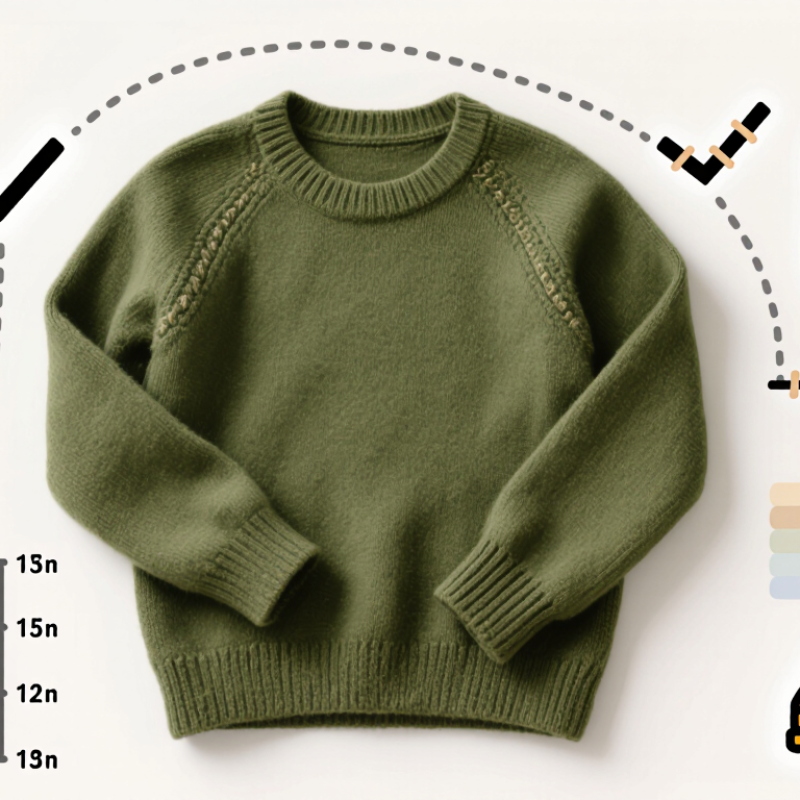
An army winter sweater is usually a mid-layer, not a complete cold-weather solution. Its job is to hold warm air close while allowing movement under a shell. The U.S. Army’s Extended Cold Weather Clothing System uses seven layers for changing conditions. That system is a useful reminder: buyers should assess a sweater as part of a clothing setup, not in isolation.
Use matters. For static guard duties, a denser knit and close-fitting cuffs can help reduce drafts. For active patrols or outdoor work, excess warmth and trapped sweat may become problems. A half-zip can release heat quickly; a crew neck may sit better beneath a jacket. Check sleeve reach with arms raised, and inspect seams around the shoulders. Small details show up fast.
Ask suppliers for fiber content, garment weight, shrinkage results, and thermal-test reports. ISO 11092:2014 measures thermal resistance and water-vapour resistance using a guarded hotplate. Compare results only when test methods and sample conditions match. A thick sweater can feel reassuring, but thickness alone does not prove useful insulation. I would not treat one lab number as a field guarantee; fit, layering, wind, and activity change the experience. And sometimes the best choice is less obvious.
This illustrative 1–5 scale compares how well a traditional knit sweater may fit common use cases; it is guidance, not standardized test data. Sweaters are generally most useful as insulating layers in cool conditions. For wet weather or strenuous activity, consider moisture management, layering compatibility, and the garment’s care instructions before buying.
An army winter sweater should be assessed by fiber content, knit structure, and layering needs—not appearance alone. Textile Exchange’s Materials Market Report 2024 estimates that global fiber production reached 124 million tonnes in 2023, with polyester accounting for 57%. This scale makes clear material documentation important. Ask for exact fiber percentages and verify recycled-content claims with supplier records. A label alone can mislead.
Check insulation with test results, not thickness by touch. ISO 11092 measures thermal resistance (Rct) and water-vapor resistance (Ret), useful comparisons when suppliers test samples under the same conditions. A dense knit may block drafts better, while a loose, bulky knit can leave cold spots at the elbows. Wool-rich blends can suit damp, chilly conditions, but performance still depends on yarn, fit, and care. Request a production-lot sample. Small differences matter.
Weather resistance is not the same as waterproofing. Open knitted loops can absorb drizzle and dry slowly. Ask for an AATCC TM22 spray test where water repellency matters, plus clear care instructions. The WMO’s State of the Global Climate 2024 reported a global average temperature about 1.55°C above the 1850–1900 level; that figure does not predict local winter conditions. Specify destination temperatures, wind exposure, and expected layering instead. A heavier sweater is not automatically warmer.
A winter sweater should fit over a base layer without restricting movement. Check chest and shoulder measurements against the supplier’s chart, then compare them with a garment that already fits well. Sizing charts help, but they are not perfect across regions. Allow room for a thermal shirt, especially if the sweater will be worn outdoors. Test it seated. Raise both arms. The hem should stay in place, and the sleeves should not pull tight at the elbows.
Layering affects comfort as much as the sweater itself. A close-fitting base layer can manage moisture, while the sweater provides insulation beneath a weather-resistant outer layer. If the knit is too bulky, the outer garment may compress it and reduce warmth. If it is too loose, cold air can move through the gaps. Think about the local climate and typical activity, not just the lowest recorded temperature. A buyer in a damp, windy region may need a different setup from someone in a dry, cold area.
Inspect functional details before ordering. Ribbed cuffs and a shaped hem can help limit drafts, while a reinforced elbow may stand up better to repeated wear. Check seams for even stitching and look for care instructions that suit your maintenance process. Small details matter. Still, extra features are not always better; a heavy knit can feel tiring during long shifts. Request fabric weight and finished-garment measurements when available, and treat missing information as a reason to ask more questions.
For army winter sweaters, judge quality by more than a thick feel. Ask for the fiber blend, knit structure, garment weight, and care instructions. Request a sample in the same size range as the intended order. Check the cuffs after stretching, and inspect seams for loose ends or uneven joining. Small details matter. If possible, wash and dry a sample according to its label, then compare measurements and surface pilling. A heavy sweater can still lose shape quickly.
Compliance depends on the destination market and the product’s intended use. Confirm that fiber and care labels meet local requirements, and request relevant test reports for colorfastness, shrinkage, and restricted substances. Verify that report dates, product details, and sample descriptions match the sweater being offered. Not a guarantee. Reports support evaluation; they do not replace incoming checks. Supplier reliability also deserves evidence: review production capacity, lead times, defect handling, and written change-control practices. Ask who approves substitutions in yarn or dye. A low price may look efficient, but unclear material changes can create costly surprises. Even a careful checklist can miss something, so agree on inspection criteria before production begins.
For army winter sweaters, compare landed cost, not just the factory quote. List garment price, packing, inland haulage, freight, insurance, customs duty, broker fees, and delivery. UNCTAD’s Review of Maritime Transport 2024 reports that ships carry over 80% of world trade by volume. Freight disruption can materially change a shipment budget. Rates can jump. Ask suppliers to quote the same quantity, carton size, destination, and Incoterm; otherwise, comparisons are weak.
For container cargo, ask a freight forwarder whether FCA better reflects the handover point than FOB. Compare air freight for urgent replenishment with ocean freight for planned seasonal stock. Calculate cost per sellable sweater, including inspection and expected defects. Check carton dimensions and gross weight: bulky knits can use valuable container space. Small details matter.
Before paying a deposit, confirm fiber composition, country of origin, HS classification, labeling rules, and duty rates with a customs broker or official tariff database. Requirements vary by destination. The World Bank’s 2023 Logistics Performance Index assessed logistics across 139 economies, covering areas such as customs, infrastructure, and timeliness. Use it as a risk screen, not a delivery promise. A spreadsheet can look exact and still miss port storage or seasonal congestion, so verify rates and keep a contingency in the landed-cost estimate.
| Buying Tip | What to Compare | Cost Impact | Shipping Consideration | Import Requirement or Check |
|---|---|---|---|---|
| 1. Specify fiber content and construction | Compare wool, cotton, and synthetic blends, plus knit density, weight, and reinforcement. Request a fiber-content declaration and sample. | Material choice, yarn quality, and finishing can substantially affect the unit price. Ask for quotes on the same specification. | Heavier or bulkier sweaters can increase freight cost per unit; compare packed dimensions and gross weight. | Fiber composition and garment construction affect tariff classification. Confirm the correct HS code with a customs broker or the destination customs authority. |
| 2. Compare total landed cost, not just the unit price | Include product cost, packaging, freight, insurance, duties, taxes, brokerage, and destination handling charges. | Duty rates and taxes depend on the importing country, product classification, customs value, and origin. Do not assume a universal rate. | Request a freight quotation based on the shipment’s actual carton count, dimensions, weight, route, and delivery terms. | Check current tariff treatment and any preferential trade agreement rules for the product’s country of origin. |
| 3. Choose the shipping method for your deadline | Compare air freight, ocean freight, and courier service using a written quotation and an estimated door-to-door schedule. | Air is generally faster and more expensive than ocean freight; courier services may suit samples or small urgent shipments. | Ocean transport is usually more suitable for larger shipments but requires additional time for port handling and inland delivery. Transit times vary by route and season. | Allow time for customs clearance and document review; the carrier’s transit estimate is not a guarantee of delivery date. |
| 4. Agree on Incoterms and responsibility for charges | Compare quotations using the same named place and Incoterms® 2020 rule, such as FCA, FOB, CIF, or DAP. | A lower quoted price may exclude export handling, freight, insurance, import clearance, duties, or final delivery. | Confirm who books transport, pays each charge, arranges insurance, and handles export and import formalities. | Incoterms allocate responsibilities between buyer and seller; they do not determine tariff rates or replace customs requirements. |
| 5. Check textile labels before production | Approve label wording, fiber names, care information, size details, and language requirements for the destination market. | Late label changes can cause relabeling costs, shipment delays, or compliance problems. | Confirm labels and packaging are finalized before goods are packed and dispatched. | For the United States, textile products generally require fiber-content, country-of-origin, and responsible-business identification labeling; care labeling rules may also apply. In the EU, textile fiber names and composition labeling are governed by Regulation (EU) No 1007/2011. |
| 6. Verify origin, documents, and product claims | Check that the commercial invoice, packing list, transport document, and origin information match the goods and purchase order. | Incorrect or incomplete documents can lead to customs delays, additional fees, or reassessment of duties. | Send draft shipping documents for review before departure, especially for first-time routes or regulated destinations. | Country-of-origin marking and origin declarations must be accurate. Do not describe a commercial garment as official military issue unless that claim is substantiated and legally permitted. |
| 7. Build inspection and delivery time into the plan | Agree on sample approval, size measurements, color tolerance, defect criteria, and pre-shipment inspection arrangements. | Inspection and testing add upfront cost but can reduce the risk of receiving nonconforming goods and paying for returns or rework. | Plan for production, inspection, booking, transit, customs clearance, and delivery rather than relying on transit time alone. | Check whether the destination market has applicable chemical or product-safety requirements; for EU markets, assess relevant REACH obligations based on the product and its materials. |
Costs, duty rates, documentation, and import rules vary by product details, origin, destination, and shipment terms. Confirm current requirements with the relevant customs authority and a qualified customs broker before ordering.