Sorry, your browser is not supported. For a better experience, keep your browser up to date. Check here for latest versions
Choosing protective equipment across international markets requires more than comparing prices or advertised ratings. A Nij Level3 Bulletproof Plate may differ in weight, shape, materials, coverage, and tested performance. Those details matter when a plate must fit a carrier, support movement, and remain comfortable during extended wear. Small differences can be noticeable.
This guide introduces seven options for global buyers, with attention to practical product details and clear questions to ask suppliers. We consider published test information, construction, sizing, warranty terms, and the availability of independent documentation. A label alone is not proof. Check the exact model and configuration against current, authoritative testing records, and confirm that documentation applies to the plate being offered.
Buying across borders adds another layer. Import rules, product classifications, and permitted uses vary by destination, so buyers should consult relevant local authorities before ordering. No plate can remove every risk, and fit, condition, and proper use all affect its real-world value. That part is easy to overlook. Product descriptions can also leave gaps; when specifications are unclear, request written answers rather than guessing. The comparisons ahead are a starting point, not a substitute for professional evaluation. A careful choice takes time.
NIJ Level III is a test classification, not a promise against every rifle threat. Under NIJ Standard-0101.06, Type III hard armor is tested with 7.62×51 mm M80 ammunition, fired at 2,780 feet per second, plus or minus 30 feet per second. The protocol uses six impacts on a test panel. That boundary matters.
The NIJ standard measures both penetration and backface deformation, using a backing material to record how far the armor’s rear surface moves. For Type III, the permitted backface signature is no more than 44 mm. NIJ’s Compliance Testing Program evaluates specific armor models and configurations against its requirements; a rating does not automatically cover a plate used with a different carrier or soft-armor panel.
Check the exact standard and tested configuration. Some Type III plates are rated for stand-alone use; others require compatible soft armor. NIJ 0101.07 uses updated rifle-threat categories, so its RF ratings should not be casually treated as identical to legacy Level III. Testing is controlled, but real impacts vary with angle, distance, ammunition, and plate condition. Labels simplify that reality. They can mislead. Sources: NIJ Standard-0101.06, Ballistic Resistance of Body Armor, and the NIJ Compliance Testing Program.
NIJ 0101.06 Level III testing uses 7.62×51 mm NATO M80 ball ammunition. This chart shows its reference impact velocity—not a guarantee of protection against every rifle round.
Reference threat: 147-grain (approximately 9.5 g) M80 ball at 2,780 ft/s (approximately 847 m/s). Level III is a specific test classification; performance against other projectiles depends on the armor and test conditions. NIJ 0101.07 uses updated rifle-threat classifications.
For international buyers, evaluating NIJ Level III plates starts with documentation, not appearance. Confirm that the exact model has credible test records and matches the stated protection standard. A report for a similar plate is not enough. Check the label, production details, dimensions, and manufacturing date, then compare them with the supplier’s paperwork. Details matter.
Tips: Ask for current documentation before ordering. Weigh the plate yourself if possible; a few extra ounces can change comfort during a long shift. Check its size against the carrier, including corner shape and thickness. Confirm shipping requirements with qualified local authorities, since rules differ by destination.
Materials and construction also affect daily use. Ask how the plate should be stored and inspected, and whether heat, moisture, or impact can affect its service life. Look for clear care instructions rather than relying on broad claims. Fit is personal. A plate that shifts when you walk may be less practical, even if its paperwork looks complete. Comparing two options side by side helps, but the lightest choice is not automatically the best. I would also leave room for uncertainty: documents can be incomplete, and product details may change between production runs.
For global buyers, “Level III” is not a complete specification. Check the exact model, test standard, and independent documentation; ratings can differ between standard editions. Fit matters too. A plate should sit securely without restricting normal movement.
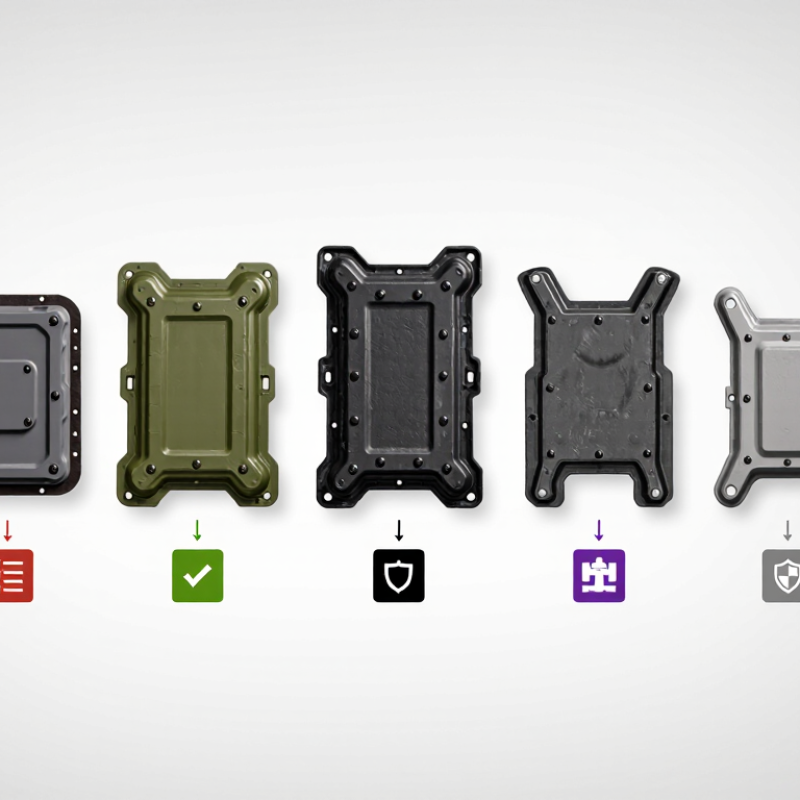
Seven common options offer different trade-offs. A single-curve plate is often simpler to fit. A multi-curve design follows the torso more closely. Ceramic-composite plates can reduce weight, while steel options are typically heavier. UHMWPE plates may be light, but their limits depend on construction. Swimmer-cut plates allow more shoulder movement, though they reduce coverage near the edges. Full-size rectangular plates cover more of the torso but can feel restrictive. Some designs combine these features, so categories may overlap.
Ask for dimensions, measured weight, care instructions, and reports tied to the exact plate model. Compare real measurements, not just product descriptions. Small details matter: a few extra millimetres can affect fit beneath clothing or equipment. There is no perfect choice. I would also treat broad claims about comfort cautiously; body shape and carrier fit change the experience. Check condition regularly, and follow the maker’s guidance for storage and replacement.
NIJ Level III plates can differ greatly in material, weight, shape, and fit. Ceramic plates are often lighter than steel, but may need careful handling and regular inspection. UHMWPE can also reduce weight, though thickness and heat limits vary by design. Steel is durable, yet its extra weight may become tiring during extended wear. Material alone does not tell the whole story.
Compare the plate’s stated protection rating with its exact test documentation. Check whether it is rated for standalone use or requires compatible soft armor. Then consider weight as worn, not just the listed plate weight. A few extra pounds can affect comfort and movement. Curved plates may sit closer to the torso, while cut and size influence shoulder clearance. Fit is personal. A specification sheet cannot replace checking coverage and comfort with the intended carrier.
Tips: Measure the carrier’s usable pocket and match it to the plate dimensions. Check that edges do not press into your ribs when seated or bending. Confirm current certification details through reliable documentation, and follow the maker’s inspection and care guidance. There is no perfect choice; balancing coverage, weight, and fit can be less straightforward than it looks.
For a shortlist of NIJ Level III plates, verify the exact model—not just the seller’s product family—against the NIJ Compliant Products List. Check the applicable test standard, plate size, manufacturing label, and current listing status. A laboratory report can support a claim, but it is not the same as a listed compliant model. NIJ 0101.07 also introduced RF threat classifications, so confirm which standard and rating a plate actually claims. I would not trust a certificate screenshot alone. Easy mistake. Ask for traceable documentation tied to the specific model and production batch.
Cross-border planning needs equal care. UNCTAD’s Review of Maritime Transport 2024 reports that more than 80% of world trade in goods by volume travels by sea, making transit time and port handling relevant to many orders. The World Bank’s 2023 Logistics Performance Index assesses 139 economies across six areas, including customs and shipment timeliness. Use those indicators as context, not a delivery guarantee. Before payment, confirm import permissions, customs classification, required end-use documents, insurance, and carrier acceptance with qualified local professionals. Keep written records of the agreed model, quantity, delivery terms, and inspection procedure. Paperwork can still be messy; allow time to resolve mismatched labels or delayed clearances.
This brand-neutral comparison covers protection standards and plate formats, not specific products. A plate’s rating, dimensions, weight, and fit are model-specific; verify them against the manufacturer’s documentation and the applicable NIJ records before purchase.
| Buyer option | Standard or claim | Documented threat reference | Fit and configuration | What to verify before ordering | Cross-border planning |
|---|---|---|---|---|---|
| 1. Level III standalone plate | NIJ 0101.06 Level III designation | The Level III test includes 7.62×51 mm M80 ball ammunition. | “Standalone” means the plate is tested for its stated protection without a separate soft-armor panel behind it. Confirm the exact plate model and size. | Check the model-specific NIJ status, label, test documentation, condition limits, and whether the claimed protection applies to the exact configuration being sold. | Confirm import and export rules with the relevant authorities in both countries. Obtain accurate product descriptions and required permits before shipment. |
| 2. Level III in-conjunction-with (ICW) plate | NIJ 0101.06 Level III claim requiring a specified backing armor configuration | Level III threat reference includes 7.62×51 mm M80 ball; an ICW plate must be used with the specified soft armor for its stated configuration. | The required soft-armor panel is part of the protective system, not an optional accessory. Confirm the exact compatible panel model. | Check that the test or certification documentation names the relevant ICW configuration. Do not assume any soft armor panel is compatible. | Check whether plates and backing armor have separate customs classifications, documentation, or permit requirements in the destination country. |
| 3. RF1 plate | NIJ 0101.07 RF1 protection level | RF1 includes test threats such as 7.62×51 mm M80, 7.62×39 mm mild steel core (MSC), and 5.56×45 mm M193. | The RF1 designation describes a protection level, not a plate size or shape. Confirm whether the plate is standalone or ICW. | Verify the exact model against the applicable NIJ records and check that the label identifies the tested model and protection level. | Request commercial invoices and product documents that accurately identify the standard and configuration; check destination-country recognition and import rules. |
| 4. RF2 plate | NIJ 0101.07 RF2 protection level | RF2 includes the RF1 threat set and adds 5.56×45 mm M855 ammunition. | Confirm plate size, curvature, weight, and standalone or ICW configuration from the exact model’s specifications. | Verify the model-specific RF2 listing and documentation. Do not treat a seller’s general “M855 resistant” statement as proof of NIJ compliance. | Before payment, confirm that the buyer, end user, destination, and shipping route meet applicable licensing and sanctions requirements. |
| 5. “Level III+” marketed plate | “Level III+” is not an official NIJ protection level. | The term alone does not define a standardized ammunition threat or test protocol. | Treat the label as a seller’s description, not a substitute for a recognized protection-level designation. | Ask for the exact ammunition type, projectile, impact velocity, test method, number of shots, and independent test report. Check any NIJ claim separately. | Ensure customs paperwork does not present an informal “III+” claim as an official NIJ certification. |
| 6. Common commercial 10×12-inch format | A commonly sold size; not a protection rating or universal sizing standard. | Threat performance depends on the specific tested plate model, not the nominal dimensions. | Measure the carrier pocket and check the plate’s actual height, width, thickness, and corner cut. A nominal 10×12-inch plate may not fit every carrier. | Request a dimensioned drawing and confirm whether dimensions include edge curvature or protective covering. | Check the declared dimensions and gross shipment weight; packaging and carrier limits can affect freight cost and delivery options. |
| 7. Multi-curve or SAPI-cut format | Shape and cut describe fit; they do not establish an NIJ protection level. | No ballistic threat can be inferred from “multi-curve” or “SAPI-cut” alone. | Check the carrier’s stated cut and size compatibility. Compare the plate’s actual dimensions and curve with the carrier and wearer’s fit requirements. | Verify the separate NIJ or test documentation for the exact model; do not infer certification from its shape or intended carrier fit. | Confirm packing, insurance, customs declarations, and any permits before dispatch. Rules differ by country and can change. |
Buyer note: NIJ 0101.06 Level III and NIJ 0101.07 RF1/RF2 are designations from different standards; they should not be treated as interchangeable labels. Check the current NIJ Compliant Products List and the exact model documentation, and confirm applicable cross-border requirements with the relevant authorities.