2026 Best Mask Strap for Diving and Snorkeling?
Choosing the best Mask Strap for diving and snorkeling in 2026 is about more than color or price. The right strap should feel secure without pulling hair, slipping during a swim, or creating pressure behind the head. Small details matter. A buckle that is hard to reach with cold fingers can become frustrating at the water’s edge.
This guide looks at common strap styles, including silicone replacements and wider neoprene covers, and explains where each may suit different divers. It considers adjustment, comfort, durability, and how easily a strap works with a compatible mask. Fit still comes first: a comfortable strap cannot fix a mask that does not seal properly. That part is easy to underestimate. Before buying, check the mask maker’s compatibility notes and inspect how the strap attaches to the frame.
There is no single winner for every face, hairstyle, or dive plan. A soft cover may feel gentler during a long snorkel, while a simple silicone strap can be easier to rinse and pack. But comfort is personal, and product descriptions do not tell the whole story. Even a well-reviewed option may twist, catch hair, or feel awkward with a hood. The comparisons ahead focus on practical trade-offs rather than promises. Use them to narrow your choices, then consider how the strap feels during a careful fit check on your own mask.
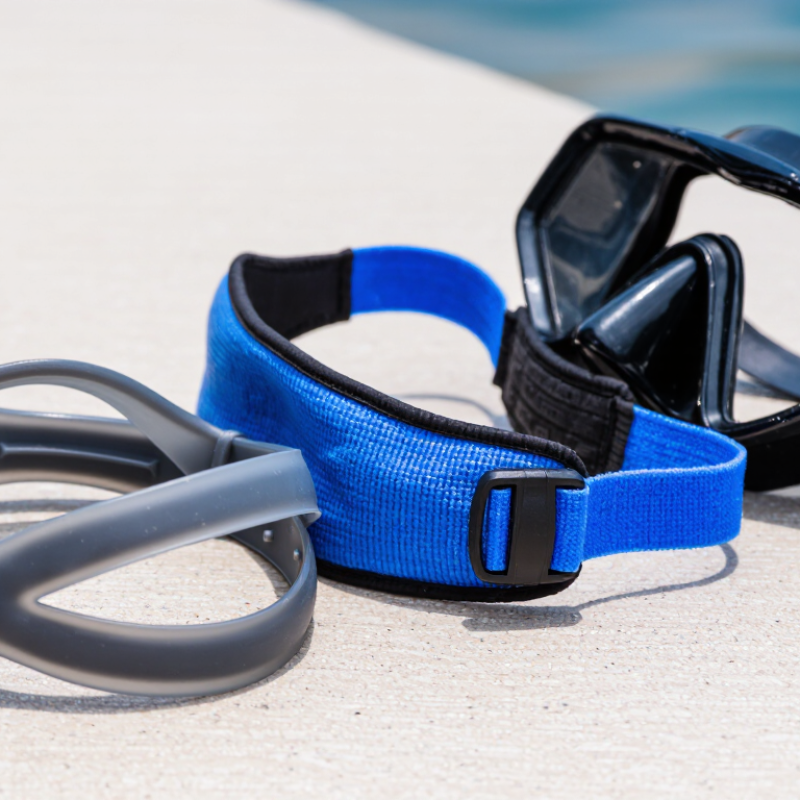
What a Diving and Snorkeling Mask Strap Does
A mask strap holds the mask against your face and helps keep its soft skirt in contact with your skin. That contact supports the seal around your nose and eyes while you dive or snorkel. The strap also helps keep the mask in place when you turn your head, surface, or clear water from inside it. It does not create the seal by itself. A good fit matters more.
Adjust both sides evenly, then check the mask with your face relaxed. The strap should feel secure, not painfully tight. Excess tension can distort the skirt or leave pressure marks, while loose or twisted straps may let the mask shift. Hair caught beneath the skirt can also break the seal. Small details matter. A practical check is to place the mask on your face without using the strap and inhale gently through your nose; it should stay briefly in place, though this is not a guarantee of an underwater seal.
Divers Alert Network’s 2023 Annual Diving Report analyzes diving fatality and injury data from 2017–2021. It does not isolate mask-strap failures as a separate cause, so the data cannot show that a particular strap prevents accidents. ISO 16805:2015 sets requirements and test methods for diving masks, reflecting that the complete mask—not just its strap—needs to be considered. Check the strap for cracks, stiffness, and damaged buckles before each outing, and replace worn parts. A quick check can be easy to overlook.
Common Types of Mask Straps and Their Materials
Common Types of Mask Straps and Their Materials
Most diving and snorkeling masks use either a split silicone strap or a wider, single-piece strap. Silicone is flexible, resists water exposure, and usually sits comfortably against the head. It can still pull hair, especially when tightened quickly. Neoprene covers are often added over silicone straps to reduce snagging and make adjustments easier with cold or wet hands. Fabric straps feel softer, but their fit and drying time depend on the weave and construction. Small details matter: a strap that twists near the buckle can create pressure behind the ears.
Material names alone do not prove durability. ASTM D412 evaluates rubber and elastomer properties such as tensile strength and elongation, but those test results do not automatically predict how a complete strap performs after repeated saltwater use. ISO 18527-3:2020 sets requirements for recreational diving masks; it does not rank strap materials or publish a universal service-life figure. That gap is worth remembering. Before a swim, check for cracks, stiff areas, loose buckles, and a strap that slips when gently tugged. A snug fit should hold the mask in place without needing a painfully tight strap. There is no perfect material for every head shape.
How to Choose a Strap for Comfort and Fit
The best mask strap is the one that holds the skirt gently against your face without pulling it out of shape. Start with the mask positioned evenly, then adjust the strap until it feels secure, not tight. Breathe in gently through your nose. If the mask stays in place, check the seal around your cheeks and nose; facial hair or hair caught beneath the skirt can still cause leaks.
A split silicone strap spreads pressure and is easy to rinse, while a fabric or neoprene cover may feel softer against long hair. Fit varies, though. Try the strap with wet hair, and check that it sits flat rather than twisting behind your head. One caveat: a quick shop test is not proof of comfort after an hour in the water. I would reassess after a short swim.
Hawaii’s Department of Health reported 206 snorkel-related drownings from 2009 to 2018 in its 2019 Snorkel Safety Study. The report does not identify mask straps as a cause, so that figure should not be read as evidence that a particular strap prevents drowning. It does underline why a clear view and a stable mask matter. Keep the strap away from the mask’s sealing edge, and avoid overtightening to compensate for a poor fit. That fix often disappoints.
2026 Best Mask Strap for Diving and Snorkeling? — How to Choose for Comfort and Fit
Prioritize adjustability and smooth, comfortable contact when choosing a mask strap. Check that the strap stays secure during movement and works with your hair and hood. Scores are editorial guide ratings, not laboratory measurements; comfort and fit vary by person and mask.
How to Attach and Adjust a Mask Strap
A mask strap should hold the skirt in place, not squeeze your face. Before entering the water, move hair away from the seal and set the mask evenly over your nose. Inhale gently through your nose. If the mask stays in place briefly without the strap, the skirt is likely seated well. ISO 18527-3:2020 specifies requirements and test methods for snorkelling masks; its focus on mask performance supports checking fit, not simply pulling the strap tighter. Small details matter.
Thread the strap through both buckles, keeping it flat and untwisted. Put the mask on, then adjust each side in small, even increments until it feels secure. The strap should sit around the widest part of your head, usually above the ears, rather than low on the neck. Check the seal again with facial hair, a hood, or wet hair in place, since each can change the fit. Too tight? Loosen it. Pressure across the forehead or a pinched skirt can signal over-tightening. I sometimes find one side needs more adjustment than the other; that is not perfect symmetry, but comfort and a steady seal matter more. Recheck the buckles before swimming, especially after repeated removal.
How to Clean and Maintain a Mask Strap
After each dive or snorkel, rinse the mask strap with fresh water. Salt crystals and pool chemicals can gradually stiffen the material and irritate skin. Use cool or lukewarm water, not hot. For sunscreen or oily residue, use a little mild, fragrance-free soap, then rinse thoroughly. Small details matter. If the strap has a fabric cover, check its care instructions; some materials need gentler washing. Avoid rough brushes, bleach, and strong solvents, which may weaken fibers or damage elastic.
Let the strap air-dry in a shaded, ventilated place. Direct sun and hot car interiors can age elastic faster. Before packing your mask, make sure the strap and buckles are completely dry. Check for cracks, fraying, sticky patches, or loose stitching, especially near adjustment points. A strap can look fine but slip when wet, so test its tension gently before a trip. It is easy to forget a quick rinse after a tiring swim; I would not rely on that habit alone. Store the mask loosely, away from sharp gear that could snag the strap.
